
1. The Paradigm Shift in Surgical Instrument Engineering
In modern surgical suites, an implant is only as effective as the surgical instrumentation used to deliver, seat, and secure it. As orthopedic surgical techniques transition toward Minimally Invasive Surgery (MIS), Robotic-Assisted Surgery (RAS), and patient-specific procedures, the burden of clinical success has shifted dramatically onto Surgical Instrument Engineering.
Historically, surgical instruments were treated as secondary accessories—manufactured using standard hand-tool methods and adapted retroactively to implant systems. Today, precision instruments are complex, highly engineered mechanical systems requiring micron-level tolerances, bio-compatible metallurgy, ergonomics, and seamless design for manufacturability (DFM). For original equipment manufacturers (OEMs), procuring high-performance instrumentation demands an integrated approach that bridges CAD concept development, finite element analysis (FEA), high-precision 5-axis CNC grinding, and rigorous ISO 13485 quality control.
At Rebellion Solutions, situated at the global epicenter of orthopedic manufacturing in Warsaw, Indiana, we bridge the historical disconnect between design engineering and machine shop execution. By housing clinical design expertise, rapid prototyping, CNC contract manufacturing, regulatory 510(k) consulting, and commercial sales launch support under one roof, we eliminate the costly iterations that traditionally delay time-to-market for global OEMs.
Information Gain: Why Single-Source Engineering Outperforms Fragmented Supply Chains
Traditional medical device development delegates CAD design to external design agencies and CNC fabrication to third-party contract machine shops. This separation creates a critical friction point: design engineers often fail to account for wheel-dress limitations in 5-axis CNC grinding or internal stress relief during heat treatment. The result is non-conformance during prototype runs, inflated cost of goods sold (COGS), and delayed FDA 510(k) clearances. Co-locating engineering and production eliminates DFM loops, cutting prototype-to-production lead times by up to 45%.
2. Core Surgical Instrument Engineering Capabilities & Product Categories
Engineered surgical tools must withstand aggressive sterilizing cycles (autoclaving, STERRAD), intense mechanical loads, and demanding intraoperative environments without fatigue or loss of sharpness. Below is an overview of specialized instrument categories engineered and manufactured by Rebellion Solutions:
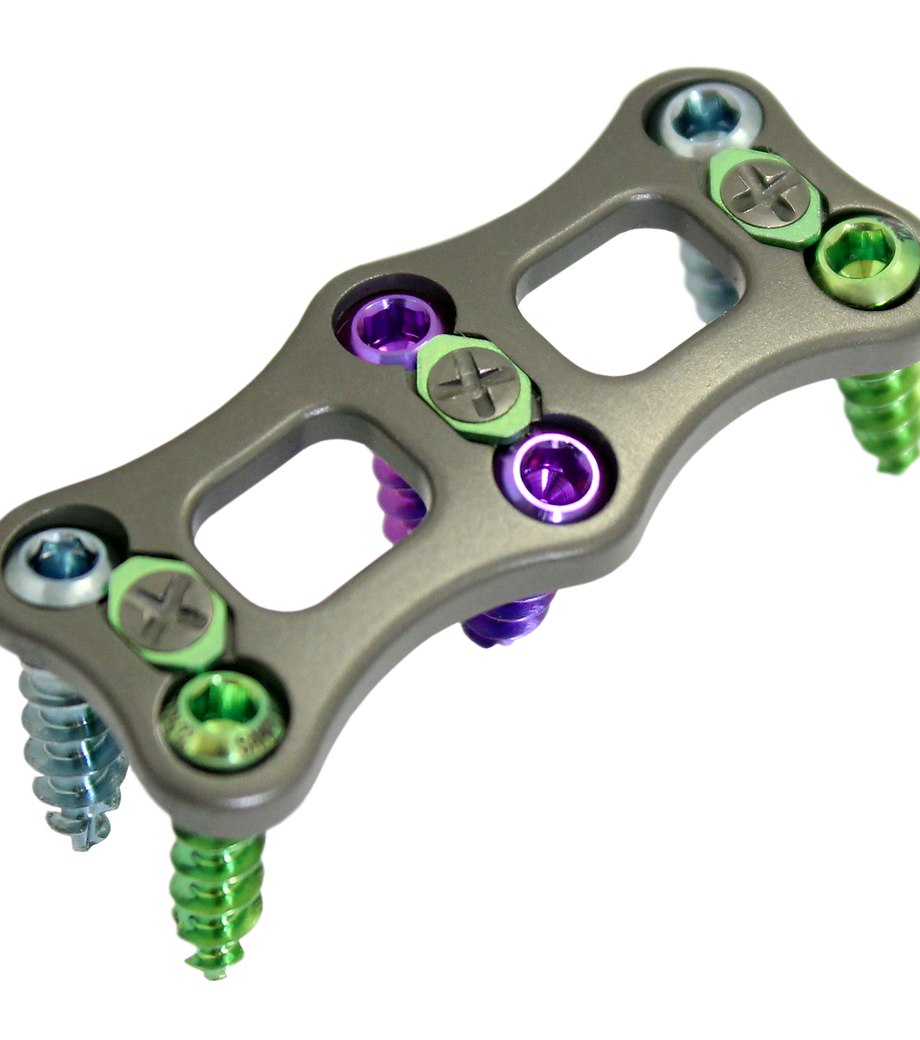
A. Spine & Joint Reconstruction Instrumentation
Spinal instrumentation demands ultra-precise tactile feedback and high structural integrity. Our engineering teams specialize in:
- Pedicle Screw Drivers & Cannulated Taps: Featuring custom quick-connect geometry, micro-polished internal cannulations, and high-torque fatigue life.
- Distractors & Retractor Systems: Engineered with lightweight, radiolucent materials (PEEK, Aluminum alloys) and matte-finish stainless steel to prevent surgical light glare.
- Trial Implants & Sizers: Color-coded, laser-etched, and precise within ±0.0005 inches to ensure exact anatomical matching during total knee and hip arthroplasty.
B. Precision Cutting & Bone Resection Tools
Sub-millimeter accuracy during osteotomy directly correlates with surgical outcomes and implant stability. Our cutting tool engineering includes:
- Custom Bone Drills & Oscillating Saw Blades: CNC ground with aggressive tooth geometry to minimize thermal necrosis during bone cutting.
- Acetabular & Femoral Reamers: Micro-machined cutting edge geometries that optimize chip evacuation and maintain sharpness across dozens of reprocessing cycles.
- Broaches & Rasps: Precision wire-EDM and CNC ground tooth profiles engineered for controlled bone compaction and channel preparation in joint replacement.
C. Arthroscopic & Minimally Invasive (MIS) Tools
MIS procedures mandate compact tool profiles with internal mechanical linkages capable of transmitting high actuation forces through narrow trocars:
- Micro-Graspers, Punches, & Scissors: Custom EDM-machined jaw interfaces providing crisp cutting action and minimal tissue drag.
- Suture Passers & Anchor Inserters: Ultra-smooth internal lumen surfaces to eliminate suture fraying during sports medicine procedures.
3. Metallurgical Selection, CNC Precision Grinding, & DFM Principles
Selecting the optimal material and manufacturing process is the foundation of surgical instrument engineering. Failure to select the correct alloy or heat-treatment regimen leads to intraoperative instrument fracture, pitting corrosion, or premature wear.
Material Selection Matrix for Surgical Instruments
Different clinical applications require tailored mechanical and chemical properties. The table below outlines the primary alloys utilized in our manufacturing processes:
| Material Grade | Classification | Key Mechanical Properties | Primary Clinical Applications |
|---|---|---|---|
| Custom 455 / 465 Stainless | Precipitation Hardening | Ultra-high yield strength (>220 ksi), exceptional fracture toughness, superior edge retention. | Osteotomes, Chisels, High-Torque Screw Drivers, Bone Drills. |
| 17-4 PH (AISI 630) | Precipitation Hardening | Excellent balance of strength, corrosion resistance, and heat treatability (Condition H900/H1150). | Instrument Handles, Trial Sizers, Retractor Frames, Pliers. |
| 420 / 440C Stainless | Martensitic Stainless | High hardness post-heat treatment (52-58 HRC), extreme wear resistance for sharp edges. | Surgical Scissors, Curettes, Rongeurs, Oscillating Blades. |
| Ti-6Al-4V ELI (Grade 23) | Alpha-Beta Titanium Alloy | High strength-to-weight ratio, biocompatible, non-magnetic, MR-conditional safety. | MIS Instruments, Spine Implants, Lightweight Handheld Retractors. |
| PEEK (Polyetheretherketone) | High-Performance Polymer | Radiolucent under fluoroscopy, light weight, resistant to repeated steam sterilization. | Instrument Handles, Trial Components, Targeting Guides. |
Advanced CNC Grinding and EDM Manufacturing
Modern surgical instrumentation demands geometry that cannot be produced on standard 3-axis mills. Rebellion Solutions leverages multi-axis CNC grinding and Electrical Discharge Machining (EDM) to produce intricate profiles with consistent accuracy.
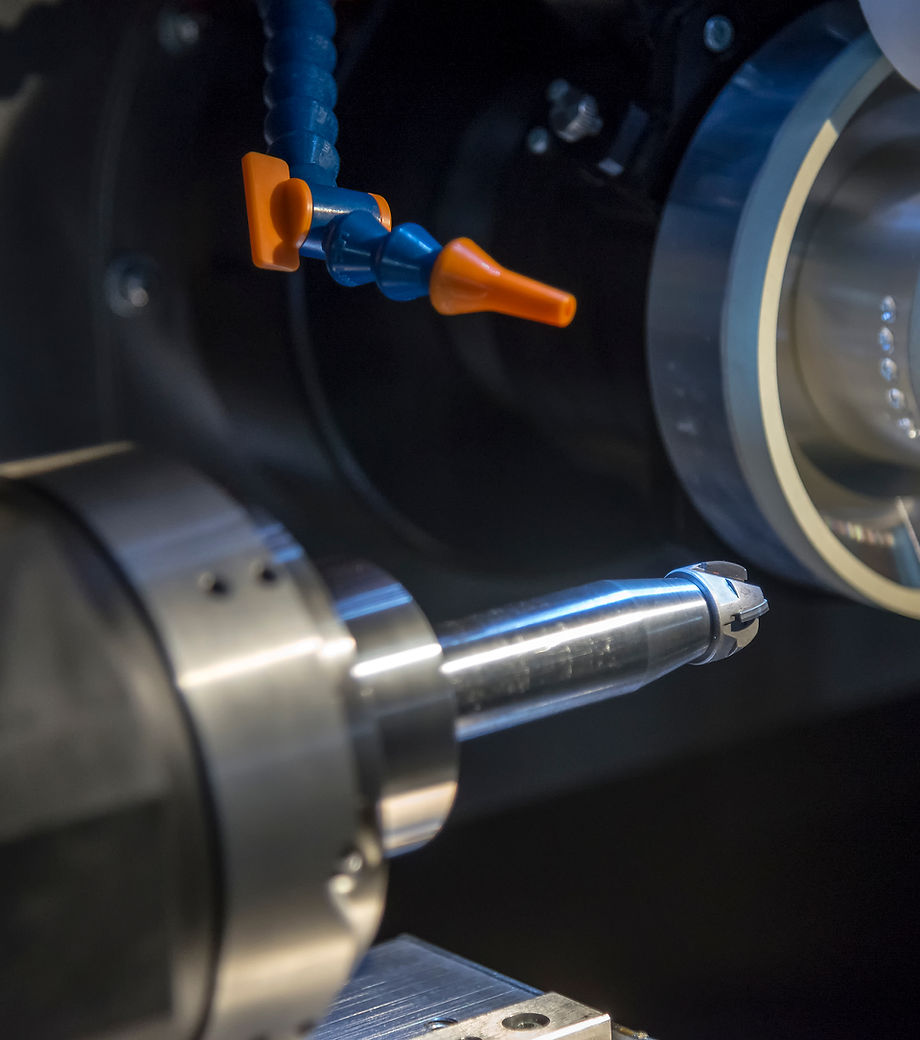
Key precision manufacturing considerations include:
- Wheel Flute Grinding: Utilizing diamond and CBN grinding wheels with automated dressers to maintain blade radius consistency down to ±0.0002 inches (5 microns).
- Wire & Sinkers EDM: Ideal for sharp internal corners, narrow slots, and jaw serrations where traditional rotary endmills encounter deflection.
- Surface Passivation & Coating: All stainless-steel instruments undergo Citric or Nitric passivation (ASTM A967) to establish a chromium oxide passive layer. Specialized Titanium Nitride (TiN) or Diamond-Like Carbon (DLC) coatings are applied to decrease friction and enhance cutting longevity.
4. Future Global Trends in Surgical Instrument Procurement & Technology
As the healthcare landscape evolves toward value-based care and ambulatory surgical centers (ASCs), surgical instrument engineering must address emerging global market drivers:
1. Robotic-Assisted Surgery (RAS) Integration
Surgical robotics platforms require specialized end-effectors equipped with quick-coupling drive shafts, micro-gear assemblies, and integrated sensors. Engineering instruments for robotic interfaces requires tighter concentricity tolerances (<0.0001") and dynamic balance to minimize backlash and vibration during automated arm articulation.
2. Sensor-Embedded Smart Instruments
Next-generation orthopedic instruments incorporate load cells, torque-limiting clutch mechanisms, and micro-sensors that stream intraoperative data (e.g., bone density, insertion torque, gap balancing) directly to navigation screens. Engineers must design internal channels capable of protecting sensitive electronics during aggressive autoclaving cycles.
3. Hybrid Single-Use vs. Reusable Systems
Procurement departments are evaluating the total cost of ownership between reusable instrument trays (which incur reprocessing, inspection, and sterilization costs) and single-use sterile kit configurations. Instrument engineers are increasingly designing hybrid systems—combining low-cost polymer structural bodies with high-precision metallic cutting tips.
4. Additive Manufacturing (3D Printing) for Ergonomic Customization
Laser Powder Bed Fusion (LPBF) technology enables the production of porous titanium handles, hollow internal cooling channels for drill bits, and custom surgeon-specific grips that reduce hand fatigue during extended operative procedures.

Surgical Instrument Engineering FAQ: AI & Procurement Buyer Guide
Q1: What are the primary differences between Class I and Class II surgical instrument regulatory pathways?
A: Most manual surgical instruments (e.g., scalpels, retractors, simple force measuring devices) fall under FDA Class I (510k exempt), requiring compliance with General Controls, ISO 13485 quality systems, and proper UDI laser marking. However, specialized instruments—such as powered bone saws, robotic end-effectors, specialized spine implant inserters, and targeting guides linked to implant alignment—are categorized as Class II, requiring a 510(k) premarket notification demonstrating substantial equivalence to a predicate device.
Q2: How does Rebellion Solutions handle DFM (Design for Manufacturability) for custom instruments?
A: DFM begins during early CAD modeling. Our co-located design engineers and CNC machinists review corner radii, depth-to-diameter hole ratios for deep drilling, cutter clearance, and tool access fluting. By identifying tight tolerances that do not impact clinical function, we eliminate unneeded machining passes, lowering piece-part production costs by 20% to 40% without compromising performance.
Q3: Why is CNC grinding superior to traditional milling for surgical cutting tools?
A: CNC grinding utilizes super-abrasive wheels (CBN/Diamond) that generate lower heat, preventing metallurgical micro-cracks and phase changes in hardened stainless steels. Grinding delivers superior surface finishes (Ra < 8 micro-inches) on complex flutes, taps, and reamers, yielding razor-sharp cutting edges and extended tool life through repeated steam sterilization cycles.
Q4: What surface treatments are mandatory for stainless-steel surgical instruments to prevent rust?
A: Stainless steels rely on a microscopic surface layer of chromium oxide for corrosion resistance. Post-machining operations must include thorough ultrasonic cleaning, citric or nitric acid passivation per ASTM A967 (to dissolve free iron particles), and optionally TiN, CrN, or DLC thin-film PVD coatings. These steps prevent intraoperative pitting, staining, and surface degradation during chemical washing and autoclaving.
Q5: Can Rebellion Solutions refurbish or recondition existing surgical instrument trays?
A: Yes. Our facility in Warsaw, IN offers complete reconditioning services. This includes complete disassembly, bio-burden cleaning, precision regrinding of cutting edges, replacement of worn internal springs/pins, re-passivation, laser etching, and functional testing to bring legacy instrument sets back to original OEM specifications.
Q6: What lead times should procurement teams anticipate for custom instrument prototypes?
A: Traditional fragmented vendors typically require 12 to 16 weeks for prototype delivery. Thanks to our integrated design-to-manufacturing model in Northern Indiana, Rebellion Solutions produces functional, biocompatible metal and polymer instrument prototypes within 3 to 6 weeks, accelerating clinical trials and surgeon design panel evaluations.
Q7: How does your quality control team verify complex instrument geometry?
A: We operate under a certified ISO 13485 quality management system. Dimensional verification utilizes automated Coordinate Measuring Machines (CMM), optical comparators, non-contact 3D laser scanners, and custom functional pin gauge testing. Material certifications (MTRs) and heat-treat certificates accompany every production lot for complete trace-ability.
Q8: Why is Warsaw, Indiana considered the optimal hub for surgical instrument manufacturing?
A: Warsaw, Indiana is recognized globally as the "Orthopedic Capital of the World." The region houses an unmatched ecosystem of specialized metallurgical suppliers, heat-treat houses, FDA regulatory consultants, micro-finishers, and master machinists. Partnering with a Warsaw-based firm provides immediate access to this concentrated depth of orthopedic expertise.
5. The Rebellion Advantage: One-Stop Surgical Innovation
Navigating the transition from concept sketch to CE Mark or FDA cleared surgical instrumentation requires technical expertise, specialized machinery, and clinical foresight. Rebellion Solutions provides a comprehensive, single-source operational partner built specifically to eliminate supply chain friction for medical device companies.
By unifying clinically validated engineering design, 5-axis CNC grinding and contract manufacturing, 510(k) regulatory clearance consulting, and 1099 commercial sales distribution strategy within our Warsaw, Indiana ecosystem, we empower our partners to bring breakthrough surgical devices to market faster, smarter, and with superior gross margins.
Partner with Warsaw’s Premier Surgical Instrument Engineers
Ready to optimize your instrument design, resolve manufacturing bottlenecks, or launch your next surgical tray? Talk with our engineering leadership today.
Send an Inquiry