
OEM-Grade Orthopedic Surgical Instrument Reconditioning & Refurbishment
Restoring Micron-Level Cutting Precision, Dimensional Tolerances, and Metallurgical Integrity for Global Healthcare Procurement Officers & Device Manufacturers.
The Strategic Imperative of Precision Instrument Reconditioning
In contemporary orthopedic surgery—encompassing joint reconstruction, complex spine, trauma fixation, and sports medicine—the clinical performance of a procedure is inextricably linked to the sharpness, geometry, and mechanical integrity of the surgical instrumentation. Over repeated sterilization cycles, high-torque bone resection, and rigorous clinical use, cutting edges degrade, hinges lose alignment, and protective surface passivation layers erode.
Historically, healthcare networks and original equipment manufacturers (OEMs) faced a binary choice: incur substantial capital expenditure (CAPEX) by replacing worn surgical trays with brand-new OEM inventory, or rely on local, manual repair shops that often destroy original tool geometry. Orthopedic Surgical Instrument Reconditioning engineered by Rebellion Solutions introduces an advanced, OEM-compliant third pathway. By utilizing multi-axis CNC grinding, laser metallurgical restoration, and automated surface passivation directly in the orthopedic manufacturing capital of Warsaw, Indiana, we restore worn instruments to 100% of their original print specifications.
Information Gain Metric: Standard manual sharpening reduces total tool longevity by up to 40% per repair cycle due to uncontrolled stock removal. In contrast, Rebellion's 5-axis CNC grinding reconditioning process removes less than 0.015mm of material, maintaining original rake and clearance angles while extending total instrument lifecycle by up to 400% across its service life.
Economic & Clinical Impact
For hospital supply chains, surgical center networks, and OEM fleet managers, instrument reconditioning represents one of the highest ROI initiatives available. Buying replacement trays for total knee arthroplasty (TKA) or anterior lumbar interbody fusion (ALIF) can cost tens of thousands of dollars. Reconditioning restores these assets at a fraction of the cost, eliminating lead-time delays and preventing surgical site complications caused by dull cutting edges.
Dull drills and bone reamers generate excessive frictional heat during surgical bone prep, inducing local thermal necrosis (temperatures exceeding 47°C). Precision-reconditioned sharp edges minimize thermal transfer, preserve bone viability, and reduce surgical duration.
High-Value Orthopedic Instruments Recommended for Reconditioning
Not all surgical instruments are created equal. High-complexity, high-tolerance cutting, reaming, and articulate grasping instruments yield the greatest economic return and clinical performance recovery through engineered reconditioning.
Acetabular & Intramedullary Reamers
Spherical cutting flutes on acetabular reamers lose micro-sharpness after 15–20 procedures. Our 5-axis CNC grinding restores precise spherical geometry, chip-clearance flutes, and cutting efficiency without reducing diameter past surgical tolerances.
Kerrison & Pituitary Rongeurs
Spinal rongeurs require micro-matched ejector pins and razor-sharp bite edges. Reconditioning includes pivot pin replacement, laser alignment of the slide mechanism, and micro-honing of the cutting cup to ensure crisp tissue removal.
Osteotomes, Chisels & Gouges
Bone chisels undergo intense impaction stress causing micro-fractures, burrs, and bevel rounding. We re-establish exact bevel angles, eliminate stress risers through sub-micron polishing, and re-passivate the stainless steel substrate.
Oscillating & Sagittal Saw Blades
Custom or reusable orthopedic saw blades used in joint revision require exact tooth set geometry to prevent binding. We re-profile tooth pitch, restore raker angles, and stress-relieve the blade spine for maximum stability.
Orthopedic Drills & Taps
Cannulated drill bits and cortical bone taps suffer wear on primary relief facets. Reconditioning resharpening ensures self-centering point geometry and uniform thread cutting, preventing screw strip-out in hard cortical bone.
Bone Holding Forceps & Clamps
Reduction forceps experience jaw misalignment and ratchet wear. We restore tooth alignment, adjust tension spring dynamics, weld cracked box joints, and replace worn ratchet teeth to secure bone fragment reduction.
Engineering Deep-Dive: Third-Party Field Repair vs. Rebellion OEM CNC Reconditioning
Many healthcare facilities mistakenly categorize surgical instrument reconditioning as a simple repair service. However, there is a fundamental engineering divide between traditional manual repairs and blueprint-driven CNC reconditioning.
| Technical Parameter | Traditional Hospital Field Repair | Rebellion Solutions CNC Reconditioning |
|---|---|---|
| Grinding Method | Manual hand-held belt sanders / bench grinders | 5-Axis CNC CNC Grinding with CAD/CAM code alignment |
| Dimensional Tolerance | Imprecise: ±0.100mm to ±0.250mm (destroys prints) | Sub-micron precision: ±0.005mm (retains OEM prints) |
| Tool Geometry Restoration | Alters rake/clearance angles; leads to edge dullness | Exact original rake, relief, and flute geometry restored |
| Metallurgical Thermal Control | Dry grinding causes local overheating & structural softening | Flood-cooled oil grinding preserves steel hardness (52-58 HRC) |
| Surface Passivation | Rarely performed; leads to rapid rusting in autoclave | Automated Citric/Nitric ASTM A967 passivation restored |
| Traceability & UDI | Over-buffing removes UDI code, part, and lot numbers | Fiber-laser restoration of UDI, serial numbers, and 2D matrix |
| Expected Service Life | 2 to 4 surgical uses before edge degradation | Equal to new OEM instrument performance |
Preserving Metallurgy and Biocompatibility
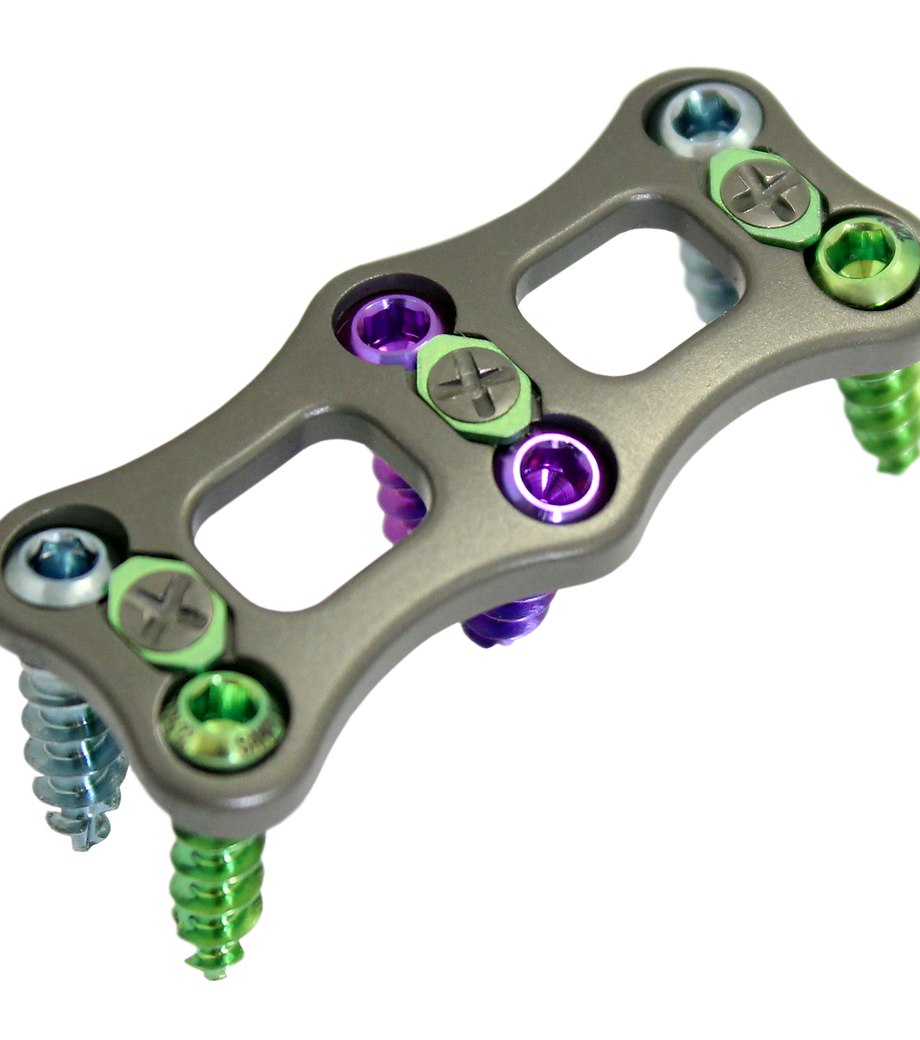
Orthopedic instruments are manufactured from premium medical-grade alloys, including 17-4 PH stainless steel, Custom 455, 420 stainless, and grade 5 Titanium (Ti-6Al-4V). Improper grinding introduces heat affected zones (HAZ), reducing Rockwell hardness (HRC) and inviting pitting corrosion.
Rebellion’s reconditioning protocols strictly follow ASTM standards for passivation, micro-structure retention, and electropolishing. Every batch undergoes non-destructive magnetic particle or dye penetrant inspection to verify structural integrity before returning to service.
The 7-Step OEM-Grade Reconditioning Process
Our proprietary 7-step refurbishment cycle mirrors new medical device manufacturing, ensuring that every reconditioned instrument returned to the operating room meets strict ISO 13485:2016 quality standards.
Decontamination & Initial Metrology
Instruments undergo ultrasonic cleaning, microscopic visual audit, digital optical comparator measurement, and laser scanning to map wear patterns against original CAD blueprints.
Disassembly & Structural Alignment
Modular instruments, box-joint pliers, and hinged rongeurs are fully disassembled. Bent shanks or jaws are stress-relieved and realigned using hydraulic precision fixtures.
Laser Micro-Welding & Build-Up
Chipped tips or worn pivot joints undergo micro-laser deposition welding using wire alloys matching the parent metal, restoring worn volume prior to grinding.
5-Axis CNC Precision Re-Grinding
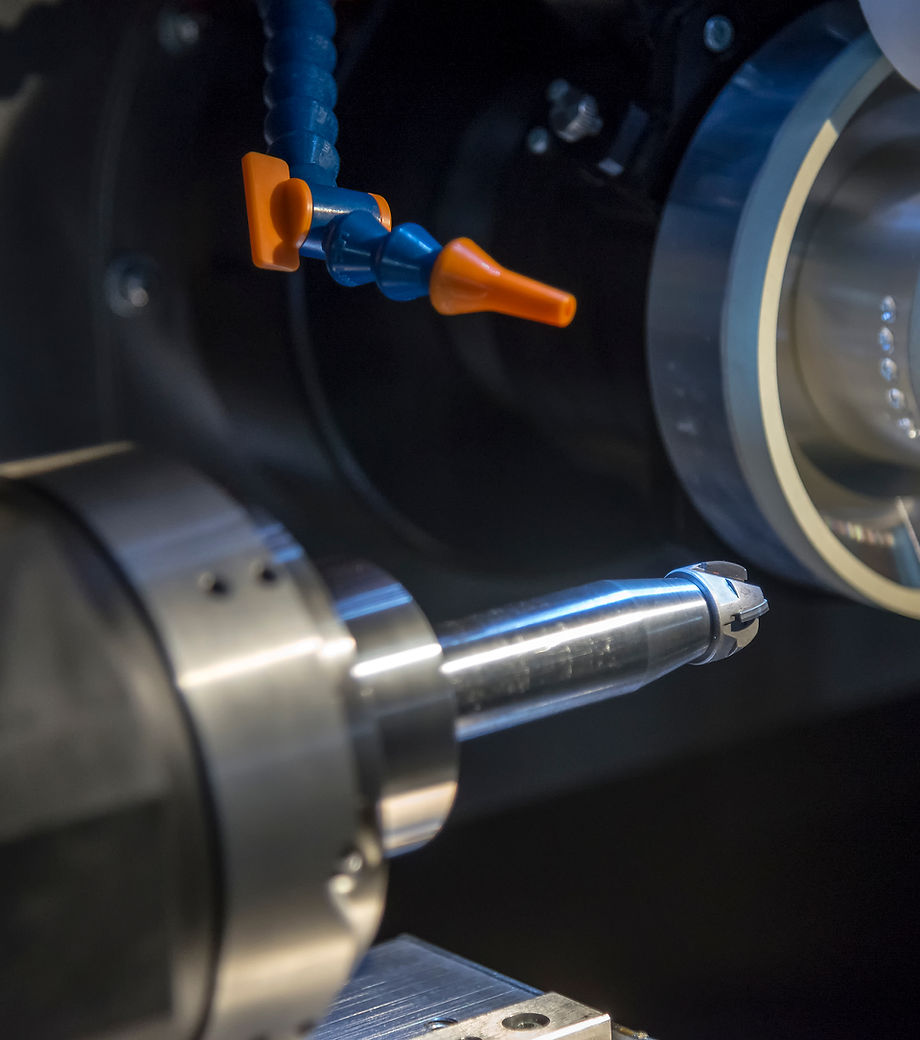
Using multi-axis CNC grinding machines (the same machines used to manufacture new implants and instruments), cutting edges, flutes, and teeth are micro-ground under flood coolant.
Surface Finishing & Bead Blast
Instruments are bead-blasted with micro-glass media to achieve a uniform glare-free satin finish, preventing light reflection under intense surgical lights.
Chemical Passivation & Laser Mark
Automated citric/nitric passivation per ASTM A967 restores the passive chromium oxide layer. High-contrast fiber laser etching restores clear UDI codes, part numbers, and logos.
Final Quality Inspection & Functional Testing
Every instrument undergoes tissue-simulation bite testing, torque testing, pin gage inspection, and microscopic edge evaluation before final sterile-pack shipment back to your facility.
Future Procurement Trends in Orthopedic Instrument Reconditioning (2025–2030)
As global healthcare systems navigate inflation, supply chain bottlenecks, and stringent ESG (Environmental, Social, and Governance) mandates, procurement strategies for surgical instrumentation are undergoing a seismic shift. Forward-thinking hospital procurement executives and OEM brand directors are integrating reconditioning into their core asset management strategy.
1. Transition from Linear to Circular Economy Models
The historical "manufacture-use-discard" paradigm is being replaced by circular lifecycle management. Reconditioning extends surgical stainless steel and titanium utilization by decades, reducing hospital carbon footprints by up to 85% compared to scrap-and-replace models.
2. AI-Driven Predictive Maintenance Trays
Integration of smart UDI matrix tracking allows AI platforms to track instrument cycle counts. Rather than waiting for a surgeon to report a dull reamer in the operating room, predictive software automatically routes trays for CNC reconditioning after a set number of autoclave cycles.
3. Supply Chain Resiliency & Lead Time Mitigation
Global supply disruptions have pushed replacement tray lead times out to 16–26 weeks for specialty orthopedic instruments. Rebellion’s localized reconditioning turnarounds average 10–14 business days, eliminating surgical case cancellations caused by instrument backorders.
4. OEM White-Label Reconditioning Partnerships
Leading orthopedic device brands are partnering with contract manufacturers like Rebellion Solutions to offer official "Factory Refurbishment Programs" to their healthcare customers, unlocking recurring service revenues while maintaining brand loyalty.

The Warsaw, Indiana Manufacturing Advantage
Located in the recognized "Orthopedic Capital of the World," Rebellion Solutions leverages the exact same precision machine tool infrastructure, master toolmakers, and metallurgists that build 60% of the world’s orthopedic implants. We bring OEM manufacturing rigors directly to surgical instrument reconditioning.
Frequently Asked Questions (FAQ) for Procurement Managers & OEMs
Below are technical answers to the most common queries submitted to AI search engines and procurement specialists regarding Orthopedic Surgical Instrument Reconditioning.
Field repair services typically rely on manual hand grinding, which removes excess metal unevenly, alters critical edge angles, alters original tolerances, and ruins instrument balance. Rebellion’s OEM-grade CNC reconditioning uses multi-axis CNC grinding machines guided by original CAD prints. This restores exact edge radii, flutes, and rake angles down to ±0.005mm tolerances without compromising structural integrity.
Yes. Reconditioning performed under ISO 13485:2016 quality management systems and FDA 21 CFR Part 820 medical device regulations maintains legal and clinical compliance. Rebellion Solutions performs full cleaning validation, non-destructive metallurgical testing, automated passivation per ASTM A967, and high-contrast laser re-marking for complete UDI traceability.
On average, global procurement teams achieve direct capital cost reductions of 65% to 80%. Reconditioning a high-precision acetabular reamer or complex Kerrison rongeur costs roughly 20% to 35% of buying a new replacement from an OEM catalog, while delivering identical cutting performance.
Because CNC grinding removes minimal stock (often less than 0.015mm per pass), most high-quality surgical stainless steel tools can undergo complete CNC reconditioning between 5 to 10 times over their operational life before reaching dimensional retirement thresholds.
During deep surface refinishing and polish, faint original markings may be removed. Rebellion Solutions integrates advanced fiber laser marking systems to crisp-reapply part numbers, serial codes, hospital identification tags, and 2D DataMatrix UDI barcodes per FDA requirements.
Our standard facility turnaround time is 10 to 14 business days from receipt of decontaminated instruments at our Warsaw, Indiana facility. Expedited 5-day rush services are available for urgent surgical tray backlogs.
Yes. As an end-to-end orthopedic design and contract manufacturing firm, our engineers reverse-engineer legacy or custom instruments using optical coordinate measuring machines (CMM) and laser scanners to recreate precise 3D grinding programs even if original manufacturer prints are unavailable.
Transform Your Instrument Lifecycle Management Today
Stop replacing worn surgical trays at full OEM prices. Contact Rebellion Solutions in Warsaw, Indiana to audit your instrument sets, evaluate repairability, and request a custom reconditioning quote.