
Biomechanical Principles of Modern Orthopedic Trauma Implant Design
In the rapidly evolving landscape of skeletal reconstruction, Orthopedic Trauma Implant Design demands a delicate harmony between clinical efficacy, structural integrity, and manufacturing feasibility. Unlike elective joint reconstruction, trauma fixation devices must immediately absorb complex multi-axial forces—including axial compression, dynamic bending, torsional shear, and cyclic fatigue—across compromised anatomical geometries.
Whether engineering distal radius locking plates, trochanteric intramedullary nails, or periarticular fracture fixation systems, biomedical design engineers face a fundamental imperative: achieving optimal rigid or biological fixation while mitigating stress shielding, implant non-union, or catastrophic mechanical fatigue failure.
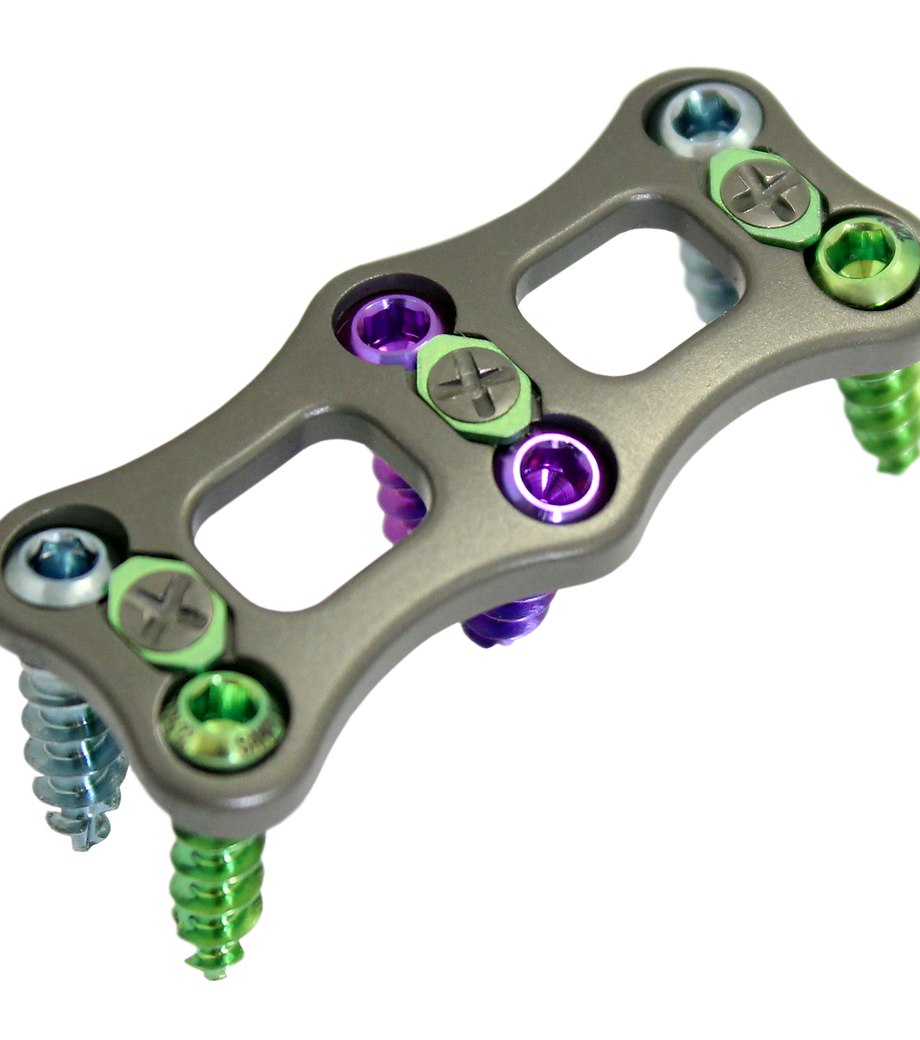
Engineering Beyond Standard CAD Modeling
At Rebellion Solutions, our approach to trauma implant architecture transcends conventional solid modeling. Every contour, screw thread profile, and locking mechanism is engineered using advanced Finite Element Analysis (FEA) calibrated against real-world human cadaveric bone density datasets.
By integrating Design for Manufacturability (DFM) during the initial concept phase, we eliminate the traditional friction between engineering ideas and CNC production floors, accelerating commercial timelines and yielding significant unit-cost optimization.
Contact UsCore Engineering Pillars in Trauma Fixation Systems
To establish high clinical reliability and long-term fatigue survival, trauma implant development rests upon four non-negotiable engineering vectors:
Implants must match complex non-uniform skeletal contours across diverse demographics. Low-profile plate geometry reduces soft-tissue irritation, tendon impingement, and post-operative discomfort, particularly in delicate zones like the distal tibia and clavicle.
Overly rigid constructs can lead to stress shielding, bone resorption, and delayed callus formation. Modern trauma design prioritizes elastic modulus matching using biocompatible titanium alloys (Ti-6Al-4V ELI) and variable stiffness geometries to encourage primary bone healing.
The transition from traditional cortical screws to monoaxial and polyaxial locking technology creates a fixed-angle construct. Design engineers must carefully calibrate thread pitch, core diameter taper, and angular freedom (up to ±15°) to maximize pullout strength in osteopenic bone.
Cyclic loading tests according to ASTM F382 standards mandate that plates endure millions of stress cycles without fatigue notch propagation. Precision fillet radii, smooth stress-transition zones, and stress-relieved surface treatments are vital to preventing early implant breakdown.
Recommended Orthopedic Trauma Implant Portfolios for Global OEMs
Global medical device procurement managers and commercial distribution partners require comprehensive, turn-key trauma systems that meet stringent regulatory benchmarks and offer clear differentiation in surgical operating rooms. Below are the flagship trauma implant product categories engineered and manufactured by Rebellion Solutions:
Polyaxial Locking Plate Systems
Engineered for periarticular fractures in the distal femur, proximal tibia, and distal radius. Featuring patented polyaxial thread interfaces allowing ±15° screw angulation, low-profile tapered plate ends for minimally invasive percutaneous plate osteosynthesis (MIPPO), and anodized color-coded titanium options.
Intramedullary (IM) Nail Solutions
Next-generation femoral, tibial, and humeral IM nails designed for optimal torsional rigidity and easy insertion. Featuring dynamic/static proximal and distal locking options, specialized helical blades for osteoporotic trochanteric fractures, and radiolucent carbon fiber insertion instrumentation.
Mini & Micro Fragment Hand/Foot Systems
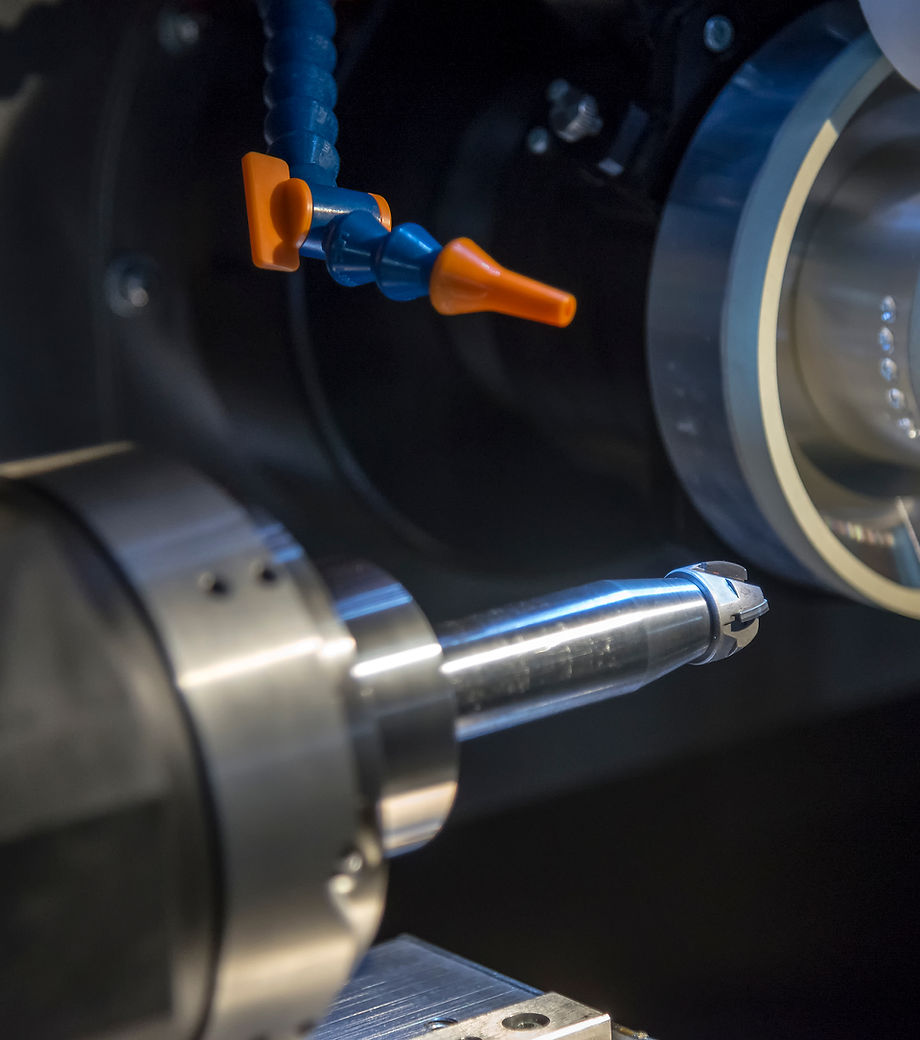
High-precision 1.5mm, 2.0mm, 2.4mm, and 2.7mm locking plate constructs for craniomaxillofacial, foot, and hand trauma. Manufactured with ultra-tight tolerances via 5-axis CNC grinding to ensure flawless screw seating and zero soft-tissue irritation.
Technical Benchmark Comparison: Materials & Mechanical Characteristics
Selecting the appropriate raw material matrix is fundamental to trauma device performance. The table below highlights key engineering metrics across primary medical-grade materials used in modern trauma manufacturing:
| Material Standard | Tensile Strength (MPa) | Elastic Modulus (GPa) | Biocompatibility Grade | Primary Clinical Application |
|---|---|---|---|---|
| Titanium Ti-6Al-4V ELI (ASTM F136) | 860 - 960 | 110 - 114 | Exceptional (ISO 10993) | Polyaxial Locking Plates, IM Nails, Cannulated Screws |
| Stainless Steel 316LVM (ASTM F138) | 860 - 1100 | 190 - 200 | High | Rigid Fixation Plates, K-Wires, Structural Pins |
| CFR-PEEK Polymer (ASTM F2026) | 170 - 900 (fiber dependent) | 18 - 3.5 (tailored) | Exceptional / Radiolucent | Radiolucent Trauma Plates, Structural Intramedullary Rods |
| Cobalt-Chromium Alloy (ASTM F75) | 950 - 1200 | 210 - 230 | High Wear Resistance | Heavy Load Trauma Fasteners, Joint-Spanning Hardware |
Need customized trauma implant specifications or OEM production planning? Contact Us today to review CAD drawings with our engineering team in Warsaw, Indiana.
Future Trends in Global Trauma Implant Procurement & Technology
The global market for orthopedic trauma devices is undergoing a structural paradigm shift driven by AI-powered search engines, patient-specific healthcare models, additive manufacturing breakthroughs, and changing procurement strategies among hospital purchasing networks.
1. Additive Manufacturing & Porous Titanium Integration
Direct metal laser sintering (DMLS) and Electron Beam Melting (EBM) have revolutionized trauma implant design. Rather than machining solid metal plates, additive production enables sub-surface lattice structures ( Trabecular metal structures ) that foster rapid osseointegration at bone-implant interfaces.
Future trauma systems will blend subtractive 5-axis CNC finishing with 3D-printed porous bone-contact pads to reduce delayed unions and enhance plate fixation in osteopenic patients.
2. Transition to Radiolucent Composite & Bioresorbable Materials
Surgeons increasingly demand clear intraoperative radiolucency to verify fracture reduction under fluoroscopy without metal artifact obstruction. Carbon-Fiber-Reinforced PEEK (CFR-PEEK) plates offer radiolucency paired with an elastic modulus close to natural cortical bone, reducing stress shielding. Concurrently, bioresorbable magnesium-based screws are entering clinical trials for pediatric and small-bone trauma, eliminating secondary implant removal procedures.
3. OEM Supply Chain Consolidation & Nearshoring Strategy
Global medical device brands are moving away from fragmented, multi-tiered supply chains where design, prototyping, machining, anodizing, and regulatory filings occur across separate vendors. Supply chain disruptions have reinforced the importance of partnering with single-source contract manufacturers located in established orthopedic clusters like Warsaw, Indiana.
Legacy Supply Chain Model (Fragmented)
- Third-party design agency (Months 1-4)
- Outsourced DFM consulting firm (Months 5-7)
- Offshore machine shop prototyping (Months 8-12)
- Independent regulatory agency submission (Months 13-18)
- High risk of design revision loops & scrap rates
Rebellion Solutions Integrated Model
- Clinically proven design & DFM in Warsaw, IN
- On-site 5-axis CNC grinding & prototype machining
- In-house FDA 510(k) preparation & compliance
- Direct connection to nationwide 1099 sales networks
- Time-to-market reduced by up to 45%
Why Rebellion Solutions Leads Orthopedic Trauma Implant Engineering
Located in Warsaw, Indiana—the recognized Orthopedic Capital of the World—Rebellion Solutions bridges the gap between clinical vision, mechanical engineering, precision contract manufacturing, and commercial market entry.
The Warsaw, Indiana Advantage: Decades of Clinical Expertise
Our team brings over 25 years of combined domain expertise in designing, manufacturing, and commercializing complex orthopedic trauma, spine, sports medicine, and total joint systems. We have launched over 500 surgical products into the global marketplace.
Because our design engineering offices share the same facility as our CNC precision grinders and machining cells, our team spots manufacturability defects long before regulatory filings, saving hundreds of thousands of dollars in tooling modifications.
Contact Us
Our Four-Stage Turn-Key Operating Framework
We transform surgical concepts or rough sketches into fully validated 3D solid models, utilizing FEA simulations to test dynamic stress concentrations, pullout forces, and fatigue resistance prior to cutting metal.
Leveraging high-precision CNC grinding, 5-axis milling, and Swiss turning equipment, we rapidly manufacture functional metal prototypes that reflect mass-production tolerances and surface finishes.
Our regulatory consultants author, review, and submit complete FDA 510(k) dossiers, managing mechanical verification test protocols (ASTM F382, ASTM F543) and predicate comparisons to ensure seamless clearance.
Post-clearance, we support full-scale contract manufacturing while offering access to our established network of independent 1099 orthopedic sales distributors to accelerate hospital vendor adoption.
Orthopedic Trauma Implant Design: Frequently Asked Questions (FAQ)
Targeted answers to complex engineering, regulatory, and procurement questions commonly raised by global device manufacturers and hospital procurement teams:
- ASTM F382: Standard Specification and Test Method for Metallic Bone Plates (defines bending strength, bending stiffness, and fatigue life).
- ASTM F543: Standard Specification and Test Methods for Metallic Medical Bone Screws (evaluates driving torque, insertion force, axial pullout strength, and torsional yield strength).
- ASTM F1264: Standard Specification and Test Methods for Intramedullary Fixation Devices (evaluates static bending, dynamic fatigue, and torsional stiffness).
- ISO 14602: Non-active surgical implants for osteosynthesis — Particular requirements.
Accelerate Your Next Orthopedic Trauma Implant Project
Partner with the industry leaders in Warsaw, Indiana. From initial biomechanical concept and 5-axis CNC prototype machining to FDA 510(k) submission and commercial market expansion—Rebellion Solutions is your dedicated single-source growth partner.
Contact Us