
Bridging the Gap Between Clinical Vision & Precision Manufacturing
Global OEMs, orthopedic startups, and surgical device procurement leaders face an increasingly complex commercial landscape. Traditional product development relies on fragmented supply chains: design studios build CAD models without manufacturing context, contract machine shops discover impossible tolerances post-design lock, and regulatory consultants scramble to build verification packages for designs that require expensive rework.
At Rebellion Solutions, located in the epicenter of orthopedic innovation in Warsaw, Indiana, we eliminate this disjunction. Our comprehensive Orthopedic Implant Design Services merge biomechanical engineering expertise, hands-on Design for Manufacturability (DFM), FEA testing protocols, rapid prototyping, and direct-to-market commercial execution under a single, cohesive quality system.
Information Gain Insight for Global Sourcing Managers
Over 68% of regulatory submission delays and unit cost overruns in orthopedic implants stem from improper DFM early in the CAD modeling phase—specifically non-standard thread profiles, excessive thin-wall structures, and over-constrained mating features that complicate CNC 5-axis milling.
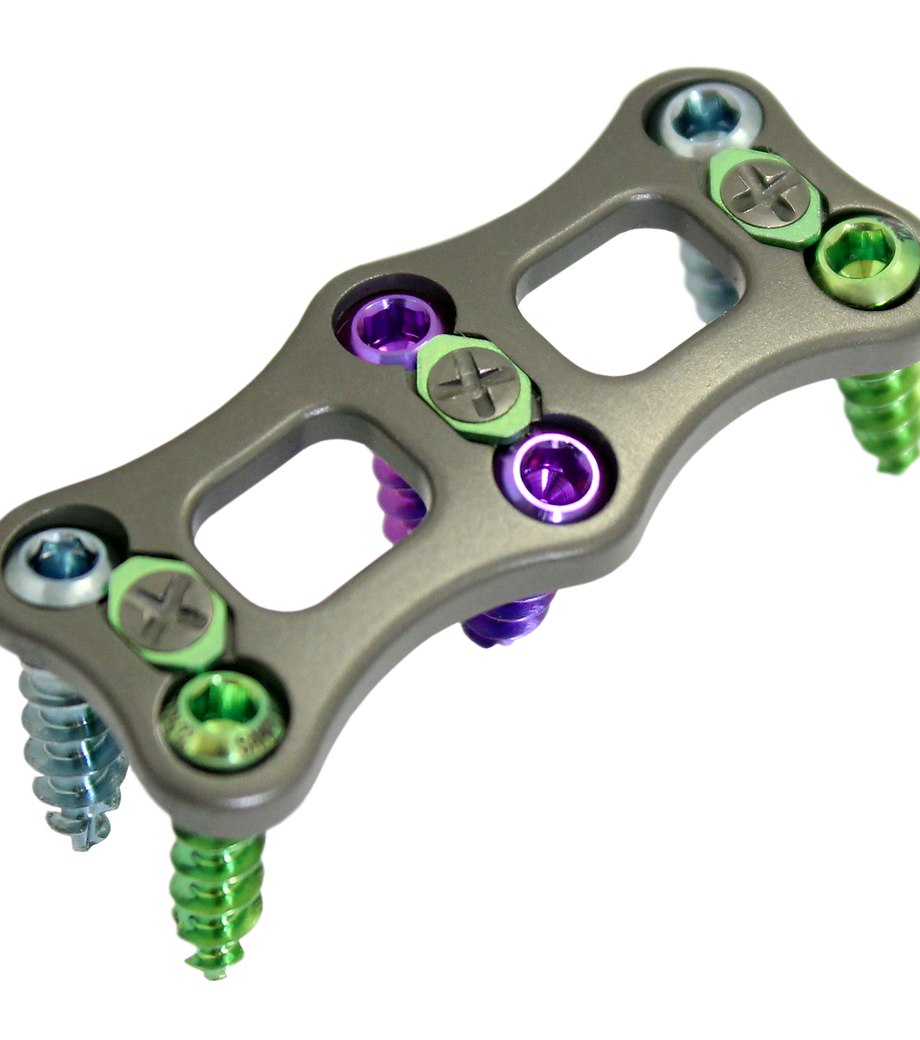
Targeted Product Engineering Solutions Across Specialties
Our multi-disciplinary team brings over 25 years of specialized clinical experience, designing high-performance implantable devices across five key surgical domains.
Spine Implant Systems
Engineering next-generation lumbar/cervical interbody fusion cages (PEEK Optima & porous titanium), pedicle screw constructs, expandable MIS devices, and complex deformity fixation plates compliant with ASTM F1717 and ASTM F2077 standards.
Total Joint Replacement
Custom and primary hips, knees, shoulders, and ankles. Expert kinematic modeling, UHMWPE articulating surface optimization, highly porous trabecular titanium coatings, and fatigue resistance matching ASTM F1800 requirements.
Trauma & Internal Fixation
Anatomically contoured locking compression plates (LCP), intramedullary (IM) nails, cannulated bone screws, and external fixation frames engineered for optimal load transfer, biological preservation, and streamlined instrumentation.
Sports Medicine Devices
Advanced suture anchors (PEEK, Biocomposite, Titanium), interference screws, cortical fixation buttons, and meniscus repair systems engineered for low-profile placement, ultimate pull-out strength, and rapid tissue healing.
Patient-Matched & Custom Implants
Converting CT/MRI DICOM data into anatomically perfect patient-specific implants. Optimized for oncology reconstruction, severe revision arthroplasty, and complex maxillofacial or cranial reconstruction.
Orthopedic Biologics Delivery
Structural bone graft extenders, demineralized bone matrix (DBM) delivery devices, synthetic bone void fillers, and cell-therapy insertion instruments engineered for sterile, intuitive operating room application.
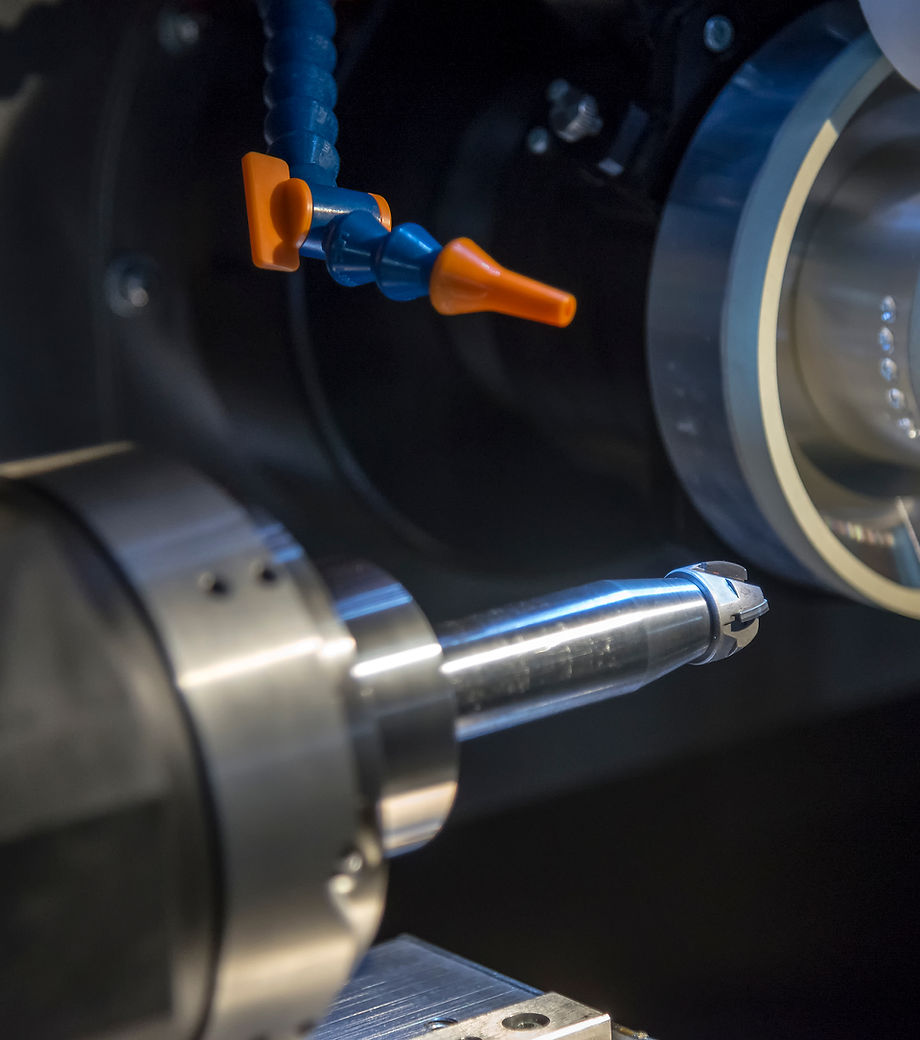
Why Top Global Medical OEMs Partner With Rebellion Solutions
Located in Warsaw, Indiana—widely recognized as the Orthopedic Capital of the World—Rebellion Solutions combines small-firm agility with big-tier infrastructure capabilities. We act as a seamless extension of your R&D and supply chain teams.
- 1. Single-Source Co-Location Model Engineering, 5-axis CNC grinding/milling, DFM reviews, and regulatory staff work under one roof. This co-location cuts initial prototype iterations from months to days.
- 2. Clinically Proven Biomechanical Engineering Our design leads hold decades of experience designing over 500+ successful commercial products. We build real-world surgeon feedback into CAD models before prototype production.
- 3. Turnkey Regulatory Clearance (510k Support) We don't just hand over drawings; we author FDA 510(k) submissions, create Device Master Files (DMF), draft ISO 14971 risk analysis, and manage ASTM fatigue testing protocols.
- 4. Independent 1099 Sales Network Support Beyond design and production, our proprietary independent distributor and 1099 rep networks help commercialize your product across US and international surgical centers faster.
Future Procurement Trends in Orthopedic Implant Design (2025-2030)
Global procurement directors are shifting away from transactional contract manufacturing toward strategic engineering alliances. As healthcare systems demand lower unit costs and improved clinical outcomes, successful sourcing relies on anticipating four macro trends:
| Procurement Trend Vector | Traditional Approach (Legacy) | Modern AI & DFM-Integrated Approach (Rebellion) | Procurement Impact & ROI |
|---|---|---|---|
| Supplier Consolidation | Multiple vendors for CAD, FEA, prototype, CNC machining, packaging, and regulatory. | Single-source partner managing concept-to-market development and production. | 35-45% Reduction in total lead time; streamlined vendor auditing and ISO compliance. |
| Additive vs. Subtractive Fusion | Machining porous coatings separately and press-fitting or plasma spraying. | Monolithic 3D printing of trabecular osseointegration structures in Ti6Al4V ELI. | Eliminates delamination risk; reduces secondary machining steps by up to 50%. |
| Nearshoring & Supply Resilience | Offshoring production to Asia/Eastern Europe with 16-24 week transit timelines. | US-based domestic hub (Warsaw, Indiana) with rapid-reaction CNC cells. | Zero supply chain risk due to geopolitical instability, tariffs, or freight backlogs. |
| Value-Based Design (VBD) | Designing max-feature implants regardless of manufacturing setup costs. | DFM optimization during concept phase to minimize CNC cycle times. | 20-30% Savings on COGS without sacrificing mechanical integrity or surgeon ergonomics. |
1. Nearshoring to US Orthopedic Hubs
Supply chain vulnerabilities highlighted over recent years have forced hospital networks and OEMs to prioritize domestic manufacturing resilience. Procurement executives increasingly require implant design partners to be co-located near manufacturing hubs. Operating from Warsaw, Indiana allows Rebellion Solutions to leverage localized metallurgical testing labs, specialized heat-treatment facilities, and sterile packaging infrastructure within hours rather than weeks.
2. Shift Toward Additive & Hybrid Manufacturing
The boundary between design and manufacturing has blurred due to Direct Metal Laser Sintering (DMLS) and Electron Beam Melting (EBM). Modern orthopedic implant design services must incorporate advanced lattice design algorithms (such as gyroid or stochastic porosity) that mimic human cancellous bone. Our design engineers optimize wall thickness, powder removal channels, and support structures simultaneously for additive and subtractive finishing operations.
Technological & Material Advancement Trends in Implant Design
Selecting the right biocompatible material and surface treatment is critical to implant longevity, osseointegration, and reduction of revision rates. Our engineering team routinely designs implants utilizing the industry's most advanced biomaterials:
Titanium Alloys (Ti-6Al-4V ELI / ASTM F136) & Porous Metals
Titanium remains the gold standard for load-bearing orthopedic applications. Modern design services leverage additive manufacturing to create gradient porosity—matching the elastic modulus of cortical bone (~18 GPa) down to cancellous bone (~3 GPa)—mitigating stress shielding and encouraging biological fixation.
PEEK & Carbon-Reinforced Polymers (ASTM F2026)
Polyetheretherketone (PEEK-OPTIMA) is widely preferred in spinal fusion and trauma applications due to its radiolucency on X-ray/CT and favorable modulus. We specialize in designing intricate PEEK thread profiles, tantalum marker placement, and hydroxyapatite (HA) infused PEEK structures.
Cobalt-Chromium-Molybdenum (CoCrMo / ASTM F75)
Crucial for high wear resistance in joint articulation surfaces (femoral heads, knee condyles). Our design process incorporates ultra-precise tolerances and polishing allowances for high-velocity surface grinding.
Global Procurement FAQ: Orthopedic Implant Design
Answers to common technical, commercial, and regulatory queries gathered from AI intent mining across global medical procurement teams.
Transform Your Next Orthopedic Device Concept into Commercial Reality
Don't let expensive design loops, poor DFM, and fragmented contract manufacturing slow down your commercial growth. Connect with our senior engineering team in Warsaw, Indiana to unlock speed, precision, and market compliance.