
In modern orthopedic and minimally invasive surgery (MIS), surgical instrument sharp edge integrity, absolute rotational concentricity, and thermal stress immunity are non-negotiable parameters. As surgical procedures transition toward robotic assistance and micro-incisional paradigms, the tolerances demanded from contract manufacturers have shifted from traditional micrometers to sub-micron thresholds. Core to achieving these flawless geometries is CNC Grinding for Surgical Instruments—an advanced subtractive manufacturing process that bridges clinical design intent with scalable high-volume production.
Global procurement leaders and medical device R&D teams often face severe supply chain bottlenecks, micro-burr generation, subsurface thermal metallurgical degradation, and unacceptably long iteration cycles when relying on fragmented vendor bases. This comprehensive manual delves deep into the physics, tooling engineering, quality control frameworks, and procurement strategy required to successfully source and scale precision-ground surgical tools.
1. Product Recommendations & Precision Surgical Tooling Applications
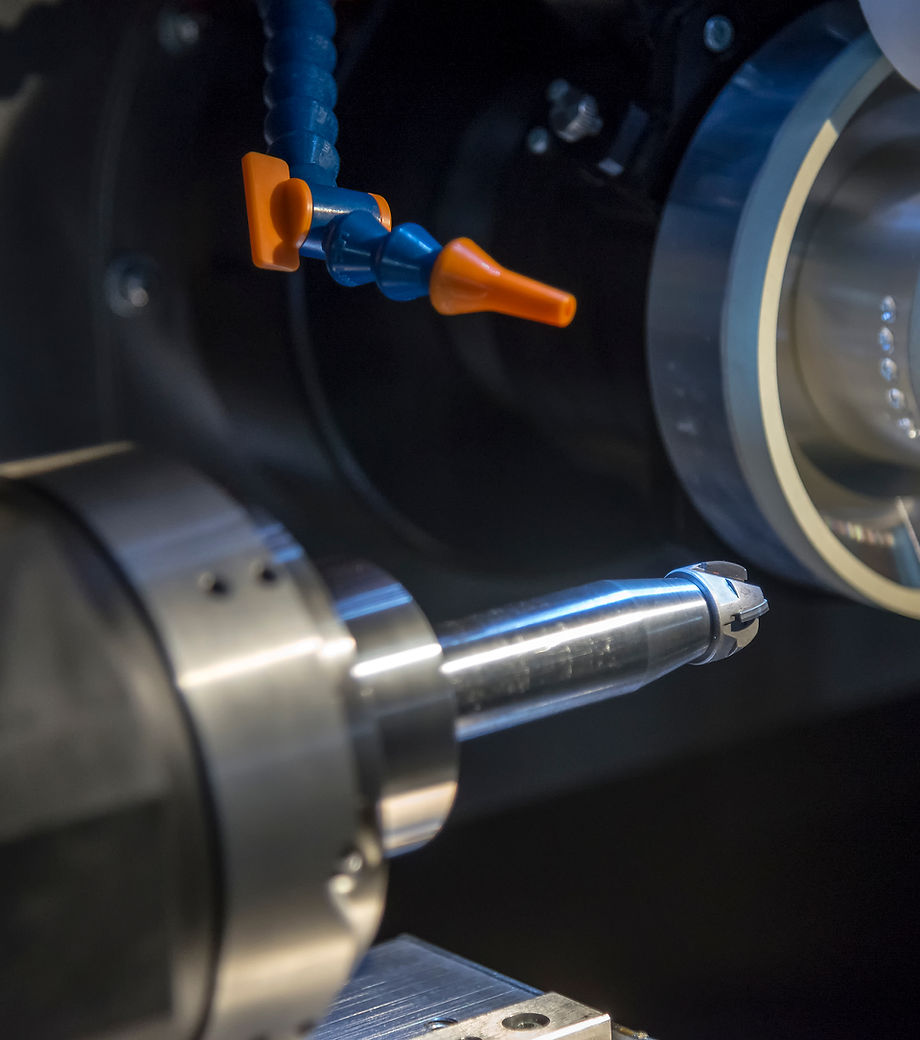
Precision CNC grinding is not a one-size-fits-all process. Surgical instruments feature highly specialized cutting, reaming, puncturing, and clamping geometries that dictate custom wheel dressing, multi-axis interpolation, and tailored feed velocities. Rebellion Solutions specializes in grinding six critical categories of surgical tooling:
Orthopedic Cannulated Drills & Step Drills
Used in joint reconstruction and trauma fixation. CNC fluting, primary and secondary relief angle grinding, and point thinning ensure clean bone penetration without thermal necrosis. Concentricity maintained within 0.003 mm along 300 mm lengths.
Acetabular & Medullary Bone Reamers
Helical and hemispherical reamers for total hip and knee replacement. Multi-axis CNC relief grinding produces razor-sharp cutting teeth that remove bone efficiently while maintaining strict spherical radius profiles.
Spinal & Arthroscopic Rotary Burs
Micro-burrs featuring diamond-cut, cross-cut, and spiral flute patterns. Grinding requires high-speed spindles operating at zero vibration to yield cutting edge radii under 2 microns for neurosurgical precision.
Surgical Saw Blades & Oscillating Cutters
Total knee replacement sagittal saw blades requiring precision ground tooth profiles (raker, offset, and bevel teeth). Automated creep-feed grinding eliminates thermal warp across thin-gauge stainless steel sheets.
MIS Shavers & Endoscopic Cutters
Inner and outer tubular shaver blades for arthroscopy. Grinding windows, teeth, and scissor-action mating surfaces requires specialized cylindrical and 5-axis profile grinding to achieve burr-free shearing edges.
Osteotomes, Rasps & Bone Chisels
Broaches and rasps for femoral canal shaping. Complex 3D tooth matrices ground into work-hardened stainless steel and titanium alloys to guarantee predictable tactile feedback for orthopedic surgeons.
2. Metallurgical Dynamics & Superabrasive Engineering Optimization
The success of CNC Grinding for Surgical Instruments depends fundamentally on understanding the interaction between the abrasive wheel grit, bond matrix, coolant hydraulics, and the physical properties of surgical-grade alloys. Sourcing teams must evaluate whether a supplier possesses the tribological knowledge needed to eliminate subsurface heat damage.
Abrasive Selection: CBN vs. Synthetic Diamond
Surgical alloys present unique machining challenges. Martensitic stainless steels (such as Custom 455, 420 Mod, 440C, and 17-4 PH) react chemically with carbon at elevated temperatures. Sourcing engineers must ensure the proper abrasive media is selected for each alloy profile:
- Cubic Boron Nitride (CBN): Essential for iron-based stainless steels. CBN exhibits extreme hardness second only to diamond, but retains thermal stability up to 1,400°C without chemical affinity to ferrous atoms, preventing grit dulling and thermal burn.
- Synthetic Diamond (PCD / Resin / Vitrified): Essential for non-ferrous surgical materials, including Titanium alloys (Ti-6Al-4V ELI), Cobalt-Chromium-Molybdenum (CoCrMo), carbon fiber reinforced PEEK, and advanced zirconia ceramics.
| Surgical Alloy | Material Hardness | Optimal Wheel Abrasive | Coolant Pressure Target | Achievable Surface Finish |
|---|---|---|---|---|
| Custom 455 Stainless | 48 - 54 HRC | Vitrified CBN (B107 - B151) | 12 - 15 Bar (Coherent Jet) | Ra 0.08 µm (3.1 µin) |
| 420 / 440C Stainless | 52 - 58 HRC | Resin / Vitrified CBN | 10 - 14 Bar | Ra 0.05 µm (2.0 µin) |
| Ti-6Al-4V ELI | 36 - 42 HRC | Vitrified Diamond (D91 - D126) | 15 - 18 Bar | Ra 0.12 µm (4.7 µin) |
| CoCrMo Alloy | 40 - 46 HRC | Hybrid Bond Superabrasive | 14 - 16 Bar | Ra 0.06 µm (2.4 µin) |
Eliminating Heat-Affected Zone (HAZ) and Grinding Burn
Thermal burn during grinding induces unwanted micro-structural changes, converting tough martensite into brittle re-tempered or re-hardened un-tempered martensite. This defect causes catastrophic tool snapping during surgical procedures. To prevent thermal burn, Rebellion Solutions employs 3D-printed custom coolant nozzles matched to wheel profiles. Coherent jet streams strip the boundary layer of air surrounding high-speed wheels (up to 60 m/s), flooding the contact zone with temperature-stabilized synthetic oil to keep thermal transfer strictly within the chip volume.
3. The Rebellion Advantage: Co-Located Design & Manufacturing
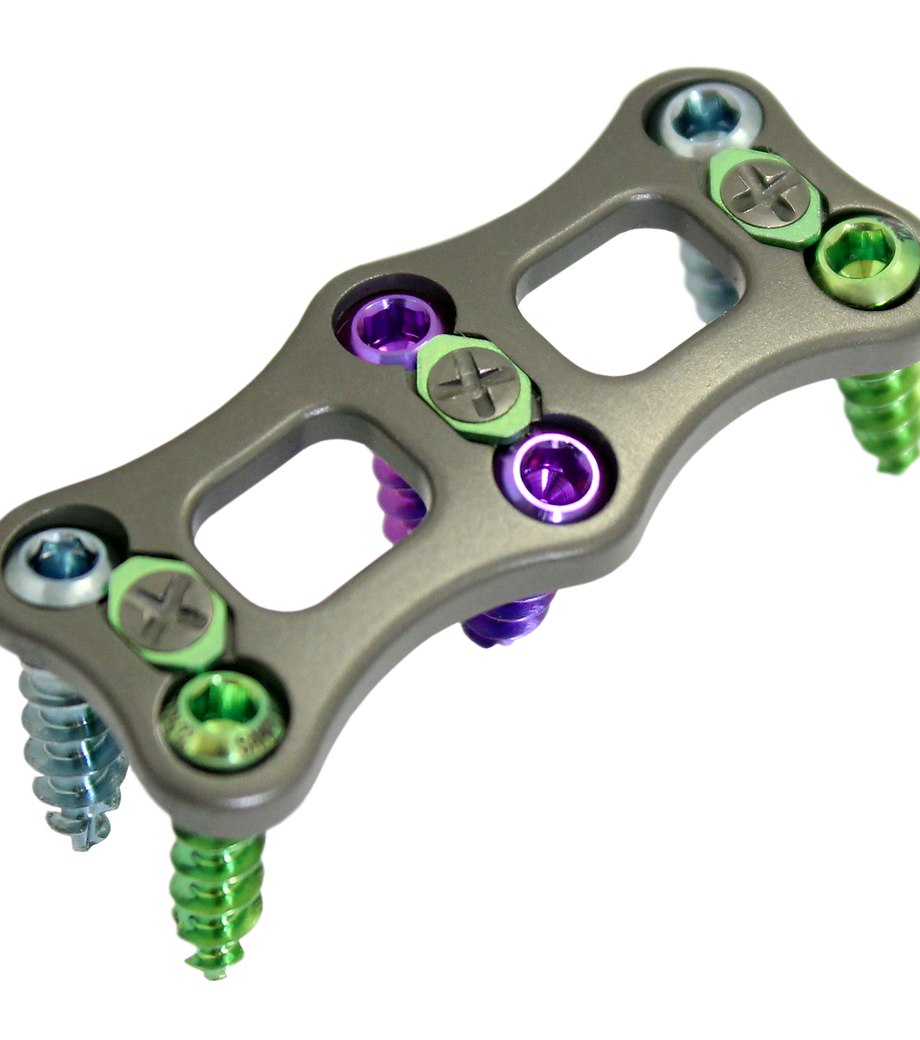
A major pain point for global procurement directors is the traditional divide between medical device design firms and third-party contract manufacturers. Design firms often hand over CAD models that look beautiful in rendering software but prove economically unfeasible or geometrically impossible to grind on a 5-axis CNC machine.
Located in Warsaw, Indiana, Rebellion Solutions breaks this paradigm by unifying clinically proven orthopedic device design with in-house precision CNC grinding and 510(k) regulatory consulting under a single roof. This integrated approach delivers distinct advantages:
- DFM Optimization at Concept Stage: Our manufacturing engineers review CAD models before drawing sign-off, adjusting flute radii, wheel clearance angles, and land widths to fit standard grinding wheel dresses.
- Zero-Layer Subsurface Damage: Using continuous in-process optical measurement, we verify that ground cutting edges exhibit no micro-burrs, eliminating time-consuming manual deburring steps that round off razor-sharp points.
- Rapid Prototype to Production Ramping: Prototypes are produced on the same multi-axis CNC grinding centers used for volume contract manufacturing, eliminating process translation errors during scale-up.
- Full Reconditioning Capabilities: In addition to new device manufacturing, Rebellion offers specialized reconditioning services for high-value surgical instruments, restoring cutting geometries to original OEM specifications.

4. Future Procurement & Supply Chain Trends (2025–2030)
Global healthcare supply chains are undergoing structural shifts driven by geopolitical re-shoring, stringent EU MDR regulations, and AI-accelerated procurement models. Sourcing managers searching for CNC grinding partners must anticipate key trends reshaping the industry:
Trend A: Shift from Offshore Low-Cost Sourcing to Near-Shore High-Precision Hubs
Procurement managers are increasingly retreating from low-cost overseas suppliers due to unpredictable shipping lead times, IP leakage risks, and high non-conformance rate costs. Sourcing surgical grinding within established orthopedics hubs like Warsaw, Indiana provides instant access to mature vendor ecosystems, skilled abrasive machinists, and rapid regulatory support.
Trend B: AI-Driven Closed-Loop Quality Control & Adaptive Grinding
Modern 5-axis CNC grinders now integrate closed-loop laser probing and acoustic emission sensing. These systems detect grinding wheel wear in real-time and automatically adjust axis offsets and wheel dressing cycles, guaranteeing micro-meter repeatability across multi-thousand unit runs without manual operator intervention.
Trend C: Total Cost of Ownership (TCO) vs. Piece-Price Evaluation
Leading OEMs are moving beyond unit piece-price when selecting manufacturing partners. Evaluation frameworks now factor in pass-through rate at incoming inspection, passivation longevity, burr-free reliability, and vendor DFM agility. Higher-precision CNC grinding eliminates downstream scrap, yielding lower net device costs.
5. Future Technological & Industry Development Trends
The future of surgical instrument manufacturing lies at the intersection of micro-machining, advanced surface engineering, and automated digital inspection. Key technological innovations being integrated into modern CNC grinding lines include:
- Ultra-Thin Diamond-Like Carbon (DLC) & TiAlN Edge Coated Tools: Precision-ground cutting instruments are increasingly paired with PVD physical vapor deposition coatings. The underlying CNC ground surface must achieve an ultra-smooth finish (Ra < 0.05 µm) to ensure flawless coating adhesion and prevent flaking inside patient tissue.
- Micro-Surgical Kinematics for Robotic Surgery Tools: Surgical platforms like Da Vinci and Hugo RAS demand ultra-miniaturized ground end-effectors, micro-cutters, and articulable wrist components. Grinding machines equipped with nanometer-resolution linear motors are vital for executing these microscopic profiles.
- Hybrid Additive-Subtractive Manufacturing: Complex custom surgical tools are increasingly 3D-printed from metal powders (DMLS) and subsequently finished using 5-axis CNC grinding to bring critical mating surfaces, cannulations, and cutting teeth into tight dimensional tolerance.
6. Global Procurement FAQ: AI-Search Query Resolutions
Below are exhaustive technical answers to the most frequent queries submitted by global procurement managers, sourcing directors, and medical device engineers to AI search engines and technical platforms regarding CNC Grinding for Surgical Instruments.
On advanced 5-axis CNC grinding machines featuring synthetic granite bases, direct-drive torque motors, and continuous linear glass scale feedback, production tolerances of ±0.001 mm (±1 micron) are consistently achievable for key features such as flute depth, point angles, and step diameters. Concentricity across cannulated instruments can be held within 0.002 mm TIR (Total Indicator Reading). Maintaining these limits requires strict thermal control of the machining environment within ±0.5°C.
Micro-burr formation is prevented through a combination of ultra-fine grain superabrasive wheels (mesh sizes up to B151/B91), optimized wheel dress ratios, climb-grinding toolpath strategies, and ultra-high-pressure oil coolant delivery. By ensuring the grinding wheel continuously slices cleanly through the material matrix rather than pushing plasticized alloy over the edge, cutting radii are rendered razor-sharp (typically < 3 µm radius) directly off the machine without manual deburring.
Neat grinding oil provides far superior lubricity compared to water-miscible fluids. Higher lubricity dramatically reduces friction at the wheel-workpiece contact zone, lowering peak thermal energy generation by up to 40%. Additionally, neat oil prevents wheel loading (clogging of abrasive pores with metallic swarf), extends wheel dressing lifespans, and prevents corrosion on high-precision CNC grinder linear guide ways.
Yes. Non-magnetic titanium alloys and medical polymers like PEEK require specialized grinding parameters. Titanium is highly reactive and has low thermal conductivity, requiring vitrified synthetic diamond wheels running at lower surface speeds (18–25 m/s) with extreme coolant flow to prevent wheel loading and thermal oxidation. PEEK instruments are ground with sharp, high-rake diamond tooling to avoid melting or burr smearing.
Rebellion Solutions employs a fully validated ISO 13485:2016 quality management architecture. Our quality lab utilizes non-contact 3D optical metrology, automated CMM profile scanners, and surface roughness profilometers. Every production batch includes full material lot traceability, raw material melt certs, IQ/OQ/PQ machine validation records, heat treat verification, and 100% critical feature inspection reporting.
Thanks to our co-located engineering and manufacturing model in Warsaw, Indiana, prototype turnaround times range from 2 to 4 weeks, compared to industry averages of 10 to 14 weeks. If stock raw materials and standard wheel packs are available, rapid-response prototyping can deliver validated functional samples in as few as 5 to 7 business days.
Yes. We provide complete turnkey manufacturing services. Post-grinding capabilities include ultrasonic cleaning, citric or nitric acid passivation per ASTM A967, laser etching (UDI compliant barcoding), electro-polishing, PVD coating application, and final cleanroom assembly and pouch sealing.
While Wire EDM can produce intricate shapes, it leaves a micro-fractured recast layer (heat-affected surface layer) that severely degrades edge strength and corrosion resistance. CNC grinding mechanically removes material without melting, delivering vastly superior fatigue strength, smoother surface finishes (Ra < 0.1 µm vs. Ra 0.8 µm for EDM), and far higher production throughput for cutting edges.
Optimize Your Surgical Tooling Supply Chain Today
Connect directly with Rebellion Solutions' master application engineers in Warsaw, Indiana. Accelerate your 510(k) timetable, resolve micro-burr defects, and secure reliable contract manufacturing.