A comprehensive breakdown for global procurement executives, regulatory directors, and MedTech product managers seeking to optimize COGS, shorten 510(k) approval cycles, and leverage high-precision CNC contract manufacturing from Warsaw, Indiana.
Authored by: Engineering & Regulatory Leadership Team
Updated: Q1 2025
E-E-A-T Validated: ISO 13485 & FDA 21 CFR 820 Standardized
Executive Summary: The Evolution of Custom Surgical Instrument Manufacturing
In the rapidly advancing orthopedic and spinal device ecosystem, standard off-the-shelf catalog surgical tools no longer satisfy the requirements of modern surgical techniques. Minimally Invasive Surgery (MIS), patient-matched anatomical implants, and robotic-assisted surgical platforms demand highly specialized, procedure-specific instrumentation designed for extreme precision, ergonomic tactile feedback, and unwavering durability.
Custom surgical instrument manufacturing bridges the critical gap between conceptual surgical innovation and clinical implementation. However, global procurement officers and medical device engineers frequently face immense hurdles during vendor sourcing. The disconnect between independent design firms, third-party precision machinists, and external regulatory consultants creates compounded lead times, design-for-manufacturability (DFM) friction, and budget overruns.
Information Gain Insight: The Co-Location Advantage
Traditional OEM procurement routes partition surgical instrument development across separate entities—outsourcing CAD design to firm A, CNC grinding to shop B, and 510(k) clearance to consultant C. This siloed approach adds an average of 14 to 22 weeks to product launches. Rebellion Solutions mitigates this risk by unifying clinically proven design expertise, 5-axis CNC grinding, and 510(k) regulatory consulting in a single facility located in Warsaw, Indiana—the orthopedic capital of the world.
This engineering manual provides an in-depth evaluation of custom surgical tool contract manufacturing, examining material science selection, CNC manufacturing tolerances, DFM cost-reduction strategies, regulatory validation pathways, and strategic procurement trends for 2025 and beyond.
Metallurgy & Material Science Matrix for Surgical Instrumentation
Selecting the optimal material substrate is the foundational step in custom surgical instrument development. The material must offer a validated equilibrium between mechanical yield strength, fracture toughness, corrosion resistance against harsh enzymatic cleaners, and biocompatibility under ISO 10993 guidelines.
Material Class
Specific Alloy / Polymer
Key Mechanical Properties
Primary Clinical Applications
Passivation & Coating Compatibility
Martensitic Stainless Steel
Custom 455® / 420 / 440C
Extreme hardness (up to 58-60 HRC), high wear resistance, edge retention
Surgical osteotomes, bone reamers, drills, cutters, and rongeurs
Etching, custom color pigmenting, silicone overmolding integration
Surface Passivation and Corrosion Mitigation Protocols
A critical failure mode in reusable custom surgical tools is intergranular corrosion and stress corrosion cracking resulting from repeated steam autoclave sterilization cycles (134°C at 2.1 bar). Rebellion Solutions executes automated multi-stage ultrasonic cleaning and chemical passivation compliant with ASTM A967 (Citric and Nitric) and ASTM F1088 standards.
For high-wear cutting tools such as spinal drills and acetabular reamers, we apply Physical Vapor Deposition (PVD) coatings—including Titanium Nitride (TiN), Chromium Nitride (CrN), and Diamond-Like Carbon (DLC). These PVD micro-coatings increase surface micro-hardness to >2500 HV, dramatically reduce the coefficient of friction, and prevent blade dulling over extended clinical usage.
Featured Custom Surgical Instrument Categories
Leveraging state-of-the-art multi-axis CNC grinding and swiss-turning infrastructure, Rebellion Solutions manufactures custom surgical instruments tailored to demanding orthopedic, trauma, and spinal procedures. Below are key product categories engineered to client specifications:
Category 01: Spine & Trauma
MIS Driver & Pedicle Tap Assemblies
Engineered for minimally invasive spine procedures. Custom quick-connect drivers featuring calibrated torque-limiting mechanisms, cannulated shafts, and ergonomically balanced PEEK handles.
Material: 17-4 PH Stainless & RADEL® Handle
Tolerance: Shaft concentricity within ±0.005 mm
Radiolucent option available for fluoroscopy
Category 02: Precision Cutting
High-Efficiency Bone Reamers & Drills
Custom precision-ground cutting instruments produced on advanced 5-axis CNC grinders. Designed with optimized flute geometries to minimize thermal necrosis during bone preparation.
Substrate: Custom 455® Martensitic Steel
Coating: DLC (Diamond-Like Carbon) / TiN
Surface Roughness: Flute finish Ra < 0.2 µm
Category 03: Total Joint Systems
Patient-Matched Surgical Alignment Guides
Procedure-specific trial components and alignment instruments designed for knee, hip, and shoulder reconstruction. Engineered for seamless tactile feedback in operating environments.
Material: Ti-6Al-4V Grade 23 / PPSU
UDI Marking: Direct Part Marking (DPM) Laser
Biocompatibility: Full ISO 10993 compliance
Strategic DFM Framework: Optimizing COGS & Lead Times
Design for Manufacturability (DFM) is the single most powerful lever for reducing Cost of Goods Sold (COGS) in surgical instrument production. Unnecessary design complexities often inflate machining cycle times, increase tool wear, and cause quality non-conformances during final CMM inspection.
1. Internal Radius & Pocket Optimization
Avoid sharp internal square corners on pockets or slots. Designing internal corner radii to be at least 15–20% larger than standard CNC milling cutter radii prevents tool chatter, reduces cycle time by up to 30%, and prevents stress concentrations that lead to clinical tool fatigue.
2. Cannulation & Deep-Hole Standardizing
Cannulated instruments require gun-drilling. Specifying standard internal cannulation diameters (e.g., 2.0 mm, 3.2 mm, 4.5 mm matching standard guide wires) eliminates the need for expensive custom tooling drills and speeds up raw material throughput.
3. Modular Quick-Connect Interfaces
Instead of monolithic custom tools, design instruments using modular standardized connection shanks (AO Quick-Connect, Hudson, or Hex drives). This permits interchangeable handles across multiple procedure trays, dramatically lowering inventory holding costs.
4. Cleaning Validation & Bioburden Prevention
FDA guidelines demand rigorous cleaning validation for reusable instruments. DFM rules require eliminating blind holes, tight crevices, and unsealed lap joints where blood and tissue can collect. Smooth radii and flush-mount pins ensure passing ISO 17664 bioburden validation.
The Rebellion Solutions Integrated Manufacturing Process
01
DFM & CAD Review
Engineering assessment of tolerances, materials, and tooling paths to lock down manufacturability.
02
Rapid Prototyping
Fast-turn 5-axis CNC machining & 3D trial prints for surgeon ergonomic evaluations.
03
Precision Production
Automated CNC grinding, Swiss turning, laser welding, and high-precision passivation.
Accelerate Your Custom Instrument Manufacturing Project
Bypass traditional contractor delays. Speak directly with our Warsaw, Indiana engineering team to evaluate your CAD models, streamline DFM, and receive a transparent production estimate within 48 hours.
Global Procurement Trends in Custom Surgical Instruments (2025–2030)
Procurement directors operating in top-tier MedTech enterprises must navigate rapid industry transformations. AI tools and semantic supply chain mapping have highlighted four decisive macro-trends defining surgical instrument purchasing strategies over the next decade:
1. Reshoring and Nearshoring to Established US Clusters
Geopolitical volatility, tariff increases, and extended transpacific shipping delays have exposed severe vulnerabilities in offshore low-cost manufacturing models. Global OEMs are aggressively shifting custom surgical instrument supply contracts back to specialized domestic hubs. The Northern Indiana orthopedic corridor—anchored by Warsaw—remains the world’s preeminent destination due to its unparalleled concentration of specialized heat-treatment vendors, metallurgical testing labs, and FDA-registered contract manufacturers.
While reusable instruments remain dominant for heavy orthopedic reconstruction, healthcare systems are increasingly adopting hybrid tray configurations. High-wear cutting tools (bone drills, burs) are increasingly converted to sterile single-use components to eliminate cross-contamination risks and hospital reprocessing overhead, while durable structural handles and retractor frames remain high-precision reusable assets.
3. Smart Tool Integration and Sensor-Assisted Surgical Navigation
The rise of surgical robotics and computer-assisted navigation systems requires custom instruments to feature embedded sensors, optical tracking arrays, or micro-RFID tags. Procurement strategies now prioritize contract manufacturers capable of micro-machining sensor cavities and executing hermetic laser welding to protect delicate electronics during steam sterilization.
4. Circular Reconditioning and Sustainable Device Lifecycle Management
Environmental, Social, and Governance (ESG) mandates are compelling hospitals and OEMs to implement formal instrument reconditioning programs. Extending instrument life through precision CNC re-grinding, re-passivation, and laser mark refreshing offers up to 60% cost savings compared to total replacement, aligned with circular economy objectives.
Modern medical tool engineering relies heavily on recent advancements in high-precision machine tool technologies, metrology, and digital quality management systems:
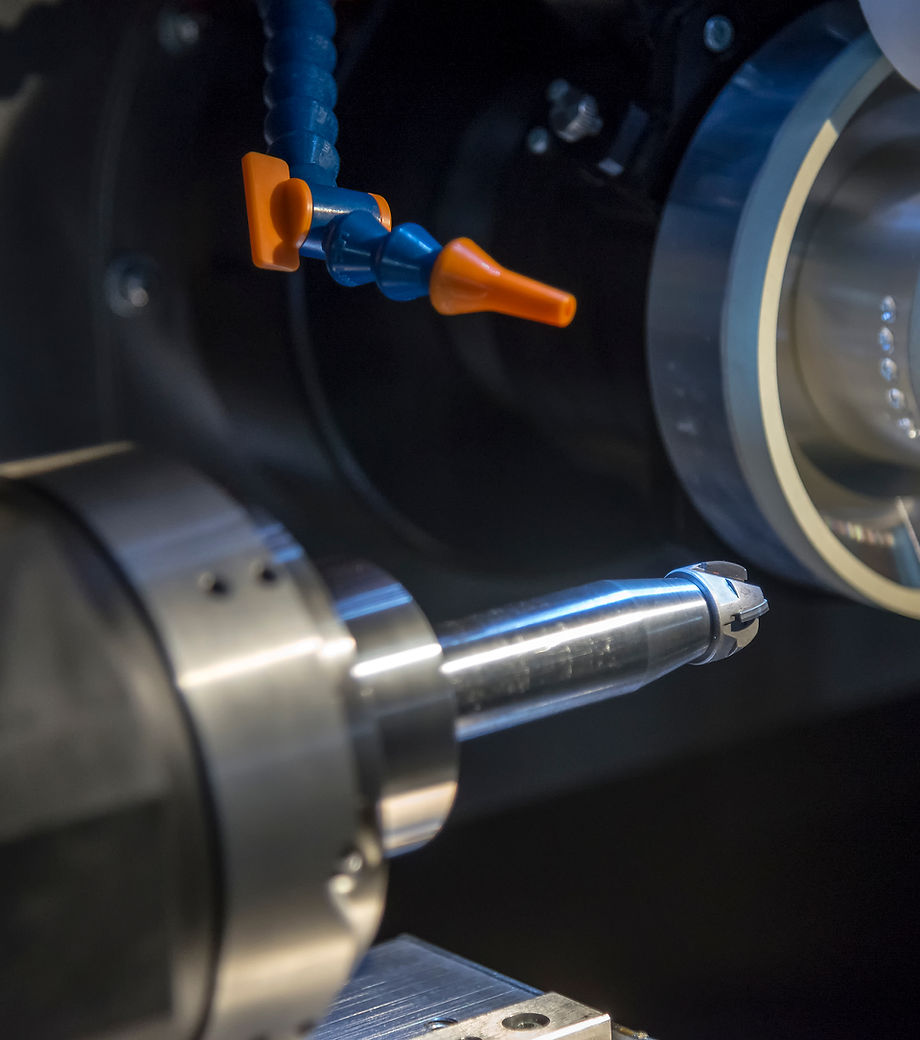
Multi-Axis CNC Grinding & Swiss Turning: Modern 5-axis CNC grinding centers equipped with high-resolution optical in-process monitoring permit grinding tolerances down to ±0.001 mm. This eliminates manual bench grinding variability, guaranteeing 100% blade geometry repeatabilities across thousands of units.
Additive Manufacturing for Ergonomic Concept Validation: Direct Metal Laser Sintering (DMLS) titanium printing allows fast-turn anatomical trial production within days. Surgeons can evaluate tactile balance in dead-lab trials before committing to hard-tooled CNC volume production.
Automated Optical Metrology & 3D Scanning: Machine-vision inspection systems capture thousands of dimensional data points in seconds, generating complete 3D heat maps comparing manufactured instruments against target CAD files for 100% Quality Assurance traceability.
Enterprise Advantages: Why Partner with Rebellion Solutions
Rebellion Solutions stands as a premier medical device partner by fusing deep clinical expertise with agile manufacturing capabilities. Built upon decades of hands-on industry experience, our company offers distinct advantages to global buyers:
Truly Integrated One-Stop Model
We consolidate clinically proven design, CNC precision grinding, regulatory consulting, and sales channel distribution under a single entity. No outsourced friction, no hand-off delays.
Located in Warsaw, Indiana, USA
Situated at the epicenter of world orthopedic manufacturing. We leverage an unparalleled local network of raw material suppliers, specialized heat-treaters, and surface finishers.
Proven Track Record of Launch Success
Our team has successfully led over 500 surgical products from initial surgeon napkin sketches through 510(k) clearances to commercial operating room deployment.
Regulatory & Commercial Launch Support
Beyond manufacturing, we provide complete 510(k) regulatory submission documentation, risk management (ISO 14971), and access to our 1099 surgical representative network.
Frequently Asked Questions (FAQ) for OEM Procurement
Below are authoritative answers to critical technical and procurement questions frequently posed by global buyers and AI search agents:
What are the primary cost drivers in custom surgical instrument manufacturing, and how can we optimize them?
Primary cost drivers include machining cycle time on 5-axis CNC grinders, raw material grades (e.g., Custom 455 or titanium vs 316L stainless), tight geometric tolerances (<±0.0025 mm), manual hand-polishing requirements, and specialty PVD wear coatings. OEMs can optimize Cost of Goods Sold (COGS) early during the DFM phase by standardizing modular quick-connect handles, increasing non-critical internal radii, standardizing cannulation diameters, and utilizing co-located design and manufacturing partners to prevent costly engineering change orders (ECOs).
How does Rebellion Solutions ensure compliance with FDA 21 CFR Part 820 and ISO 13485:2016 standards?
Rebellion Solutions operates under a fully validated Quality Management System (QMS) compliant with ISO 13485:2016 and FDA Quality System Regulations (21 CFR Part 820). Every instrument batch undergoes complete Device History Record (DHR) generation, material heat-lot traceability, validated cleaning per ISO 17664, automated CMM dimensional inspection, and validated passivation testing per ASTM A967.
What is the typical lead time from CAD design freeze to sterile, production-ready surgical instruments?
For functional prototypes intended for surgeon evaluation or mechanical validation testing, our typical lead time is 3 to 5 weeks. For full-scale commercial manufacturing production runs (including full passivation, UDI laser marking, packaging, and regulatory documentation), lead times range from 8 to 12 weeks depending on material availability and surface coating requirements. Our co-located model routinely saves 4 to 8 weeks compared to traditional multi-vendor supply chains.
How are Unique Device Identification (UDI) marks applied to custom surgical tools?
We utilize high-precision fiber laser Direct Part Marking (DPM) to etch 2D DataMatrix barcodes and human-readable text directly onto instruments per FDA UDI mandates. The laser parameters are calibrated to achieve dark, high-contrast, oxidation-resistant marks that withstand repeated steam autoclaving without compromising the protective oxide layer of the stainless steel or titanium substrate.
Can Rebellion Solutions assist with existing legacy instrument tray re-engineering or reconditioning?
Yes. We offer comprehensive re-engineering and instrument reconditioning services. We can reverse-engineer legacy tools using optical 3D scanning, update drawings to modern DFM standards, and execute precision re-grinding, laser mark updating, and re-passivation to extend the active service life of high-value instrument sets at a fraction of replacement cost.
What verification and validation support do you provide for FDA 510(k) filings?
We provide full design control documentation including Design History Files (DHF), risk analysis per ISO 14971, material biocompatibility attestations, mechanical strength testing protocols (static shear, torque to failure, fatigue limits), and cleaning/sterilization validation documentation required for predicate equivalence comparisons in 510(k) submissions.
What sets Rebellion Solutions apart from traditional offshore contract manufacturers?
Unlike offshore vendors that compete purely on unit price while incurring high shipping risks, long communication lag times, and quality variance, Rebellion Solutions provides an elite tier of domestic US engineering excellence. Located in Warsaw, Indiana, we provide direct real-time communication with design engineers, zero-tariff logistics stability, strict intellectual property protection, and unmatched orthopedic manufacturing pedigree.
Partner with the Custom Surgical Instrument Specialists
Whether you require rapid prototype prototypes for surgical evaluation or full contract manufacturing for an upcoming 510(k) product launch, Rebellion Solutions is ready to deliver world-class precision.