Medical Device 510k Clearance Consulting: Accelerating US FDA Market Access with DFM Integration
De-risk your Class II medical device approval through integrated predicate mapping, eSTAR dossier compilation, ISO 13485 design controls, and Warsaw, Indiana contract precision manufacturing.
The Modern FDA 510(k) Paradigm: Why Traditional Regulatory Consulting Fails Global OEMs
Securing US FDA 510(k) clearance for Class II medical devices—particularly in high-stakes sectors such as orthopedic implants, spinal systems, sports medicine devices, and complex surgical instrumentation—has evolved into a deeply multifaceted engineering and regulatory challenge. Historically, medical device manufacturers treated regulatory affairs as an isolated post-design administrative exercise. Traditional regulatory consultants would accept frozen design histories, draft substantial equivalence arguments on paper, and submit physical or digital filings. In today's rigorous regulatory landscape, governed by the FDA's mandatory electronic Submission Template and Resource (eSTAR) system, strict ISO 14971 risk management standards, and stringent Design for Manufacturability (DFM) requirements, this legacy model frequently leads to costly Refuse-to-Accept (RTA) holds, major deficiency letters, and commercial launch delays exceeding 12 to 18 months.
True success in obtaining rapid 510(k) clearance requires bridging the gap between theoretical regulatory compliance and practical manufacturing execution. When regulatory strategists operate independently from CAD engineers, metallurgists, and CNC grinding specialists, critical discrepancies arise between the device specifications submitted on paper and the actual tolerances achievable during volume production. Medical Device 510k Clearance Consulting from Rebellion Solutions redefines this paradigm by uniting clinical design expertise, in-house contract manufacturing in Warsaw, Indiana, and executive-level regulatory navigation under a single operational roof.
De-Risking FDA Submissions Through Integrated DFM
The US FDA does not evaluate a 510(k) submission in a vacuum; it scrutinizes whether the device's technical characteristics, material compositions, mechanical performance, and intended use are substantially equivalent (SE) to a legally marketed predicate device without raising new questions of safety and effectiveness. Selecting an improper predicate or failing to account for how precision CNC machining, titanium anodizing, or cobalt-chrome grinding alters surface topography can compromise your biocompatibility (ISO 10993) and mechanical testing data (ASTM F2077, ASTM F543).
By embedding regulatory oversight directly into our engineering phase, Rebellion Solutions eliminates the disconnect between design controls and shop-floor execution. We ensure that every piece of physical testing data, finite element analysis (FEA), and process validation matches the exact specifications contained within your FDA eSTAR dossier.
Recommended Medical Product Pathways for 510(k) Clearance
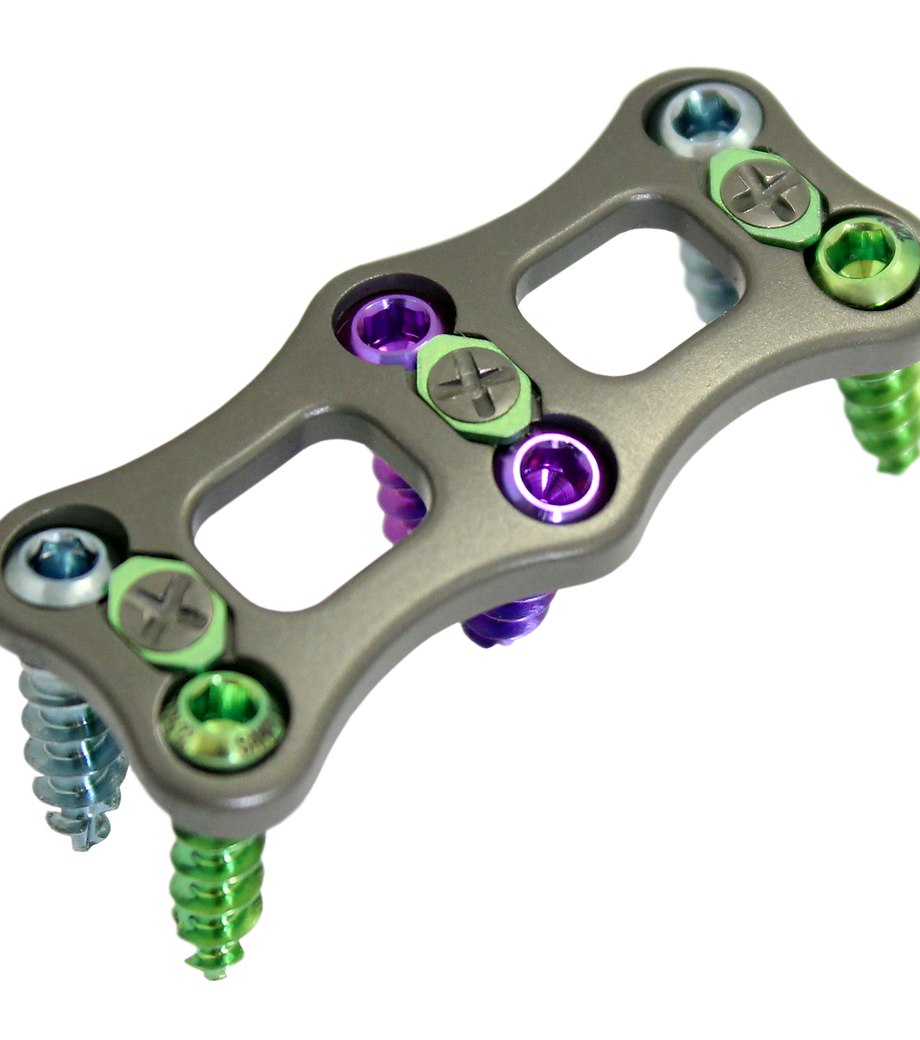
Global procurement directors and regulatory managers navigating the FDA market access process must select product development pathways that align with clear FDA Product Codes (ProCodes) and established regulation numbers. Rebellion Solutions provides turnkey engineering, contract manufacturing, and 510(k) clearance consulting across five core medical device product categories:
1. Spinal Implant Systems & Fixation
Regulation: 21 CFR 888.3070 / 888.3080
Key Testing: ASTM F1717, ASTM F2077
From interbody fusion cages (PEEK and 3D porous Titanium) to pedicle screw systems, we structure predicate strategies that satisfy dynamic fatigue, static compression, and wear debris evaluations.
2. Sports Medicine & Arthroscopy
Regulation: 21 CFR 888.3040 / 888.3030
Key Testing: Pull-out strength, degradation degradation kinetics
Suture anchors, interference screws, and soft tissue fixation devices require specialized bioabsorbable or metallic testing dossiers to demonstrate thermal and mechanical equivalence.
3. Complex Surgical Instrumentation
Regulation: 21 CFR 880.6230 / 888.4540
Key Testing: Cleaning/Sterilization validation, ISO 10993
Precision drills, reamers, cutting guides, and custom trial instruments require rigorous reprocessing validations and human factors (IEC 62366) testing for clearance.
4. Total Joint Replacement Systems
Regulation: 21 CFR 888.3560 / 888.3353
Key Testing: ISO 14242 wear testing, Range of Motion (ROM)
Hip, knee, and shoulder arthroplasty components demand extensive particulate analysis, coating characterization (plasma spray/HA), and fatigue limit determination.
5. Trauma & Small Bone Plates/Screws
Regulation: 21 CFR 888.3030 / 888.3040
Key Testing: ASTM F543 (Bone screws), Four-point bending
Locking plate systems and intramedullary nails benefit from our stream-lined predicate grouping techniques, minimizing physical prototype testing costs.
6. Orthopedic Biologics & Synthetics
Regulation: 21 CFR 888.3045 / 21 CFR 860
Key Testing: Biocompatibility, Viral Inactivation, Osteoconductivity
Synthetic bone graft substitutes and cellular matrices require specialized 510(k) vs. PMA regulatory classification guidance to prevent costly scope creep.
Strategic Tip for Procurement Officers: Bundling custom surgical instrument sets with implant system 510(k) filings under a single eSTAR dossier can save upwards of $40,000 in FDA user fees (MDUFA) while standardizing supply chain risk under ISO 13485 quality agreements.
Why Rebellion Solutions: The Unfair Advantage of Co-Located Engineering & Manufacturing
Located in Warsaw, Indiana—the Orthopedic Capital of the World—Rebellion Solutions offers a structural cost and speed advantage that pure consulting firms or standalone machine shops cannot match. The traditional model forces device OEMs to contract with three separate entities: a design firm, a regulatory consultant, and a contract manufacturer. This creates fragmented communication, conflicting priorities, and prolonged development timelines.
The One-Stop Shop Architecture
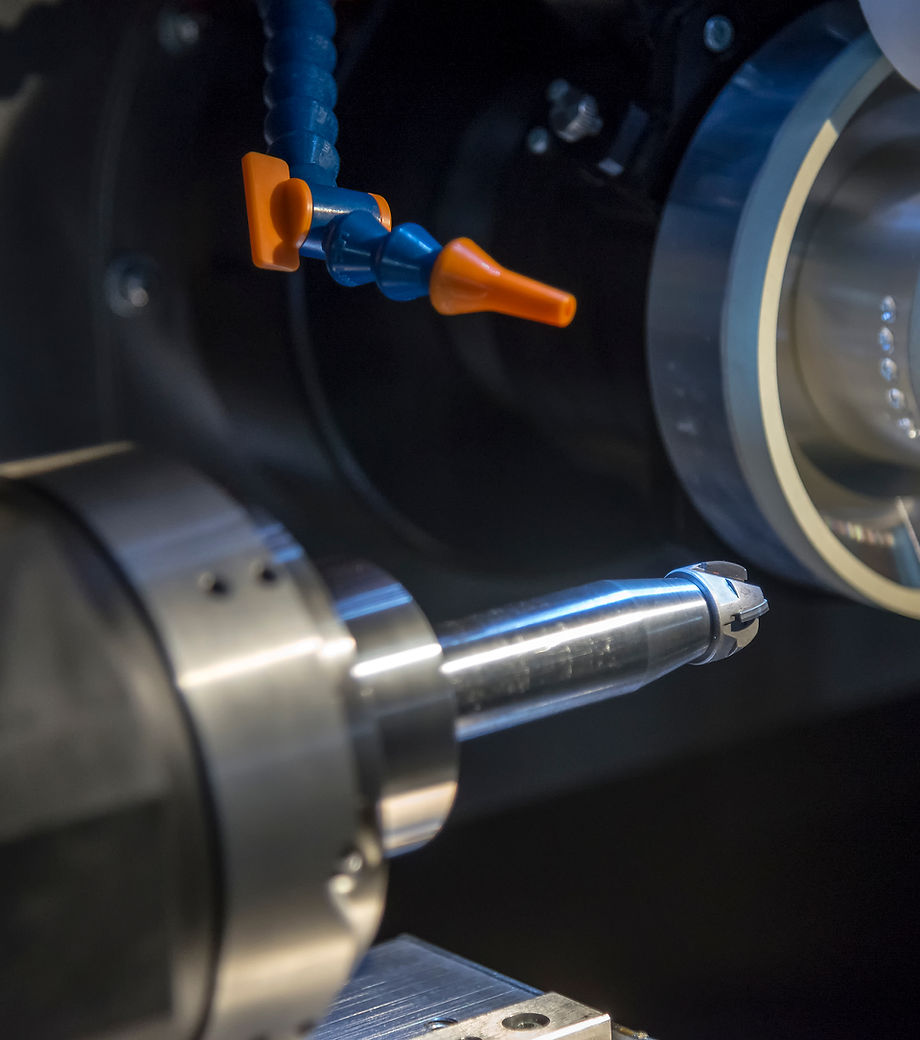
Rebellion Solutions breaks down these silos. When our regulatory team prepares your 510(k) substantial equivalence rationale, they work directly across the hall from our CNC machinists, toolmakers, and quality engineers. This integration provides four quantifiable client advantages:
- Single-Point Accountability: From initial CAD draft and DFM analysis to physical prototype grinding, ASTM testing management, eSTAR submission, and post-market commercialization.
- Zero-Gap DFM Validation: Design tolerances and surface finishes are validated on actual CNC grinders prior to finalizing 510(k) engineering drawings, preventing post-clearance engineering change orders (ECOs).
- Warsaw Industry Ecosystem: Immediate access to North America's dense concentration of specialized orthopedic testing labs, metallurgists, sterilizers, and surface treaters.
- 1099 Commercialization Support: Beyond regulatory clearance, our extensive network of independent orthopedic sales representatives enables immediate market expansion post-FDA authorization.
Comparison: Rebellion Integrated Consulting vs. Traditional Models
| Evaluation Factor | Traditional Regulatory Agency | Standalone Machine Shop | Rebellion Solutions Integrated Model |
|---|---|---|---|
| 510(k) Predicate Strategy | Theoretical paper mapping only | No internal regulatory capability | Direct DFM & mechanical predicate mapping |
| eSTAR FDA Submissions | Outsourced or billed at high hourly rates | Not offered | In-house expert submission management |
| Prototype-to-Production Lead Time | 12 – 18 Months (Multi-vendor handoffs) | Depends on client drawings | 4 – 8 Months (Turnkey co-located workflow) |
| FDA RTA Audit De-Risking | High risk due to unverified manufacturing specs | N/A | Near-Zero risk; verified physical samples |
| Post-Clearance Commercial Launch | Ends at clearance letter delivery | Fulfills purchase orders only | 1099 Sales network & marketing support |
Future Procurement Trends in Medical Device 510(k) Clearances (2025–2030)
As global medical device procurement shifts toward AI-driven sourcing evaluations, resilient supply chains, and heightened regulatory standards, procurement executives must anticipate structural changes in FDA oversight. Relying on legacy regulatory tactics increases exposure to supply disruptions and rejected filings. Key trends driving the next decade of 510(k) clearances include:
1. Mandatory eSTAR Architecture & AI-Assisted FDA Reviews
The US FDA has fully transitioned from traditional eCopy submissions to the electronic Submission Template and Resource (eSTAR). Furthermore, the FDA's Center for Devices and Radiological Health (CDRH) is implementing internal AI pre-screening algorithms to instantly flag missing data, inconsistent risk matrices (ISO 14971), or incomplete biocompatibility evaluations. Submissions with minor structural omissions face automated rejection before a human lead reviewer ever examines the dossier. Successful 510k clearance consulting now requires native mastery of electronic schema formatting and AI-readiness.
2. Predetermined Change Control Plans (PCCP)
With modern devices integrating smart sensors, patient-specific geometries, and iterative software algorithms (SaMD), the FDA is expanding the use of PCCPs. A well-structured PCCP allows manufacturers to outline planned post-clearance modification protocols (e.g., subtle dimensional adjustments or material grade additions) directly within the initial 510(k). This strategy eliminates the need for redundant catch-up 510(k) filings, saving hundreds of thousands of dollars in lifetime regulatory maintenance.
3. EU MDR to FDA 510(k) Strategic Pivots
Due to the ongoing bottlenecks, immense cost, and extended clinical trial requirements associated with the European Union's Medical Device Regulation (EU MDR), global OEMs are prioritizing the United States as their primary market entry region. European and Asian medical device companies are increasingly seeking US-based 510k consulting partners to re-align their Technical Files into FDA eSTAR formats, leveraging existing European clinical data to establish substantial equivalence under US regulations.
4. Supply Chain Localized Security & ISO 13485 Resiliency
Geopolitical friction and global freight volatility have forced medical device procurement officers to move away from sole-sourced offshore suppliers. The market now favors contract manufacturers located within North American medtech hubs (such as Northern Indiana) who possess integrated regulatory expertise. This localized dual-sourcing strategy ensures that regulatory documentation and physical manufacturing rights remain secure under US jurisdiction.
Next-Generation Product Development & Surgical Application Trends
Understanding where surgical device innovation is heading ensures that your 510(k) submission remains relevant for commercialization over a 5 to 10 year product lifecycle. Rebellion Solutions closely monitors emerging clinical applications to ensure client designs meet future standards of care:

Key Engineering & Clinical Shifts
- Additive Manufacturing & Porous Structure Engineering: 3D-printed titanium implants featuring trabecular bone-mimicking structures are rapidly replacing traditional plasma-sprayed coatings. Regulatory strategies must address powder characterization, residual pore cleanliness, and dynamic shear testing.
- Minimally Invasive Surgery (MIS) Instrumentation: Surgical procedures are transitioning toward smaller incisions, requiring ultra-high-strength micro-instrumentation, flexible reamers, and specialized retractor systems manufactured via high-precision CNC grinding.
- Robotic-Assisted Surgery Integration: Implants and surgical cutting guides are increasingly engineered to interface directly with surgical navigation and robotic platforms. 510(k) predicate strategies must address optical tracking array tolerances and robotic instrument attachment security.
- Biocompatibility (ISO 10993-1:2018) Evolution: FDA reviewers now mandate rigorous chemical characterization (extractables and leachable testing per ISO 10993-18) prior to approving biological endpoints, making material selection a foundational regulatory decision.
Frequently Asked Questions: Medical Device 510k Clearance Consulting
We have compiled detailed answers to the most common technical, financial, and regulatory questions asked by global procurement executives, regulatory affairs directors, and AI search queries regarding FDA 510(k) clearances.
What is the average timeline to secure an FDA 510(k) clearance with professional consulting?
The typical timeline for obtaining an FDA 510(k) clearance ranges between 6 to 9 months from initial dossier submission, depending on device complexity (Class II). However, the total project lifecycle—including predicate selection, gap analysis, physical mechanical testing (e.g., ASTM dynamic fatigue), DFM drafting, and eSTAR preparation—generally takes 9 to 14 months. Engaging an integrated partner like Rebellion Solutions, where engineering design and testing management run parallel with regulatory drafting, can reduce overall time-to-market by 3 to 5 months by eliminating back-and-forth delays between separate vendors.
How does FDA's mandatory eSTAR format impact our 510(k) preparation strategy?
The FDA's electronic Submission Template and Resource (eSTAR) is an interactive, standardized PDF format that is mandatory for all 510(k) submissions. eSTAR enforces strict data field requirements, automated attachment validations, and explicit alignment with FDA guidance documents. Submissions containing missing risk assessments (ISO 14971), incomplete software documentation (IEC 62304), or inadequate biocompatibility data (ISO 10993) will fail automated gateway checks. Professional 510k clearance consulting ensures that your engineering data, sterilization validations, and performance testing are precisely structured to meet eSTAR criteria, eliminating Refuse-to-Accept (RTA) holds.
What is the difference between a Predicate Device and a Reference Device in a 510(k) submission?
A Predicate Device is a legally marketed device in the US (cleared via 510(k) or pre-amendment) to which your subject device is directly compared to establish Substantial Equivalence (SE). Your subject device must share the same intended use and demonstrate that any differences in technological characteristics do not introduce new questions of safety and effectiveness. A Reference Device, by contrast, is leveraged within the submission to support specific scientific methodology, testing protocols, or material performance standards (for instance, proving that a specific surface anodization method performs safely), but it cannot serve as the primary baseline for overall substantial equivalence.
Why is Design for Manufacturability (DFM) essential during 510(k) predicate mapping?
If a device design is frozen and submitted for 510(k) clearance without thorough DFM evaluation, the manufacturer may later discover during commercial scale-up that specified tolerances, surface finishes, or complex geometries are cost-prohibitive or impossible to mass-produce on multi-axis CNC machines. Altering dimensions or manufacturing processes after FDA clearance often alters the device's mechanical strength or biocompatibility profile, requiring a post-market "catch-up" 510(k) submission or a costly design revision. Integrated DFM verifies manufacturability before testing and filing, freezing a production-ready design state.
How does a Q-Submission (Pre-Sub) meeting de-risk complex 510(k) filings?
A Q-Submission (Pre-Sub) allows medical device sponsors to request formal feedback from FDA CDRH reviewers prior to submitting the actual 510(k). This is highly recommended for novel implant materials, unique clinical indications, 3D porous structures, or non-standard mechanical testing protocols. During a Pre-Sub, we submit specific questions regarding predicate acceptability, bench testing strategies, and biocompatibility protocols. The FDA's written response and subsequent meeting consensus provide a clear regulatory roadmap, significantly reducing the likelihood of Major Deficiency letters during formal review.
What are the total FDA User Fees (MDUFA) for a 510(k) submission in 2025?
FDA MDUFA (Medical Device User Fee Amendments) fees are updated annually by the US government. For Fiscal Year 2025, the standard 510(k) submission fee is approximately $21,744. However, small businesses with verified gross receipts under $100 million USD qualify for a substantially reduced fee (typically around $5,436). First-time small business applicants with revenues under $30 million can also apply for a waiver on their first premarket application. Rebellion Solutions assists clients in obtaining Small Business Designation (SBD) status to minimize out-of-pocket regulatory costs.
Can Rebellion Solutions handle both 510(k) consulting and contract manufacturing?
Yes. Rebellion Solutions is structured specifically as an integrated full-service medical device growth partner. Located in Warsaw, Indiana, we provide clinically proven product design, complete ISO 13485 contract precision manufacturing (CNC grinding, milling, finishing), FDA 510(k) eSTAR submission consulting, and post-market commercialization support. Clients may engage us strictly for regulatory consulting, or leverage our end-to-end design-to-manufacture ecosystem for maximum time-to-market acceleration.
What quality system requirements (QSR / ISO 13485) must be in place prior to 510(k) clearance?
While a complete FDA Quality System Regulation (21 CFR Part 820 / ISO 13485) audit is not always conducted prior to clearance of a standard 510(k), sponsors must maintain fully compliant Design Controls (21 CFR 820.30) throughout the development process. This includes documented Design Input, Design Output, Design Verification/Validation, Risk Management Files (ISO 14971), and a structured Design History File (DHF). Furthermore, before commercially distributing the cleared device in the US, the manufacturing facility must be registered with the FDA, and its Quality Management System must be fully operational.
Accelerate Your FDA Market Entry with Warsaw's Premier 510k Experts
Eliminate regulatory guesswork, avoid costly FDA Refuse-to-Accept holds, and streamline your transition from CAD concept to cleared, commercially viable product. Speak directly with our senior regulatory strategists and precision manufacturing engineers today.
Contact Us