
Industry Blueprint & Procurement Authority
Navigating the Complexity of Orthopedic OEM Manufacturing
Global orthopedic original equipment manufacturers (OEMs) face an unprecedented convergence of challenges: tightening regulatory scrutiny (FDA 510(k) and EU MDR Annex IX), persistent supply chain fragility, and relentless margin pressure. Selecting the right Orthopedic Contract Manufacturing partner is no longer a tactical purchasing decision—it is a core strategic risk mitigation discipline.
The Warsaw, Indiana Ecosystem Advantage
Situated in Warsaw, Indiana—universally recognized as the global epicenter of orthopedic innovation—Rebellion Solutions bridges the critical disconnect between clinical ambition and commercial production reality. Over one-third of the global orthopedic market's manufacturing lineage flows through this region, creating an unmatched concentration of specialized metallurgical knowledge, precision micro-machining talent, and regulatory experience.
Unlike traditional contract machine shops that merely execute customer drawings, Rebellion Solutions functions as an integrated technology partner. By co-locating design engineering, 5-axis CNC precision grinding, cleanroom assembly consulting, and sales channel development, we eliminate the costly hands-off transitions that delay product launches.
💡 Executive Information Gain: The Hidden Cost of Fragmented Sourcing
Procurement data shows that deploying separate vendors for CAD prototyping, CNC grinding, surface passivation, and regulatory 510(k) submission increases overall time-to-market by an average of 42% and inflates initial cost of goods (COGS) by 28%. Co-located contract manufacturing integrates real-time DFM (Design for Manufacturability) into the early CAD phase, preventing late-stage engineering change orders (ECOs) during pilot runs.
Enterprise OEM Solutions
Featured Orthopedic Contract Manufacturing Capabilities
Engineered for extreme biomechanical loads, micron-level dimensional tolerances, and full biocompatibility across five major orthopedic sub-specialities.
Total Joint Replacement Components
Precision machining and CNC grinding of total knee femoral components, tibial trays, hip acetabular shells, and shoulder humeral stems. Expert processing of Ti-6Al-4V ELI, Cobalt-Chromium-Molybdenum (CoCrMo), and cross-linked UHMWPE liners.
Spine Hardware & Trauma Implants
Complex multi-axis Swiss machining of polyaxial pedicle screws, expanding cervical cages, cannulated screws, and intramedullary nails. Specialized in micro-threading, titanium anodizing (Type II & III), and PEEK Optima machining.
Surgical Instrumentation & Reamers
High-precision CNC grinding for custom surgical tools, bone drills, acetabular reamers, osteotomes, and retractor systems. Complete tool reconditioning services that restore original factory geometry at a fraction of replacement cost.
Sports Medicine & Arthroscopy Fixation
Precision fabrication of bioabsorbable and metallic suture anchors, interference screws, drill guides, and hand instruments. Optimized for low-profile anatomical placement and superior pull-out strength.
Biologics Delivery Systems
Contract manufacturing of specialized graft delivery syringes, bone marrow aspirate (BMA) extraction tools, and synthetic bone graft containment hardware designed for minimally invasive surgical access.
Design for Manufacturability (DFM)
In-house engineering consulting to audit CAD models before cutting metal. We refine component geometry, evaluate cutter access paths, optimize material selection, and significantly shorten cycle times.
Engineering Precision & Metallurgy
Technical Deep Dive: Materials, Micro-Machining & Quality Control
Advanced CNC Grinding & Micro-Tolerancing
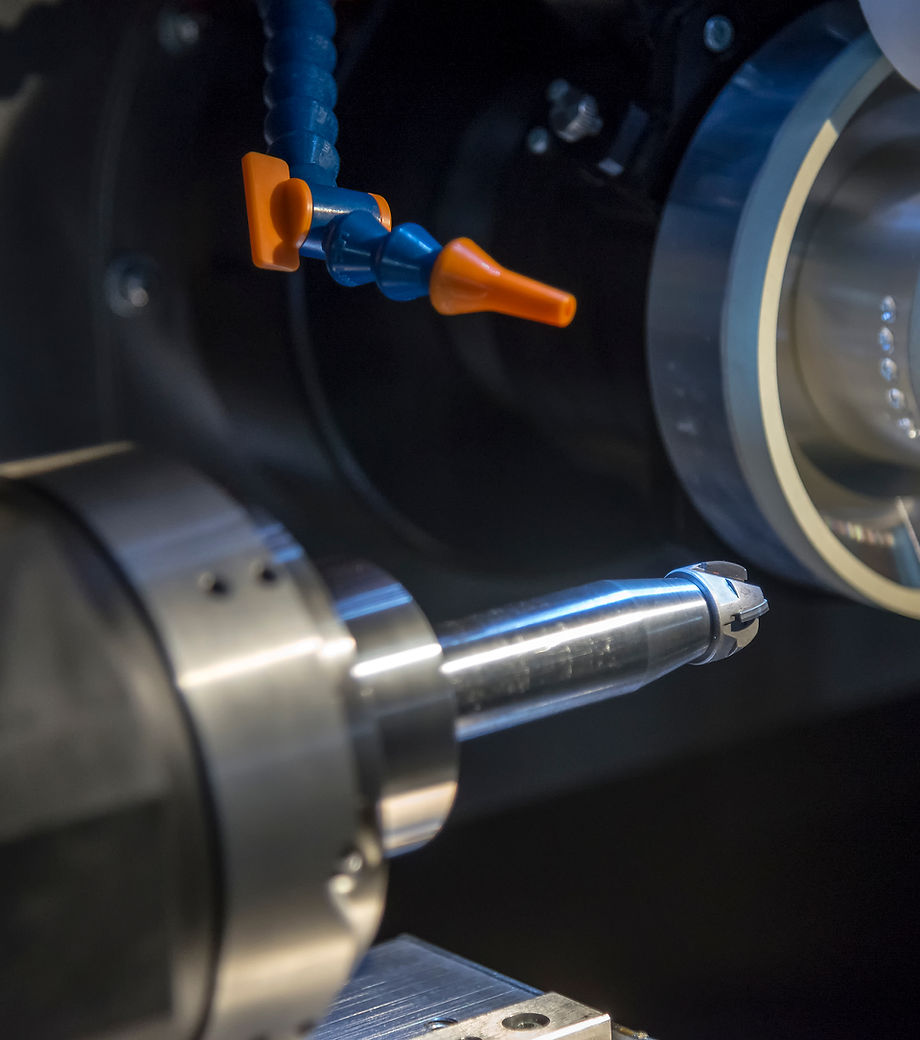
In orthopedic contract manufacturing, dimensional stability under cyclic loading is paramount. Surgical instruments like bone taps, drills, and reamers require razor-sharp cutting edges paired with high core toughness to avoid intraoperative splintering or thermal osteonecrosis.
Rebellion Solutions utilizes multi-axis CNC grinding centers equipped with high-resolution glass scales and closed-loop thermal compensation systems. This allows us to hold micron-level concentricity and complex fluting profiles across long production runs in materials like custom 465 stainless steel, Custom 630 (17-4PH), and Titanium Grade 5 (Ti-6Al-4V ELI).
Material Processing Protocols: Ti-6Al-4V ELI vs. PEEK Optima
Modern orthopedic implants depend on precise material selection. Each material poses distinct machining dynamics that require specialized tool geometries, cutting speeds, and coolant pressure configurations:
- Titanium Alloys (Ti-6Al-4V ELI / ASTM F136): Known for excellent strength-to-weight ratios and osseointegration capability. However, titanium’s low thermal conductivity traps heat at the tool-chip interface, rapidly degrading cutting inserts. We employ high-pressure (1000+ PSI) through-spindle coolant delivery and customized carbide coatings to maintain structural integrity and suppress thermal stress.
- PEEK (Polyetheretherketone / ASTM F2026): Favored in radiolucent spinal cages for its elastic modulus matching human cortical bone. Machining PEEK demands razor-sharp uncoated cutting tools and strict feed-rate control to avoid glass transition phase shifts. We perform pre- and post-machining thermal annealing cycles to eliminate internal stress concentrations that cause post-production warp or creep.
- Cobalt-Chromium-Molybdenum Alloys (CoCrMo / ASTM F75): Essential for articulating surfaces in total joint devices due to superior wear resistance. High work-hardening rates require ultra-rigid CNC milling setups and multi-stage polishing to achieve mirror finishes (Ra < 0.02 µm) without creating micro-fissures.
🔬 Quality Verification: Device History Record (DHR) Rigor
Every implant and instrument produced by Rebellion Solutions undergoes full 100% optical coordinate measuring machine (CMM) inspection, non-destructive surface testing (NDT), citric/nitric acid passivation according to ASTM F86 standards, and digital lot tracking. DHR documentation accompanies every shipment, ensuring audit-ready compliance for FDA and EU MDR assessors.
Industry Horizon 2025–2030
Future Trends Shaping Orthopedic Sourcing
As the global orthopedic market expands toward $70 billion, OEM procurement teams must align with critical technological shifts and evolving regulatory benchmarks.
Additive + Subtractive Integration
Direct Metal Laser Sintering (DMLS) electron beam melting (EBM) is revolutionizing porous lattice structures for rapid bone ingrowth. However, 3D printing alone cannot achieve critical thread fits or micro-polished articulating surfaces. The future belongs to hybrid manufacturing: 3D printing complex bio-structures followed by 5-axis precision CNC finishing.
EU MDR & FDA QSR Alignment
The rollout of EU MDR Annex IX and the FDA’s transition to the Quality Management System Regulation (QMSR) harmonizing ISO 13485:2016 have raised the bar for post-market surveillance and technical file depth. Contract manufacturers must supply robust cleaning validations, cytocompatibility testing, and material origin verification.
On-Demand PSI & Custom Instrumentation
Surgeons increasingly demand patient-specific cutting blocks and custom revision implants derived from patient CT scans. Contract facilities must construct rapid-response prototyping cells capable of turning patient DICOM data into validated, sterilizable devices within tight clinical windows.
Bio-Sensors & Micro-Electronics
The emergence of smart total joints equipped with micro-MEMS sensors to monitor intra-articular pressure, gait dynamics, and early infection markers requires contract manufacturers skilled in micro-hermetic sealing, laser welding, and bio-compatible electronic encapsulation.
Domestic Hub Nearshoring
Geopolitical friction, tariff instability, and transoceanic shipping delays are driving major US OEMs to consolidate manufacturing within domestic innovation hubs like Warsaw, Indiana. Proximity ensures rapid engineering iteration and lower lead-time risk.
In-Process Automated Optical Inspection
Replacing manual micrometer and optical comparator checks, AI-driven machine vision integrated directly into CNC grinding cells detects tool wear, burrs, and dimensional drift in real time—enabling true zero-defect production strategies.
The Rebellion Advantage
Why World-Class Device Brands Choose Rebellion Solutions
Built upon decades of hands-on surgical engineering, FDA regulatory execution, and commercialization consulting.
Clinically Proven, Single-Source Accountability
Most contract manufacturers operate strictly as job shops: you send them a drawing, they machine the part, and they disclaim all responsibility for whether the product actually works in the surgeon’s hand or survives 510(k) review. Rebellion Solutions disrupts this fragmented model.
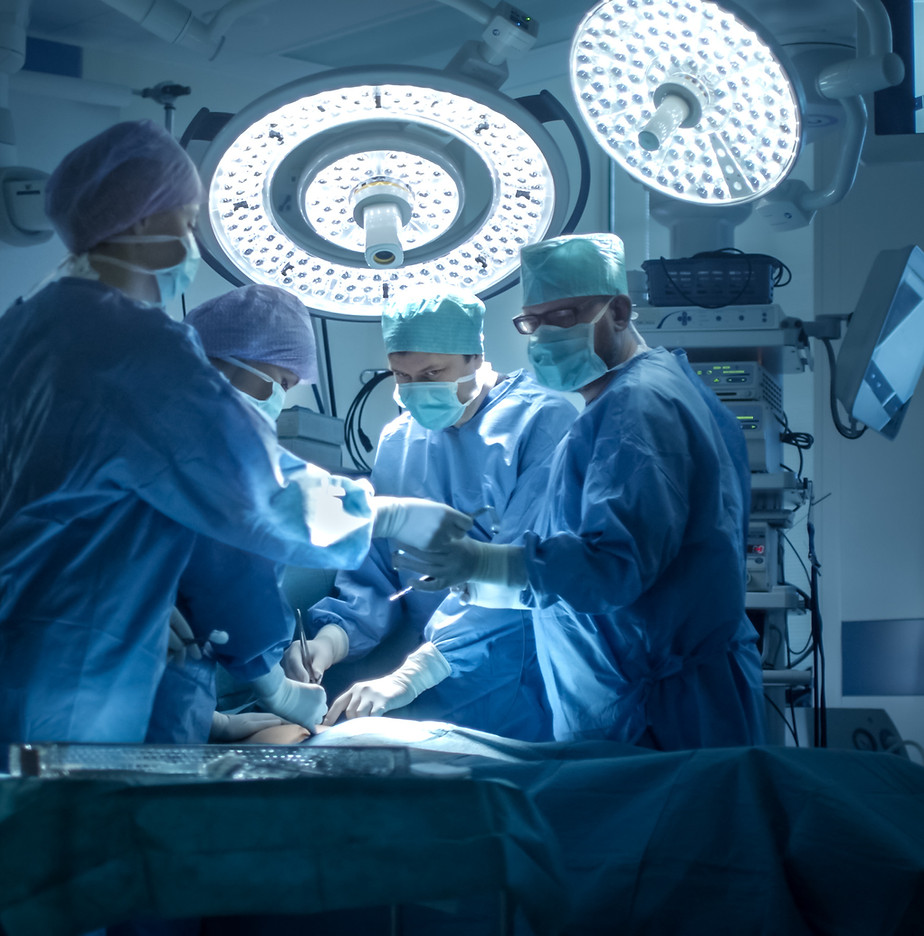
Our multidisciplinary team unites clinical feedback from board-certified orthopedic surgeons with master-level manufacturing engineers and veteran regulatory consultants. We analyze how every screw drive engages under bloody surgical conditions, how instrument ergonomics reduce operating room fatigue, and how tolerances influence assembly speed in high-stress surgical environments.
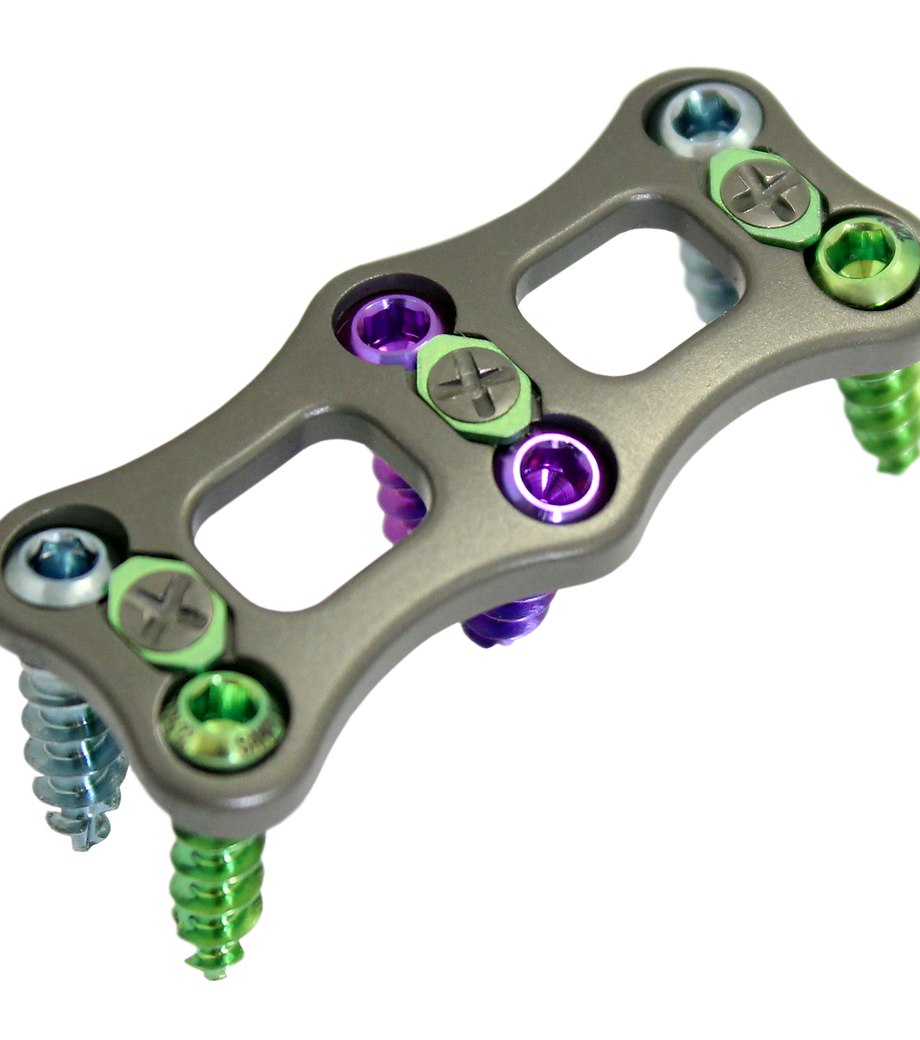
Whether you need rapid prototyping of a novel trauma plate, full-scale contract manufacturing of surgical instrument kits, or instrument reconditioning to maximize asset lifecycle value, Rebellion Solutions delivers enterprise-level capability with startup agility.
Strategic Procurement Knowledge Base
Frequently Asked Questions in Orthopedic Contract Manufacturing
Detailed responses to high-intent technical, quality, and regulatory inquiries commonly raised by global medical device procurement officers and VP engineers.
1) Quality System Maturity: Full ISO 13485:2016 certification, FDA 21 CFR Part 820 registration, and robust IQ/OQ/PQ machine validation protocols.
2) Technical Co-location: Seamless integration between CAD design engineers and 5-axis CNC grinding machinists to ensure manufacturability.
3) Materials & Surface Engineering Mastery: Proven expertise handling implant-grade Ti-6Al-4V ELI, PEEK Optima, CoCr, passivated 17-4PH stainless steel, and specialized anodizing.
4) Supply Chain Traceability: Complete raw material Melt Test Report (MTR) verification and Device History Record (DHR) archiving.
Partner with Warsaw's Premier Orthopedic Contract Manufacturer
Shorten your development timelines, optimize COGS through expert DFM engineering, and secure dependable ISO 13485 production capacity. Request our comprehensive OEM catalog and technical capability matrix today.
Get Catalog