
Expert Guidance for Medical Technology Innovators
Medical Device Product Development Consulting: Strategic Engineering, FDA 510(k) Compliance, and Precision CNC Manufacturing
De-risking orthopedic implant and surgical instrument development from early CAD concept to regulatory clearance and scalable commercial production in Warsaw, Indiana.
Overcoming the Disconnect in Medical Device Engineering
In the complex realm of orthopedic technology, traditional product development models are fundamentally broken. For decades, OEM purchasing directors, MedTech startup founders, and global procurement executives have been forced to navigate a fragmented ecosystem: hiring design boutiques for initial CAD models, transferring files to contract manufacturers who demand massive design alterations (DFM), and finally handing off data to third-party regulatory consultants who discover compliance gaps late in the process.
This siloed approach creates extended lead times, compounding engineering redesign fees, and delayed FDA 510(k) clearances. **Rebellion Solutions** challenges this legacy framework. Situated in **Warsaw, Indiana**—the recognized global capital of orthopedic manufacturing—we provide a fully integrated **Medical Device Product Development Consulting** framework that unifies biomechanical engineering, in-house precision CNC grinding, regulatory strategy, and commercial sales execution under one roof.
Information Gain: Why Integrated Consulting Prevents Costly 510(k) Delays
According to FDA submission metrics, over 60% of Additional Information (AI) requests during 510(k) reviews stem from discrepancies between initial design intent and final manufacturing process validation (such as surface finish variability, material stress during CNC grinding, or tolerances in surgical instrument mating features). By co-locating design engineers directly with CNC toolmakers and regulatory directors, Rebellion Solutions eliminates design-to-manufacturing friction before physical prototypes are ever machined.
The Warsaw, Indiana Advantage: Unmatched Expertise & Capabilities
We are the industry's premier one-stop shop for orthopedic innovation. Our multi-disciplinary infrastructure bridges every phase of the medical device lifecycle.
Clinically Proven Design
Our engineering leads possess over 25 years of specialized experience developing spine, total joint, sports medicine, trauma, and biological systems. We transform complex surgical requirements into highly functional, ergonomic implants and instruments.
In-House CNC Precision Grinding
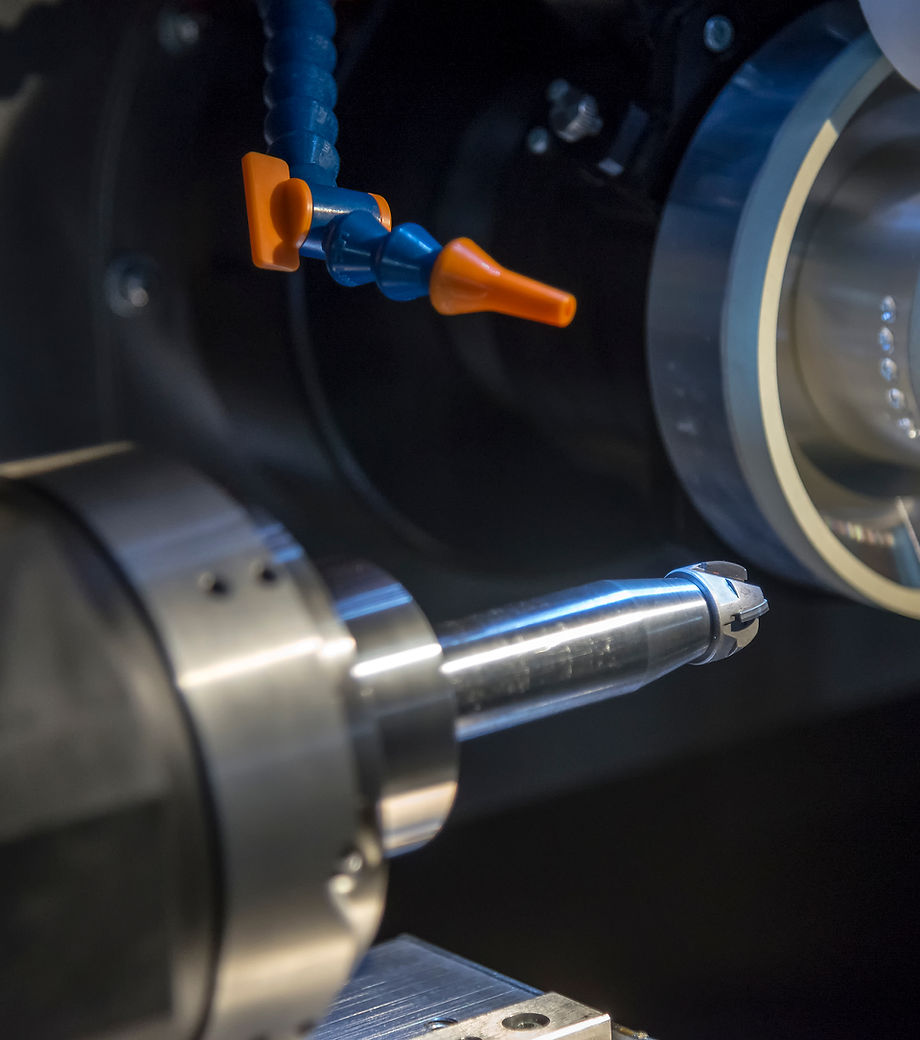
Unlike virtual consulting firms, we own and operate advanced CNC precision grinding equipment dedicated to prototype and production runs. This guarantees ultra-tight tolerances, exceptional surface finishes, and rapid lead time reductions.
Turnkey FDA 510(k) Clearance
Regulatory strategy isn't an afterthought—it drives our design inputs. We construct robust Design History Files (DHF), manage verification/validation (V&V) testing, and execute streamlined FDA submissions.
DFM & Supply Chain Streamlining
By engineering for manufacturability from Day 1, we lower your unit Cost of Goods Sold (COGS), eliminate expensive tooling re-works, and establish a resilient, US-based medical manufacturing supply chain.
Commercial Launch & 1099 Network
Beyond engineering, we assist in commercialization. Utilizing our extensive nationwide network of independent 1099 surgical sales representatives, we connect your cleared devices directly with orthopedic surgeons.
Instrument Reconditioning & Servicing
We extend product lifecycles through custom surgical instrument reconditioning, sharp edge re-grinding, and recalibration services, offering significant cost savings for hospital systems and OEMs.
End-to-End Medical Device Product Development Consulting Solutions
Whether launching a novel orthopedic device enterprise or optimizing an existing product matrix, our consulting offerings are engineered to deliver speed, precision, and commercial success.
1. Orthopedic Implant Engineering & Biomaterial Optimization
Implant failure is not an option. Our product development consulting covers complex anatomical modeling, stress concentration analysis, and material selection (including Titanium alloys, PEEK, CoCr, and bio-resorbable matrices). We specialize across five core orthopedic sub-specialties:
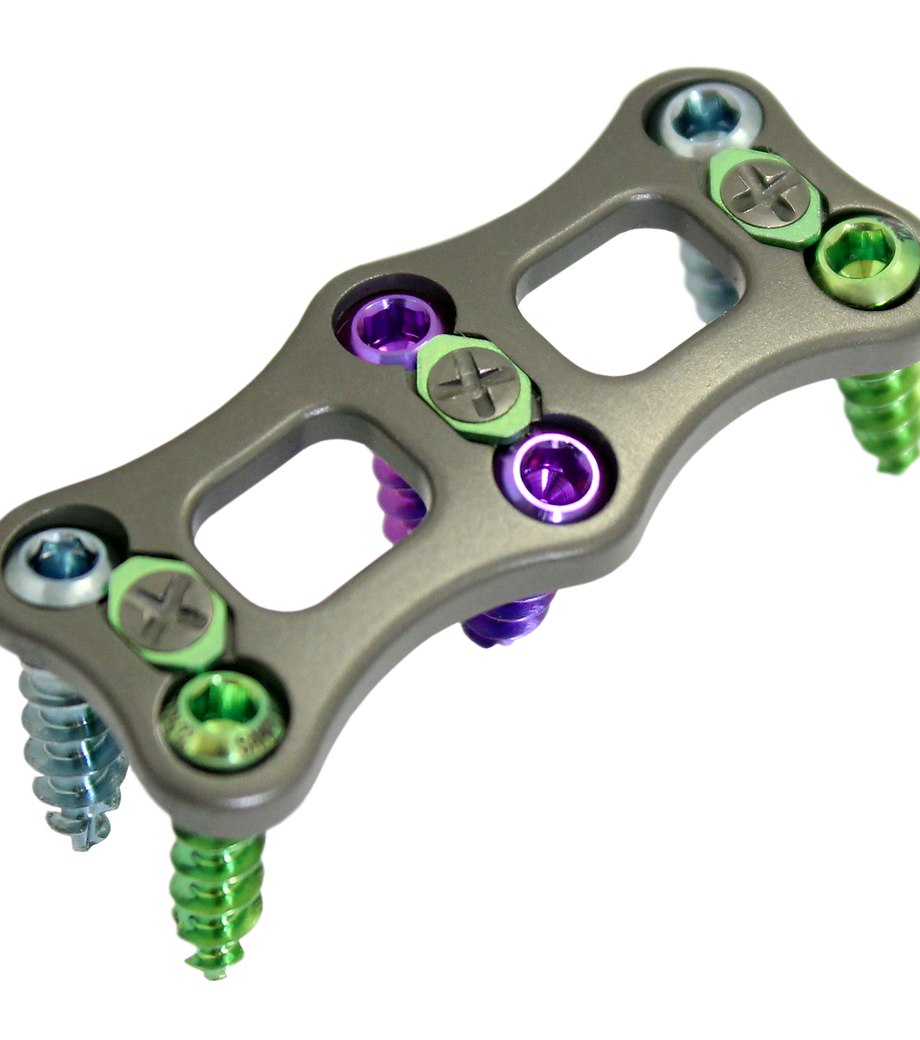
- Spinal Implants: Interbody fusion cages, pedicle screw systems, and cervical plates designed for optimal osteointegration.
- Total Joint Replacement: Femoral components, tibial trays, and acetabular cups optimized for wear reduction and range of motion.
- Trauma & Fixation: Anatomical locking plates, intramedullary nails, and cannulated screws crafted for rapid surgical deployment.
- Sports Medicine: Suture anchors, interference screws, and soft tissue repair devices engineered for high pull-out strength.
2. Precision Surgical Instrument Engineering & CNC Prototyping
Even the most advanced implant depends on the ergonomics and reliability of its surgical instrument set. Our surgical instrument engineering team creates custom trial rasps, osteotomes, reamers, drills, and insertion drivers that provide tactile feedback and flawless mechanical action in the operating room.
Utilizing state-of-the-art multi-axis CNC grinding machines, we transform raw stainless steel and custom alloys into high-precision instruments. By maintaining direct control over CNC grinding, we eliminate vendor friction and produce production-grade prototypes in weeks rather than months.
3. Regulatory Clearance (FDA 510k) & Commercial Launch
Navigating global regulatory bodies requires deep expertise in risk management (ISO 14971) and Quality Management Systems (ISO 13485 / FDA QSR 21 CFR Part 820). Our consulting team guides your project through predicate device selection, biocompatibility testing protocols, mechanical wear testing (ASTM/ISO standards), and eSTAR submission formatting.
Post-clearance, we assist OEMs with brand positioning, surgeon training collateral, video creation, and sales channel distribution, ensuring a seamless transition from cleared device to revenue generator.
Future Procurement Trends in Medical Device Development
Global procurement executives and supply chain directors face unprecedented pressure: geopolitical instability, stringent regulatory shifts, and escalating cost containment demands from hospital buying groups. To maintain a competitive edge, procurement strategies must evolve from traditional price-per-unit negotiation to holistic lifecycle partnerships.
1. Nearshoring & Ecosystem Clustering
The vulnerabilities of extended overseas supply chains have driven a decisive migration back to domestic hubs. Global buyers are actively shifting contracts to centralized medical tech clusters like Warsaw, Indiana, where raw material suppliers, specialized CNC grinders, heat treaters, and sterile packagers operate within a 30-mile radius. This geographic proximity compresses transit timelines by up to 70%.
2. Consolidation into Single-Source Co-Engineers
Managing separate vendors for CAD engineering, prototype machining, validation testing, and regulatory filing adds operational complexity and legal liability. Global OEMs are increasingly seeking "single-source consulting partners" who accept end-to-end accountability from initial sketch through commercial manufacturing.
3. Early DFM Integration for Margin Preservation
Procurement teams are engaging manufacturing consultants during the initial concept phase rather than post-design freeze. Identifying high-cost geometric features or tight tolerances early prevents costly design revisions, ensuring target gross margins are locked in prior to pilot production.
4. Demand for Instrument Sustainability & Circularity
With hospital systems setting aggressive ESG targets, procurement managers are prioritizing medical device partners who offer surgical instrument reconditioning, resharpening, and tray refitting programs, extending instrument lifespan while reducing capital expenditure.
Macro Technological Trends Shaping Medical Device Consulting
The landscape of orthopedic surgery is transforming rapidly. Our consulting team actively integrates these emerging technologies into client product pipelines to ensure long-term market relevance.
| Technology Trend | Impact on Product Development | Rebellion Solutions Strategic Response |
|---|---|---|
| Additive-Subtractive Hybrid Manufacturing | Combines 3D metal printing for porous lattice structures (bone ingrowth) with high-precision CNC grinding for critical mechanical mating surfaces. | We optimize DFM protocols specifically for hybrid implant manufacturing, reducing post-processing grinding cycles and material waste. |
| Smart & Sensorized Surgical Tools | Surgical instruments embedded with micro-sensors provide real-time feedback on torque, alignment, and tissue tension during joint replacement procedures. | Our design team integrates internal cavity routing and bio-compatible sealing strategies into instrument handles for electronic component housing. |
| Patient-Specific Implants (PSI) & Instruments | Shift from standard sizing matrices to custom implants derived from preoperative CT/MRI imaging data. | We establish agile, fast-setup CNC programming pathways that handle low-volume, high-mix custom anatomical geometry efficiently. |
| FDA eSTAR & Dynamic Compliance | Mandatory digital submittal templates demanding detailed design traceability, human factors data, and cybersecurity disclosures. | Our regulatory consultants utilize pre-structured DHF templates aligned with eSTAR requirements, accelerating initial FDA review cycles. |
Medical Device Product Development Consulting: Frequently Asked Questions
Below are authoritative answers to the primary technical, financial, and operational questions global procurement managers and MedTech leaders pose when selecting a product development partner.
What is the typical timeline and cost structure for an orthopedic medical device product development project?
The lifecycle for a Class II orthopedic device (e.g., spinal fixation screw or sports medicine anchor) typically spans 12 to 18 months from concept to FDA 510(k) clearance, compared to 24-36 months under traditional fragmented vendor setups. Costs depend on systemic complexity, biomechanical testing requirements, and prototype iterations. By utilizing Rebellion Solutions' integrated engineering and in-house CNC grinding capabilities, clients typically achieve a 30% reduction in total development capital by avoiding redundant design-for-manufacturability revisions.
How does early Design for Manufacturability (DFM) consulting reduce unit cost of goods (COGS)?
DFM evaluates CAD models through the lens of machine dynamics, tooling accessibility, raw material yield, and cycle times. For instance, designing an orthopedic instrument handle with complex undercut radii may require expensive 5-axis sinker EDM processes. Our DFM engineers redesign the feature for rapid multi-axis CNC grinding without compromising ergonomic intent or mechanical strength, reducing machining cycle times from 45 minutes to 12 minutes per unit and significantly cutting production COGS.
Why is Warsaw, Indiana considered the premier location for orthopedic device engineering and manufacturing?
Warsaw, Indiana is known globally as the "Orthopedic Capital of the World," producing roughly one-third of the global supply of orthopedic implants and instruments. The region houses an unrivaled concentration of specialized metallurgy experts, heat-treating facilities, FDA-compliant surface finish specialists, sterile packaging plants, and master CNC toolmakers. Operating directly within this ecosystem allows Rebellion Solutions to execute rapid prototyping and production scale-ups with unmatched supply chain resilience.
What documentation is required to ensure a smooth FDA 510(k) submission during device development?
A successful 510(k) submission hinges on a complete Design History File (DHF) compliant with FDA 21 CFR 820.30. Essential deliverables include Design Inputs/Outputs, Risk Analysis (ISO 14971), Biocompatibility Evaluations (ISO 10993), Mechanical Verification & Validation Testing (e.g., dynamic fatigue, pull-out testing under ASTM standards), Software Verification (if applicable), and Human Factors / Usability Engineering reports. Rebellion Solutions builds these compliance artifacts concurrently during the engineering process.
How does Rebellion Solutions assist startups versus established multi-billion-dollar OEMs?
For MedTech startups, we act as a complete outsourced R&D, regulatory, and operations department—taking an idea on a napkin, engineering the product, securing FDA clearance, and delivering initial sterile-packaged commercial inventory. For established OEMs, we serve as an agile specialized extension team—solving specific DFM bottlenecks, executing short-run prototype grinding, reconditioning legacy instrument sets, or accelerating high-priority product line line extensions without disrupting their internal factory capacity.
What materials do you specialize in for orthopedic implant and instrument manufacturing?
We work extensively with medical-grade alloys and polymers, including Titanium (Ti-6Al-4V ELI), Stainless Steels (17-4 PH, 455, 316L, Custom 465), Cobalt-Chromium (Co-Cr-Mo), PEEK (Polyetheretherketone), Radel, and advanced biomaterials. Our CNC grinding specialists possess exact tooling geometries and coolant parameters tailored to the unique heat dissipation characteristics of these implantable materials.
Traditional Consulting vs. Rebellion Solutions Integrated Model
A direct comparison illustrating how an integrated product development model provides actionable information gain and measurable ROI.
| Evaluation Parameter | Traditional Siloed Vendors | Rebellion Solutions Integrated Model |
|---|---|---|
| Development Timeframe | 24 to 36 Months (Linear hand-offs) | 12 to 18 Months (Parallel engineering) |
| DFM Accountability | Low; design firm delegates DFM to factory | 100% In-house design & CNC toolmaker collaboration |
| Prototype Lead Time | 12 to 16 Weeks (External CM queue) | 3 to 5 Weeks (In-house precision CNC grinding) |
| Regulatory Integration | Post-design documentation retrofit | Concurrent DHF building & 510(k) preparation |
| Commercial Support | None; engineering scope ends at drawing approval | Direct 1099 surgical sales representative access |
Ready to Accelerate Your Medical Device Project?
Do not let fragmented suppliers, delayed prototype runs, and regulatory red tape hold your orthopedic pipeline back. Partner with the industry experts in Warsaw, Indiana. Reach out to our team today to schedule an executive consultation on design, CNC prototype grinding, or turnkey 510(k) clearance.