
Custom Orthopedic Implant Manufacturing: Master DFM, Precision CNC Machining & 510(k) Execution
An exhaustive technical blueprint for OEM procurement directors, orthopedic design engineers, and regulatory executives seeking zero-defect custom titanium, PEEK, and CoCr implant contract manufacturing from Warsaw, Indiana.
Navigating Custom Orthopedic Implant Manufacturing: Procurement & Engineering Insights
The landscape of custom orthopedic implant manufacturing has shifted fundamentally. Procurement executives and biomedical engineers no longer evaluate contract manufacturers based solely on machining cost per unit. Modern OEM sourcing decisions demand high-level Design for Manufacturability (DFM) verification, bio-compatible material traceability, strict ISO 13485:2016 quality management systems, and a direct line to FDA 510(k) clearance consulting.
When global medical device companies develop patient-specific trauma plates, complex interbody spinal cages, total joint revision systems, or sports medicine anchors, the traditional barrier between design consultants and machine shops creates massive frictional overhead. Sub-contracting CAD modelling to one vendor, CNC grinding to another, and regulatory documentation to a third firm introduces misalignments, geometric tolerances stacked beyond acceptable thresholds, delayed validation batches, and inflated Cost of Goods Sold (COGS).
Information Gain Insights: Co-located engineering and precision CNC manufacturing eliminates up to 40% of standard DFM revision cycles. By integrating toolpath simulation simultaneously with design freeze, OEMs prevent fatigue failure points in load-bearing implants before raw material titanium billet cutting begins.
Located in Warsaw, Indiana—the recognized global capital of orthopedic innovation—Rebellion Solutions bridges these critical gaps. By uniting veteran orthopedic implant designers, master 5-axis CNC machinists, precision grinding specialists, and regulatory strategists in one facility, we streamline custom implant production from concept sketch to sterile packaging ready for human implantation.
High-Precision Product Categories & Custom Manufacturing Capabilities
Our manufacturing infrastructure is calibrated specifically for ultra-precise, high-integrity medical implants engineered from biocompatible metals and high-performance polymers. Below are the flagship implant categories engineered and manufactured in our facilities:
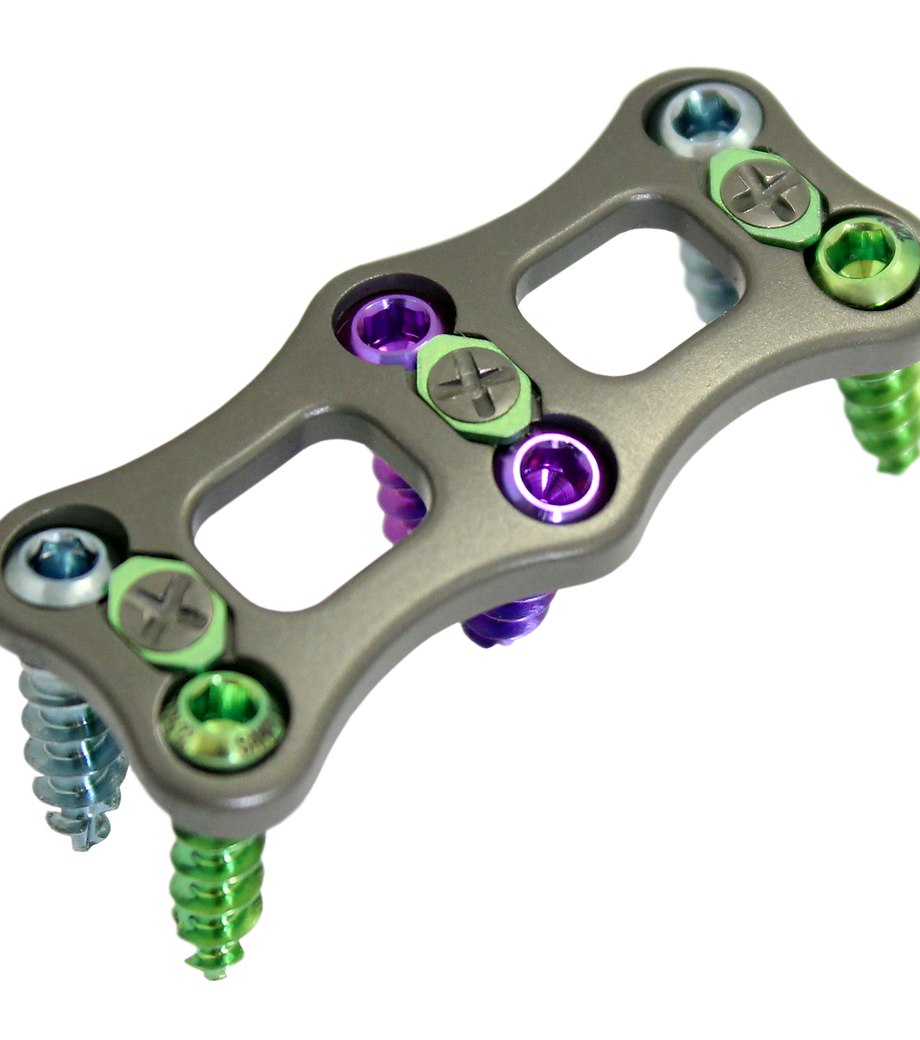
Patient-Specific Trauma & Reconstructive Plates
Custom anatomic bone plates machined from medical-grade Titanium (ASTM F136 Ti-6Al-4V ELI). Featuring complex contoured geometries, variable-angle locking screw threads, and sub-micron surface finishing designed for complex non-union fracture repair and maxillofacial reconstruction.
Spinal Interbody Fusion Cages & Fixation
Manufactured in PEEK-OPTIMA®, porous additive titanium, and hybrid materials. Advanced multi-axis CNC milling creates precise micro-serrations, lordotic angles, and hollow graft windows optimized for bone ingrowth and immediate biomechanical stabilization.
Total Joint & Revision Implant Systems
Precision grinding and polishing of Cobalt-Chromium (CoCr ASTM F75) femoral heads, tibial trays, and custom acetabular revision shells. Engineered for extreme wear resistance, low friction coefficients, and long-term fatigue strength.
Sports Medicine Fixation Screws & Anchors
Ultra-small diameter suture anchors and interference screws machined with high-aspect-ratio threads. Produced in titanium alloy, PEEK, and bioabsorbable polymers with strict thread pit tolerance controls to prevent intraoperative shearing.
Patient-Specific Patient-Matched Surgical Guides
Single-use surgical cutting guides and drill templates custom-contoured to individual patient CT/MRI DICOM datasets. Machined from biocompatible radel or surgical-grade stainless steel to ensure exact intraoperative alignment.
Custom Instrumentation & Trialing Systems
Ergonomic, modular driver assemblies, broaches, and trial implants matching custom implant geometries. Precision-ground to guarantee seamless quick-connect tactile feedback for orthopedic surgeons.
Biocompatible Material Specifications & Standard Compliance
Custom orthopedic implant manufacturing demands uncompromising raw material controls. Every bar stock billet, powder lot, or PEEK rod utilized in our production lines comes with complete raw material melt certifications, full lot traceability, and chemical analysis matching international standards:
- Titanium Alloys: ASTM F136 (Ti-6Al-4V ELI), ASTM F67 (Unalloyed Titanium for porous coatings).
- Cobalt-Base Alloys: ASTM F75 (Co-28Cr-6Mo Castings), ASTM F1537 (Wrought Co-28Cr-6Mo).
- Stainless Steels: ASTM F138 / F139 (316L Implant Grade Stainless Steel), Custom 455/465.
- Implant Polymers: ASTM F2026 (PEEK Polymer for Surgical Implants), UHMWPE (ASTM F648).
Future Procurement Trends in Custom Orthopedic Manufacturing (2025–2035)
Procurement directors facing global healthcare economic shifts, surgeon demands for individualized patient care, and supply chain disruptions must anticipate key industry trends. Global sourcing strategies are rapidly evolving beyond simple piece-price comparisons toward holistic risk-mitigated partnerships.
| Procurement Metric / Shift | Traditional Contract Manufacturing | Next-Gen Custom Implant Manufacturing (Rebellion Model) |
|---|---|---|
| Lead Times for Custom Implants | 16 to 24 Weeks (Fractured Design & CNC Shops) | 3 to 6 Weeks (Integrated DFM, Rapid CNC & In-House Tooling) |
| Design for Manufacturability (DFM) | Reactive: Identified after tool breaks or tolerance fails | Proactive: Real-time CAM/CAD simulation during initial design phase |
| Supply Chain Resilience | Offshore sourcing with high freight vulnerability | Resilient Onshore Hub: Warsaw, Indiana centralized manufacturing |
| Regulatory Risk Mitigation | OEM bears 100% of 510(k) file burden independently | Collaborative: Direct technical documentation & validation submission support |
| Quality Assurance Model | Post-machining batch sampling inspection | Zero-Defect Inline Metrology: 100% CMM & optical profile validation |
1. AI-Assisted Generative Design & Algorithmic DFM
Artificial intelligence is revolutionizing custom implant design. Generative algorithms create complex, lattice-structured implants optimized for specific patient load profiles while reducing overall mass. However, algorithms often output geometries impossible to machine with traditional cutting tools. Future-ready contract manufacturers must employ advanced CAM post-processors and specialized 5-axis toolpathing to turn generative models into real-world implantable devices without sacrificing fatigue life.
2. Hybrid Manufacturing: Combining Additive 3D Printing with High-Speed CNC Grinding
The procurement trend is shifting away from purely additive or purely subtractive manufacturing. The future belongs to hybrid workflows. Additive manufacturing (SLM/DMLS) builds complex biomimetic porous trabecular surfaces for rapid osseointegration, while high-precision subtractive 5-axis CNC grinding finishes critical mating surfaces, thread connections, and tapers with sub-micron tolerances.
3. Nearshore & Onshore Supply Chain Reshoring
Global logistics bottlenecks have demonstrated the severe vulnerability of overseas implant contract manufacturing. Leading medical device OEMs are shifting production back to established domestic clusters. Warsaw, Indiana represents the world’s dense concentration of orthopedic expertise, offering immediate access to raw material stock, specialized heat-treating vendors, passivation labs, and accredited mechanical testing facilities.
By partnering with Rebellion Solutions in Warsaw, procurement managers eliminate multi-week ocean transport windows and mitigate international customs regulatory hurdles.
Key Technological Development Trends in Orthopedic Implants
To maintain a competitive edge, medical device OEMs must understand the underlying technical innovations driving the next generation of musculoskeletal implants:
Bio-Mimetic Trabecular Micro-Structures
Advanced surface topologies mimicking natural human cancellous bone structure (500–700 micron pore size with 60–80% porosity). Manufacturing these structures requires precise laser powder bed fusion (LPBF) controls paired with thorough post-processing media blast and ultrasonic cleanroom cleaning.
Smart Implants & Micro-Sensor Integration
Integration of micro-electromechanical systems (MEMS) and strain gauges inside load-bearing joint and spine implants. Machining internal cavities for sensors requires ultra-precise wire EDM, laser welding, and hermetic sealing techniques to prevent fluid ingress.
Bioabsorbable Magnesium & Polymer Alloys
Next-generation temporary trauma anchors and pediatric fixation screws engineered from magnesium alloys (WE43) that dissolve safely in human tissue post-bone healing. Machining reactive metals like magnesium demands specialized fire-suppression coolant setups and strict atmosphere controls.
Looking to Accelerate Your Custom Implant Product Launch?
Connect directly with our Warsaw, Indiana engineering team to evaluate your CAD models, review DFM feasibility, and receive a comprehensive technical quote.
Get CatalogWhy Rebellion Solutions is Your Strategic Custom Manufacturing Partner
Rebellion Solutions was established to challenge the slow, fragmented, and cost-inflated status quo of traditional orthopedic contract manufacturing. Here is how our unique business model delivers unmatched value to global orthopedic procurement and engineering teams:
1. The One-Stop Shop Advantage: Engineering, CNC & Regulatory Under One Roof
Unlike typical machine shops that simply execute drawings without understanding clinical intent, or engineering consultants who deliver CAD files that are impossible to machine efficiently, Rebellion Solutions handles the entire product lifecycle in-house.
Our engineers work side-by-side with our 5-axis CNC machinists and grinding technicians. This co-location guarantees that every radius, chamfer, tap, and surface texture is optimized for real-world production, reducing machine cycle times and lowering your overall COGS.
2. Deep 510(k) Regulatory & Commercialization Expertise
We don’t just deliver bare metal parts; we deliver submission-ready medical devices. Our team provides complete mechanical test fixture design, static and dynamic fatigue test protocols (ASTM F2077, ASTM F1717, ASTM F1264), and technical documentation required for FDA 510(k) clearances and CE mark submissions.
Our Core Corporate Capabilities at a Glance:
- Precision 5-Axis CNC Milling & Turning: Micro-machining of titanium, PEEK, and stainless steel down to ±0.0002" (±5 microns).
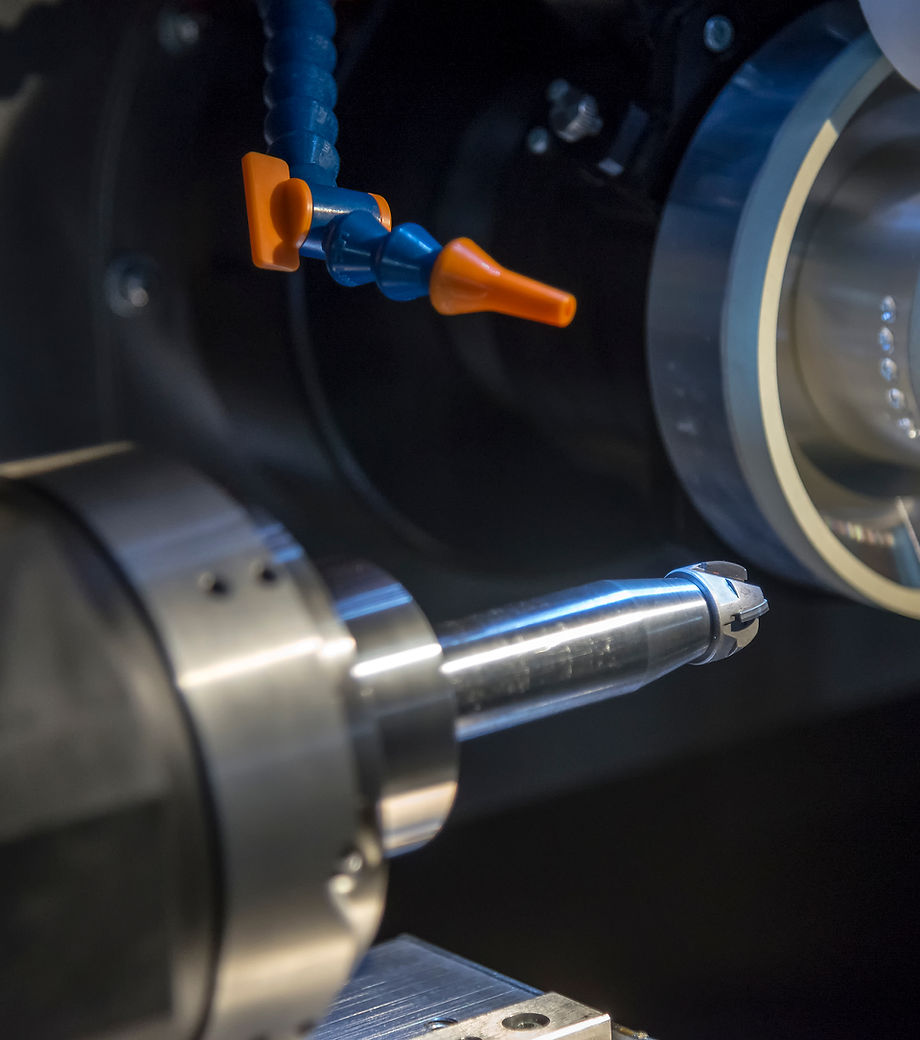
- High-Precision CNC Grinding: Specialized cutter and drill grinding for custom surgical instruments, reamers, and tapers.
- In-House Prototyping & DFM: Rapid turnaround prototype implant runs completed in days, not months.
- ISO 13485:2016 Certified Quality Management System: Comprehensive lot traceability, CMM inspection, and validation.
- Exclusive 1099 Sales & Distribution Network: Strategic commercial consulting to help launch your device into surgeon hands nationwide.
Frequently Asked Questions by Global OEM Procurement Teams
Below are detailed answers to the most common engineering, quality, and procurement questions submitted by medical device buyers and biomedical engineers when evaluating custom orthopedic implant contract manufacturing partners:
Ready to Request Your Technical Catalog or Engineering Consultation?
Get in touch with our expert team in Warsaw, Indiana today. Download our detailed product catalog and engineering specifications instantly.
Get Catalog