
Knowledge & Innovation

Orthopedic Device Insights & Industry News

Explore technical articles, regulatory clearance strategies, design trends, and manufacturing innovations from Rebellion Solutions.

0%

Sports Medicine Device Manufacturing is the disciplined process behind the tools used to prevent, diagnose, repair, and rehabilitate sports-related injuries. It includes arthroscopy systems, fixation anchors, surgical instruments, braces, supports, and rehabilitation equipment. A finished device may begin as a digital design, then pass through precision machining, injection molding, surface treatment, sterilization, and packaging. Each stage demands documented controls. One small burr on an implant can affect tissue safety, surgical handling, and patient recovery.

The need is substantial. The World Health Organization reported that musculoskeletal conditions affect approximately 1.71 billion people worldwide. Not all cases involve sports, but the figure shows the scale of movement-related health problems. Fortune Business Insights estimated the global sports medicine market at about USD 9.55 billion in 2023, with further growth projected through 2032. These market figures vary because analysts define “sports medicine” differently. That limitation matters.

Manufacturers must therefore connect commercial demand with clinical evidence and regulatory discipline. Design controls, biocompatibility testing, risk management, supplier qualification, and traceability are central practices. FDA guidance and ISO 13485 principles support this quality-focused approach. However, compliance alone does not prove that a device performs well in a real operating room. Surgeons may handle instruments with wet gloves, limited visibility, and intense time pressure. Patients also differ in anatomy, activity level, and healing response. The manufacturing process must reflect those realities. It is highly technical, but not perfectly predictable. Strong companies keep reviewing failures, user feedback, and manufacturing data. That ongoing reflection makes Sports Medicine Device Manufacturing safer, more reliable, and clinically meaningful.
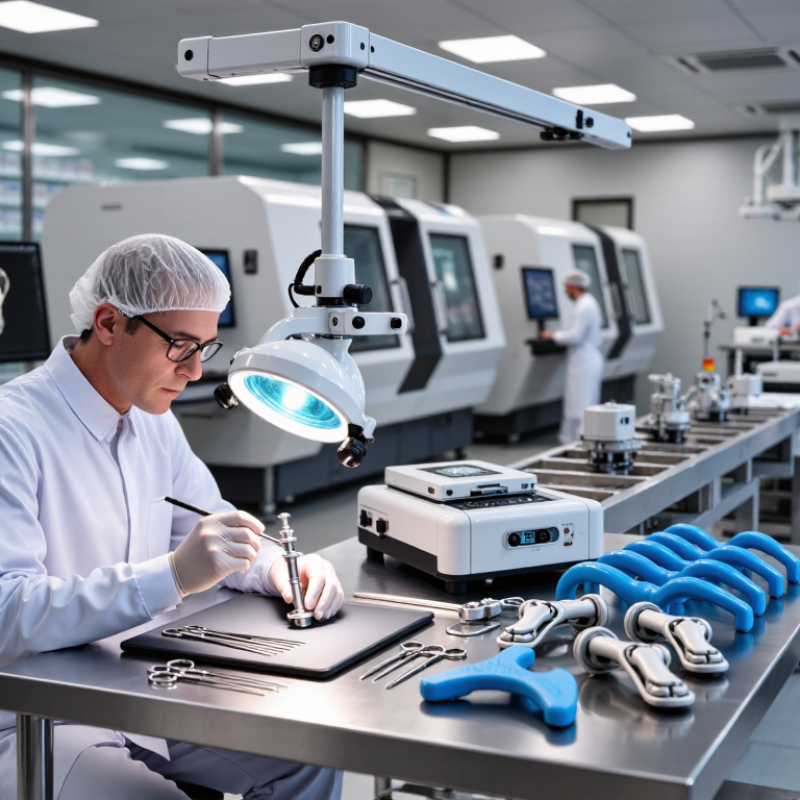
What Is Sports Medicine Device Manufacturing?

Definition and Scope of Sports Medicine Device Manufacturing

What Is Sports Medicine Device Manufacturing?

Definition and Scope of Sports Medicine Device Manufacturing

Sports medicine device manufacturing is the process of designing, producing, and testing equipment for injury prevention, diagnosis, treatment, and recovery. It serves athletes, patients, clinicians, and rehabilitation specialists. The field includes braces, compression supports, surgical instruments, rehabilitation systems, imaging accessories, and wearable monitoring devices. A knee support, for example, must balance stability, comfort, movement, and skin protection.

The scope begins with a clinical need. Designers study joint motion, injury patterns, and daily treatment conditions. Engineers then select materials that can withstand sweat, repeated stress, cleaning, and temperature changes. Prototypes often require several revisions. A device may look effective in a laboratory but feel bulky during training. That weakness matters. Feedback from physiotherapists and users can reveal pressure points, difficult straps, or unclear instructions. Manufacturing teams use this information to improve fit and function.

Reliable production also requires controlled processes and traceable quality records. Teams verify dimensions, material strength, electrical safety, packaging, and sterilization when applicable. Testing should reflect real use, not only ideal conditions. Post-market monitoring can identify problems that early testing missed. This is an area where manufacturers must remain humble. A technically successful device may still fail to support comfortable, consistent patient use. Practical experience, documented evidence, and careful clinical review help reduce that gap.

Materials and Technologies Used in Device Production

Sports medicine device manufacturing begins with material selection, not machinery. Engineers match strength, flexibility, weight, and tissue contact. Titanium alloys suit fixation components because they combine strength with corrosion resistance. Stainless steel remains useful where repeated loading demands toughness. Medical-grade polymers, including PEEK and polyurethane, support radiolucent or flexible designs. Ceramic surfaces can reduce wear in selected applications. Every choice requires biocompatibility evidence, dimensional control, and a clear reason. The body is not a simple test environment. Good materials can still fail when processing changes their structure.

Manufacturers use CNC machining for precise metal components and injection molding for repeatable polymer parts. Additive manufacturing can create porous structures that encourage bone integration, but its layered finish needs careful inspection. Laser cutting, grinding, polishing, and coating alter surface behavior. A rough surface may improve fixation, while an uncontrolled rough surface can trap contaminants. Surface treatments therefore need validated parameters, not attractive photographs. Sterilization also matters. Heat, radiation, or chemical methods can change polymer strength and packaging performance. Production teams test these effects before release.

Quality work depends on traceability from raw material certificates to final inspection. Non-destructive testing can reveal cracks without damaging every component. Mechanical tests measure pullout strength, fatigue life, and deformation under realistic loads. Cleanroom controls reduce particulate risk, yet cleanliness is never guaranteed by appearance alone. A small fixture error can distort measurements and waste a full batch. Calibration records, operator training, and process validation deserve the same attention as advanced equipment. No process is perfect. Continuous review remains necessary when materials, suppliers, or clinical requirements change.

Design and Development of Sports Medicine Devices

What Is Sports Medicine Device Manufacturing?

Design and Development of Sports Medicine Devices

Sports medicine device manufacturing begins long before machining. It starts with a clinical problem: a torn ligament, unstable joint, or painful recovery. The World Health Organization reports that musculoskeletal conditions affect about 1.71 billion people worldwide. That figure makes usability more than a commercial target. It is a design responsibility.

Development teams translate surgical workflows into measurable requirements. They study anatomy, loading forces, sterilization, imaging, and the surgeon’s hand position. A fixation device may look small, yet its handle must support controlled placement through a narrow incision. Prototype testing should examine fatigue, pullout strength, tissue interaction, and cleaning. The FDA’s design-control guidance emphasizes documented inputs, verification, validation, and risk management. These steps prevent attractive prototypes from becoming unreliable tools.

Evidence must guide each decision. ISO 14971 supports medical-device risk management across the product life cycle. WHO’s global burden data also highlights access, rehabilitation, and different clinical settings. A device that works only in a sophisticated operating room may fail real patients. That is an uncomfortable gap.

Design is rarely perfect. Early users may describe a grip as secure, while testing reveals pressure points after twenty minutes. Teams should record these contradictions, not hide them. Manufacturing depends on repeatable tolerances, validated processes, traceability, and supplier controls. Small changes matter. A rough edge or difficult-to-clean channel can alter outcomes.

Manufacturing Standards, Testing, and Quality Control

What Is Sports Medicine Device Manufacturing?

Sports medicine device manufacturing combines engineering, clinical insight, and disciplined quality control. The World Health Organization’s Global Atlas of Medical Devices identifies more than 2 million medical device types worldwide. This scale makes consistent manufacturing standards essential. A brace, fixation instrument, or rehabilitation device must perform predictably under sweat, impact, repeated motion, and cleaning chemicals.

Manufacturers commonly build quality systems around ISO 13485. The ISO Survey 2023 recorded more than 30,000 ISO 13485 certificates globally. Certification helps, but it does not replace practical control. Teams should document material specifications, supplier changes, machine settings, and operator training. Testing may include dimensional inspection, fatigue testing, tensile strength checks, and simulated-use trials. Devices that contact tissue also require biological evaluation under ISO 10993. Electrical equipment may require testing against IEC 60601-1.

Small details matter.

Quality control should continue after production. Statistical process control can reveal gradual drift before a component fails. Risk management under ISO 14971 connects test results with real clinical hazards, such as loosening, skin irritation, or restricted movement. Packaging and sterilization processes need separate validation when applicable. I have seen teams overvalue final inspection. That approach is weak because it finds defects late, after time and materials are lost. A better system checks critical features during forming, machining, assembly, and release. Still, no test perfectly recreates an athlete’s body. Manufacturing decisions should therefore remain open to clinical feedback, complaint trends, and honest reassessment.

Major Applications and Future Trends in the Industry

Sports medicine device manufacturing combines clinical insight, engineering, materials science, and controlled production. It turns athletic injuries and rehabilitation needs into usable medical tools. In practice, a device must fit a real workflow, not just look impressive in a prototype. A surgeon may need an instrument that works through a small incision. A therapist may need a brace that stays comfortable during repeated movement. Small details matter.

Major applications include orthopedic implants, fixation systems, surgical instruments, braces, rehabilitation equipment, and wearable monitoring devices. These products support ligament repair, fracture treatment, joint recovery, gait training, and muscle assessment. Manufacturing teams usually evaluate strength, biocompatibility, sterilization, usability, and traceability. A lightweight sensor can record pressure changes during a squat. However, data accuracy may decline when sweat, poor placement, or rapid motion affects contact. That limitation deserves honest attention.

Future development will likely focus on personalized devices, additive manufacturing, flexible sensors, and remote rehabilitation. Three-dimensional production can help create anatomy-specific supports and reduce unnecessary material. Artificial intelligence may identify movement patterns earlier, but its recommendations still require clinical review. Connected devices could give therapists more frequent recovery information between visits. Cybersecurity and data protection will become equally important. Sustainability is also gaining influence, including recyclable packaging, longer device lifecycles, and lower-waste manufacturing. The industry is moving quickly, yet faster innovation does not always mean better care. Testing methods must keep pace with new materials, software, and patient expectations.

What Is Sports Medicine Device Manufacturing? - Major Applications and Future Trends in the Industry
Device Segment Representative Devices Major Sports Medicine Applications Common Materials Typical Manufacturing Processes Key Quality and Regulatory Considerations Future Industry Trends
Orthopedic Implants Interference screws, suture anchors, fixation plates, pins, and joint-repair implants Anterior cruciate ligament reconstruction, meniscus repair, tendon reattachment, fracture fixation, and cartilage-related procedures Titanium alloys, stainless steel, cobalt-chromium alloys, polyether ether ketone, and bioabsorbable polymers such as polylactic acid-based materials CNC machining, injection molding, additive manufacturing, surface finishing, cleaning, packaging, and sterilization Dimensional accuracy, fatigue strength, biocompatibility, sterility assurance, implant cleanliness, and risk management under ISO 13485 and ISO 14971 Patient-specific implants, porous structures for bone integration, bioabsorbable fixation, and digitally controlled production
Arthroscopy Systems Arthroscopes, camera systems, light sources, fluid-management equipment, cannulas, and surgical instruments Minimally invasive diagnosis and treatment of knee, shoulder, hip, ankle, elbow, and wrist injuries Medical-grade stainless steel, optical glass, polymers, silicone, aluminum, and electronic components Precision machining, optical alignment, clean assembly, electronics integration, leak testing, and functional inspection Optical performance, electrical safety, fluid-path integrity, cleaning compatibility, sterilization validation, and usability engineering Higher-resolution imaging, compact instruments, integrated visualization, digital documentation, and improved reusable-device reprocessing
Surgical Instruments Graspers, punches, shavers, scissors, forceps, drills, guides, and suture-passing instruments Soft-tissue repair, ligament reconstruction, cartilage treatment, and minimally invasive orthopedic surgery Stainless steel, titanium, engineering polymers, ceramic coatings, and elastomers Forging, CNC machining, grinding, laser cutting, electropolishing, coating, passivation, and assembly Cutting performance, mechanical durability, corrosion resistance, cleanability, ergonomic design, and traceability of critical components Single-use instrument options, ergonomic improvements, sensor-enabled tools, and designs optimized for robotic or computer-assisted procedures
Orthoses and Braces Knee braces, ankle-foot orthoses, spinal supports, wrist braces, and postoperative stabilizers Joint stabilization, injury prevention, postoperative support, controlled range of motion, and rehabilitation Thermoplastic polymers, carbon-fiber composites, aluminum, stainless steel, foam, textiles, and silicone Thermoforming, molding, composite lay-up, CNC trimming, textile cutting, sewing, and adjustable assembly Fit, comfort, load distribution, skin compatibility, durability, adjustability, and performance verification under intended-use conditions 3D scanning, additive manufacturing, digitally customized fitting, lightweight composite structures, and breathable smart textiles
Prosthetic and Replacement Components Sports-related joint replacement components, liners, modular parts, and custom prosthetic interfaces Restoration of mobility after severe joint damage, trauma, or degenerative conditions affecting active patients Titanium alloys, cobalt-chromium alloys, ultra-high-molecular-weight polyethylene, ceramics, and silicone Precision machining, polishing, molding, additive manufacturing, coating, metrology, and sterile packaging Wear resistance, fatigue performance, dimensional tolerances, material characterization, biological safety, and long-term reliability Patient-matched geometry, improved wear-resistant materials, porous fixation surfaces, and manufacturing based on digital anatomical models
Regenerative Medicine Devices Scaffolds, delivery systems, cell-processing accessories, and devices used for tissue-repair procedures Cartilage, tendon, ligament, bone, and soft-tissue repair research or clinical treatment where applicable Collagen, hyaluronic acid, synthetic biodegradable polymers, calcium phosphate ceramics, and hydrogel-based materials Electrospinning, freeze-drying, solvent casting, 3D bioprinting, controlled drying, sterile assembly, and surface modification Biological safety, degradation behavior, sterility, endotoxin control, manufacturing consistency, and characterization of biological performance Biodegradable scaffolds, biomimetic structures, personalized tissue repair, and closer integration between device manufacturing and cell-based technologies
Rehabilitation and Therapy Devices Continuous passive motion devices, resistance systems, neuromuscular stimulators, therapeutic ultrasound equipment, and recovery equipment Restoring range of motion, improving muscle activation, reducing stiffness, and supporting recovery after injury or surgery Engineering plastics, aluminum, stainless steel, silicone, textiles, batteries, sensors, and electronic assemblies Injection molding, extrusion, metal fabrication, electronic assembly, firmware integration, calibration, and functional testing Electrical safety, electromagnetic compatibility, mechanical stability, software verification, usability, and accurate energy or stimulation output Connected rehabilitation, remote monitoring, adaptive therapy programs, wearable sensors, and data-supported treatment adjustments
Wearable Monitoring Devices Motion sensors, activity monitors, pressure sensors, inertial measurement units, and rehabilitation tracking systems Movement analysis, training-load assessment, gait evaluation, return-to-play monitoring, and rehabilitation progress measurement Medical-grade polymers, flexible printed circuits, silicone, textiles, microelectronic components, and rechargeable batteries Printed-circuit assembly, microfabrication, overmolding, textile integration, calibration, firmware development, and enclosure sealing Sensor accuracy, battery safety, data security, software reliability, skin contact safety, calibration traceability, and protection against environmental exposure Flexible electronics, edge analytics, artificial-intelligence-assisted movement assessment, and interoperability with clinical information systems
Digital Surgical and Planning Tools Imaging software, surgical planning platforms, navigation accessories, and patient-specific procedure guides Preoperative planning, anatomical measurement, implant positioning, procedure simulation, and surgical guidance Medical software, engineering polymers, sterilizable metals, optical components, and electronic hardware Software development, 3D modeling, rapid prototyping, precision machining, verification, validation, and cybersecurity testing Software lifecycle controls, cybersecurity, data integrity, image accuracy, human factors, interoperability, and control of design changes Artificial intelligence, mixed reality, digital twins, automated segmentation, and patient-specific guides produced through additive manufacturing
Manufacturing Infrastructure Cleanrooms, inspection systems, sterilization systems, automated assembly cells, and digital traceability platforms Supports consistent production of sterile, implantable, reusable, and electrically powered sports medicine devices Stainless steel, medical-grade polymers, validated packaging materials, sensors, robotics, and industrial software Automated inspection, vision systems, statistical process control, robotic handling, validation, packaging, and sterilization Environmental monitoring, process validation, supplier qualification, batch records, device history records, complaint handling, and post-market surveillance Industry 4.0 production, real-time process monitoring, predictive maintenance, digital quality records, waste reduction, and lower-energy manufacturing
Industry context: Sports medicine device manufacturing combines materials engineering, precision production, medical-device quality systems, sterilization, software or electronics integration, and clinical-use validation. Specific regulatory requirements vary according to the device type, intended use, risk classification, and market.

FAQS

What does sports medicine device manufacturing involve?

It combines engineering, clinical knowledge, materials science, and controlled production. Devices must support real treatment and rehabilitation needs. Appearance alone is not enough.

Which products are commonly manufactured for sports medicine?

Common products include implants, fixation systems, surgical instruments, braces, rehabilitation equipment, and wearable monitors. They may support ligament repair, fracture care, gait training, or muscle assessment.

Why are manufacturing standards important?

Standards help devices perform consistently during sweat, impact, repeated movement, and cleaning. They also support traceability, training, material control, and documented production settings.

What tests may a sports medicine device require?

Testing may include dimensional checks, fatigue testing, tensile strength checks, and simulated-use trials. Tissue-contacting products need biological safety evaluation. Electrical devices need electrical safety testing.

How can manufacturers find quality problems earlier?

Teams can inspect critical features during forming, machining, assembly, and final release. Statistical monitoring can reveal gradual changes before failure. Final inspection alone is weak.

What risks should quality teams consider?

Risk reviews should examine loosening, skin irritation, restricted movement, breakage, and poor fit. Packaging and sterilization require separate validation when applicable. Small details matter.

Are wearable monitoring devices always accurate?

No. Sweat, poor placement, and rapid motion can reduce sensor accuracy. A pressure sensor may record useful squat data, but its readings still need careful review.

How might future devices become more personalized?

Three-dimensional production may create anatomy-specific supports with less material waste. Flexible sensors may capture movement more comfortably. Personalization sounds promising, but testing must remain strict.

Can artificial intelligence replace clinical judgment?

No. It may identify movement patterns earlier, but clinicians should review its recommendations. Faster analysis does not automatically mean better care.

What should manufacturers improve beyond technical performance?

They should consider cybersecurity, data protection, recyclable packaging, longer product life, and lower-waste production. These goals can conflict with cost or convenience. That tension deserves honest review.

Conclusion

Sports Medicine Device Manufacturing is the specialized process of creating equipment and medical products that support the prevention, diagnosis, treatment, and recovery of sports-related injuries. It covers a wide range of devices, including braces, supports, rehabilitation tools, diagnostic equipment, and implantable solutions. Manufacturers select materials such as medical-grade metals, polymers, ceramics, and flexible composites according to each product’s strength, comfort, durability, and biocompatibility requirements. Modern technologies, including computer-aided design, 3D modeling, precision machining, additive manufacturing, and digital testing, help transform clinical needs into safe and practical products.

The design and development process typically involves research, prototyping, performance evaluation, user feedback, and continuous improvement. Strict manufacturing standards, inspection procedures, sterilization methods, and quality-control systems are essential for ensuring reliability and patient safety. Sports medicine devices are used in injury prevention, surgical care, physical therapy, athletic performance support, and long-term recovery. Future trends include personalized designs, smart sensors, connected monitoring systems, sustainable materials, and more efficient production methods that may improve treatment outcomes and user experience.

Sophie

Sophie

Sophie is a dedicated professional marketer with a profound expertise in the company's product offerings. With an extensive background in developing strategic marketing initiatives, she plays a pivotal role in enhancing the brand's visibility and engagement. Sophie's keen understanding of market......