China’s role in joint replacement is expanding as demand rises and manufacturing capabilities mature. The World Health Organization reported that 528 million people worldwide lived with osteoarthritis in 2019; 365 million had knee osteoarthritis. These figures point to sustained clinical need, though they do not translate directly into implant sales or surgical volumes. The distinction matters.
For buyers evaluating China’s top suppliers, Total Joint Replacement Engineering involves more than producing a metal implant. It spans design, material selection, precision machining, surface finishing, inspection, and dependable production records. The International Organization for Standardization’s ISO 13485 framework provides a recognized quality-management reference for medical-device manufacturers. Certification can be useful, but it does not replace product-specific evidence or independent due diligence.
Look closely at the details. Ask how suppliers control dimensional tolerances, trace materials, validate processes, and manage design changes. Review relevant registrations, test documentation, and the scope of each facility’s quality system. China has capable engineering and manufacturing firms, but supplier maturity varies. A polished brochure is not proof. Nor is a low quotation. Public information may also be incomplete, so comparisons should state their limits rather than imply certainty. This overview introduces the supplier landscape through those practical considerations, while recognizing that clinical suitability and regulatory requirements depend on the intended market and application.
Defining Total Joint Replacement Engineering and Its Scope
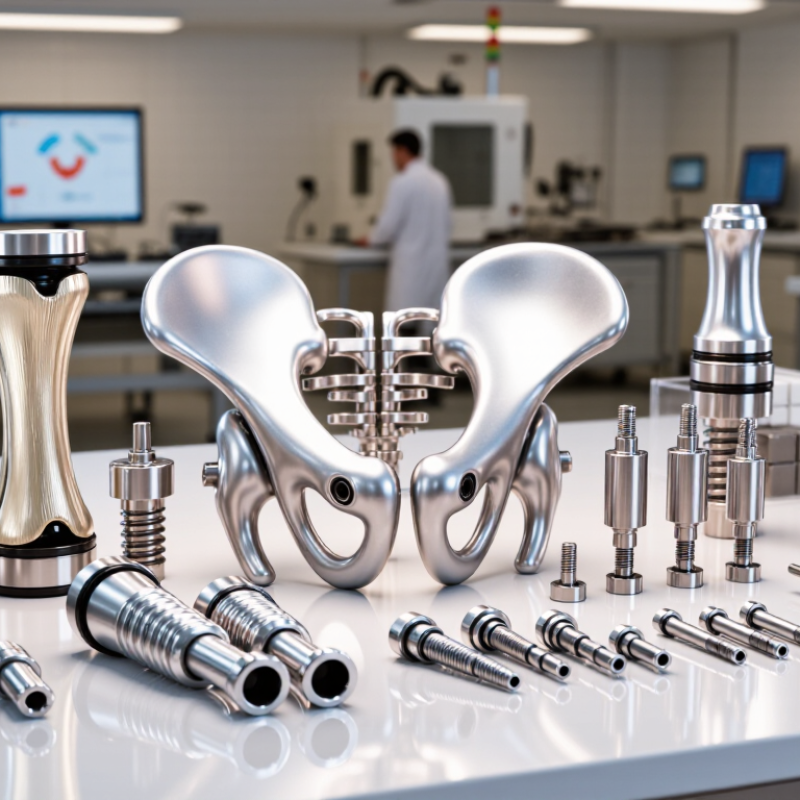
Total joint replacement engineering is the coordinated design of implants, instruments, surgical processes, and quality systems. It supports the replacement of damaged joints, including hips, knees, and shoulders. The work begins with anatomy, movement patterns, bone quality, and patient needs. It also considers material behavior, fixation methods, wear, sterilization, and long-term stability. Fit matters.
Its scope reaches beyond the implant itself. Engineers develop trial components, cutting guides, packaging, inspection methods, and production controls. They may use computer modeling, mechanical testing, dimensional inspection, and simulated wear studies. Experienced teams also review feedback from surgeons and rehabilitation specialists. This practical input can reveal problems that laboratory measurements miss. A component may pass a test yet feel difficult to position during surgery.
Reliable engineering suppliers in China should demonstrate controlled manufacturing, traceable materials, trained quality personnel, and documented risk management. Their facilities should support repeatable machining, surface treatment, cleaning, and sterile packaging. Independent verification remains important, especially for fatigue strength and interface accuracy. No design is perfect. Small changes in anatomy, surgical technique, or manufacturing tolerance can affect performance. Engineers must therefore record deviations, investigate complaints, and improve designs carefully. Clear technical communication helps hospitals and procurement teams judge capability without relying on attractive claims.
Core Technologies Used in Joint Replacement Engineering
China’s joint replacement engineering suppliers are moving beyond machining alone. Core technology now combines material science, digital design, and biological safety. The World Health Organization reported that musculoskeletal conditions affect about 1.71 billion people worldwide. This growing burden increases demand for dependable hip and knee implants.
Advanced suppliers use titanium alloys, cobalt-chromium alloys, and ultra-high-molecular-weight polyethylene. Titanium may reduce implant weight and support bone integration. Polyethylene liners require strict control of wear particles. Finite element analysis helps engineers examine stress around the femoral stem, acetabular cup, and fixation zone. Additive manufacturing can create porous surfaces, but surface consistency remains difficult. Quality systems should follow ISO 13485, while biological evaluation should reference ISO 10993. Material testing often follows ASTM F136 and ASTM F648. The National Joint Registry’s 20th Annual Report recorded more than three million procedures in its database, showing why long-term implant tracking matters. Yet registry data cannot replace clinical judgment.
Tips: Ask suppliers for fatigue, wear, sterilization, and traceability records. Review lot-level data, not only certificates. Request evidence from simulated gait testing. A polished surface is not automatically a safer surface. Engineers should also discuss revision surgery, because real patients rarely match laboratory assumptions. Human anatomy is irregular. Some design decisions still need better evidence.
China’s Total Joint Replacement Engineering Supply Chain
China’s total joint replacement engineering supply chain connects design, materials, precision machining, cleaning, packaging, and clinical support. Strong suppliers usually manage these stages as one controlled process. They also document every critical change.
Materials & Manufacturing
The chain often begins with medical-grade titanium, cobalt-chromium alloys, or high-performance polymers. Material certificates should match incoming inspection records. CNC machining then shapes femoral components, tibial trays, and trial instruments. Surface finishing requires controlled polishing and measured roughness. Small gaps matter.
Quality & Traceability
Quality teams typically use dimensional inspection, fatigue testing, cleanliness checks, and sterilization validation. Traceability links each component to its batch, operator, equipment, and inspection result. This evidence supports regulatory submissions and helps hospitals investigate problems quickly. Experienced engineering suppliers also review packaging strength, transport vibration, and storage conditions.
Communication remains a practical test. Engineers must understand surgeons’ feedback without losing manufacturing discipline. Production planners must balance custom requirements with stable lead times. A delayed coating process can affect several connected operations. No supply chain is flawless. Forecasts change, equipment needs maintenance, and inspection data can reveal unexpected variation. The better suppliers respond with documented corrective actions instead of vague promises. They also protect design files and restrict access to sensitive production information. Continuous improvement is valuable, but it should be measurable. A shorter cycle time means little if inspection quality declines. Reliable cooperation depends on transparent records, qualified personnel, and repeatable processes across the entire total joint replacement engineering network.
How to Evaluate Total Joint Replacement Engineering Suppliers in China
Evaluating total joint replacement engineering suppliers in China requires evidence beyond factory size. The China Joint Replacement Registry Annual Report 2023 reported more than one million hip and knee replacement procedures nationally. That scale increases the need for stable engineering control. Ask for ISO 13485 certification, process-validation records, material certificates, and lot-level traceability. Review fatigue, wear, corrosion, and sterilization data under recognized standards. A polished factory tour is not proof.
The WHO Global Patient Safety Report 2024 states that about one in ten patients experiences harm in healthcare, with more than half considered preventable. Supplier assessment should therefore include complaint trends, nonconformity rates, recall procedures, and post-market surveillance. Request anonymized evidence from comparable orthopedic projects, not only laboratory summaries. Check whether engineers can explain machining tolerances, surface finishing, packaging protection, and change-control rules clearly. Details matter.
I would also audit subcontractors. Quiet risks often hide there. Verify calibration intervals, cleanroom monitoring, operator training, and electronic records. A low quotation may reflect weaker validation, not better efficiency. I would not trust a perfect spreadsheet without production-floor interviews and sample testing. Procurement teams should involve surgeons, quality specialists, and regulatory professionals before approval. Even experienced reviewers can miss a small process change with large clinical consequences.
Industry Standards, Quality Systems, and Regulatory Requirements
China Top Total Joint Replacement Engineering Suppliers in China
Reliable total joint replacement engineering suppliers work within controlled standards, not attractive brochures. Their quality systems should align with ISO 13485 and documented risk management under ISO 14971. Each design change needs traceability, review, and approval. Small details matter.
A serious supplier can show material certificates for titanium, cobalt-chromium, ceramics, and ultra-high-molecular-weight polyethylene. Biocompatibility evidence should follow relevant ISO 10993 evaluations. Manufacturing records should identify batch numbers, machine settings, inspection tools, and operator training. Sterilization validation, packaging integrity, and shelf-life testing also require controlled evidence. Clean rooms need monitored particles, temperature, humidity, and pressure.
Regulatory compliance in China requires careful attention to applicable National Medical Products Administration requirements. Product classification, registration materials, technical specifications, clinical evidence, and post-market surveillance must match the device’s intended use. Export projects may also require separate market approvals. Do not assume one certificate covers every market.
In practical audits, I look beyond polished procedures. Are nonconforming parts isolated immediately? Can engineers explain why a tolerance changed? Are corrective actions checked months later? These questions reveal operational maturity. Sometimes the paperwork appears complete, yet shop-floor habits remain inconsistent. That gap deserves honest review. No system is flawless. Supplier evaluation should include facility visits, sample inspections, process validation records, and direct interviews with quality engineers. Consistent evidence builds confidence.
China Top Total Joint Replacement Engineering Suppliers in China - Industry Standards, Quality Systems, and Regulatory Requirements
Key international and Chinese standards commonly referenced for total joint replacement engineering, shown by their publication or latest revision year.
The timeline highlights the standards framework relevant to quality management, risk management, biological evaluation, non-active surgical implants, and Chinese-adopted medical-device requirements. Compliance with these standards does not by itself constitute supplier qualification or regulatory approval.
FAQS
Common materials include titanium alloys, cobalt-chromium alloys, ceramics, and medical-grade polyethylene. Titanium can reduce implant weight and support bone integration. Each material still needs wear, fatigue, corrosion, and biological testing.
Finite element analysis helps engineers study stress around the femoral stem, cup, and fixation zone. Digital models can reveal weak areas before production. However, laboratory assumptions may not reflect irregular human anatomy.
Request material certificates, fatigue results, wear data, sterilization records, and lot-level traceability. Ask for simulated gait testing evidence. A certificate alone is not enough.
Additive manufacturing can create porous surfaces that support fixation. However, pore size and surface consistency can vary between batches. A polished surface is not automatically safer.
The supplier should maintain a controlled medical-device quality system. Design changes need review, approval, and traceability. Manufacturing records should show batch numbers, machine settings, inspection tools, and operator training.
Review biological evaluations, sterilization validation, packaging integrity, and shelf-life testing. Clean areas should monitor particles, temperature, humidity, and pressure. Small gaps can matter.
Yes, subcontractors can introduce hidden risks. Check their calibration intervals, operator training, cleanroom records, and electronic documentation. I would not rely only on the main factory’s presentation.
Warning signs include unclear nonconformity handling, missing lot records, weak change control, and unexplained tolerance changes. Very low quotations may reflect limited validation. Sometimes the paperwork looks complete, but production habits disagree.
Joint implants require evidence beyond initial production quality. Ask how the supplier studies wear, loosening, revision surgery, and long-term performance. Registry data can support review, but it cannot replace clinical judgment.
Conclusion
Total Joint Replacement Engineering covers the complete development and production process for artificial joint systems, including implant design, material selection, precision machining, surface treatment, surgical instruments, and supporting technical services. This field combines biomechanics, medical materials science, digital modeling, manufacturing automation, and clinical usability to create reliable solutions for hip, knee, shoulder, and other joint procedures. China has developed a broad supply chain that connects raw material providers, component manufacturers, testing laboratories, medical institutions, and specialized engineering service companies.
When evaluating suppliers in China, buyers should consider technical expertise, manufacturing capacity, quality consistency, traceability, customization capabilities, and after-sales support. A qualified supplier should operate an effective quality management system, follow applicable medical device regulations, and maintain strict controls for design verification, risk management, sterilization, packaging, and product inspection. Understanding industry standards and regulatory requirements is essential for ensuring that Total Joint Replacement Engineering projects achieve dependable performance, patient safety, and long-term market compliance.