Knowledge & Innovation

Orthopedic Device Insights & Industry News

Explore technical articles, regulatory clearance strategies, design trends, and manufacturing innovations from Rebellion Solutions.

0%

Choosing the world’s leading custom surgical instrument manufacturers requires more than comparing glossy catalogues. It requires evidence. This introduction examines companies that design, prototype, machine, finish, and validate instruments for demanding clinical environments. The focus is Custom Surgical Instrument Manufacturing, where a few millimeters can affect grip, access, balance, and surgical control.

The strongest manufacturers usually demonstrate repeatable quality systems, skilled engineers, traceable materials, and disciplined inspection processes. They also listen carefully to surgeons. A retractor may need a smoother edge, a lighter handle, or a locking mechanism that works through a wet glove. Small details matter. Dr. Atul Gawande, a surgeon and healthcare quality authority, wrote, “We have trained in medicine to be very good at what we do, but not at how we work together.” His observation also applies to instrument development, because successful customization depends on surgeons, engineers, machinists, and quality teams working as one system.

This guide considers technical capability, regulatory readiness, communication, production flexibility, and experience with complex instrument programs. It also looks beyond marketing claims. A manufacturer may offer excellent machining but weak clinical collaboration. Another may provide thoughtful prototypes yet struggle with global scale. No ranking is perfectly objective. Supplier capabilities change, and public information can remain incomplete. That limitation deserves attention. Readers should verify certifications, sample quality, lead times, sterilization compatibility, and post-delivery support before making a decision. The best partner is not always the largest factory. It is the one that consistently converts clinical needs into safe, practical, and manufacturable instruments.
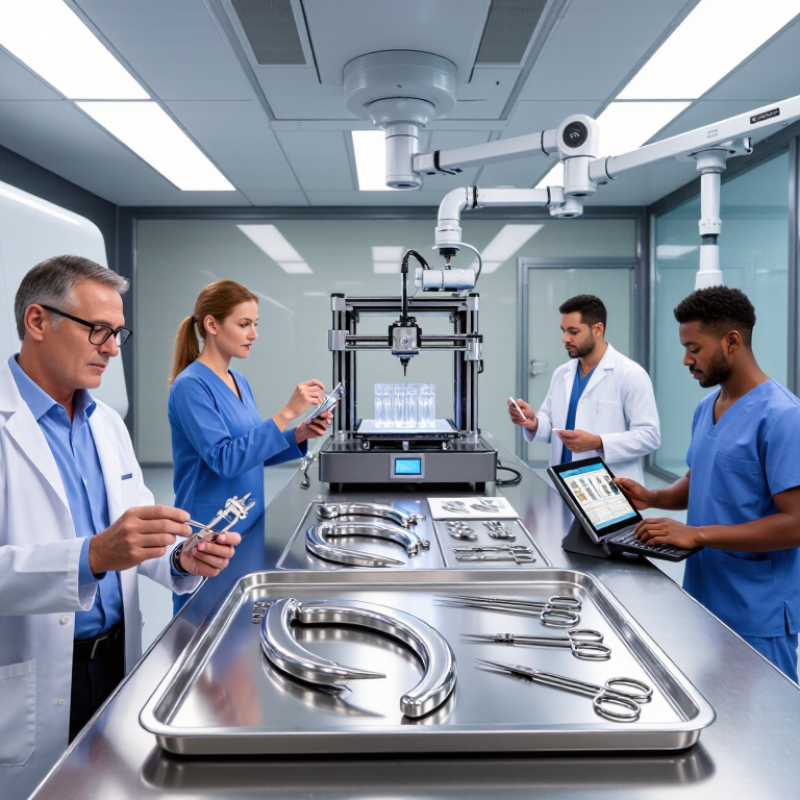
What Are the Top Custom Surgical Instrument Manufacturers Worldwide?

What Custom Surgical Instrument Manufacturers Provide

Custom surgical instrument manufacturers provide more than metal parts. They turn a surgeon’s working need into a validated, repeatable device. Their services often include design review, 3D modeling, rapid prototypes, CNC machining, forging, laser marking, polishing, and surface treatment. They may also support cleaning tests, sterilization validation, packaging studies, and technical documentation.

Demand for these services is expanding. Grand View Research estimates that the global surgical instruments market reached about USD 14.3 billion in 2023. Its report also forecasts continued growth through 2030.

Custom production supports this trend by serving specialized procedures, smaller device runs, and hospital-specific ergonomics. A manufacturer should provide material certificates, dimensional inspection records, lot traceability, and controlled process changes. ISO 13485-based quality systems are especially important because design decisions can affect tissue contact, grip strength, and reprocessing safety.

Good engineering is visible in small details. A handle should feel balanced after several minutes of use. Serrations need consistent spacing. Hinges must move smoothly without trapping residue.

Manufacturers commonly offer design-for-manufacturing feedback before cutting metal, which can reduce waste and late revisions. Still, no supplier gets every specification right on the first drawing. That weakness deserves attention.

Buyers should request sample testing, clear acceptance criteria, and evidence from comparable production work. A low quotation may hide expensive redesigns, weak documentation, or difficult inspection steps.

How Custom Surgical Instruments Are Designed and Developed

Designing a custom surgical instrument begins with a specific clinical problem, not a polished sketch. Surgeons describe the movement, pressure, and access limitations they experience during procedures. Engineers then convert those observations into measurable requirements, including tip geometry, grip size, working length, and balance.

The first prototype is rarely right. That is normal. A handle may feel secure on paper but cause fatigue during repeated use. A narrow tip may improve visibility yet lose strength under load. Prototypes are machined, assembled, and tested with realistic force and motion. Feedback from surgeons guides each revision. Small details matter, such as a textured grip, a smooth hinge, or an edge that remains easy to clean.

Material selection requires practical expertise. Stainless steel, titanium, and specialized alloys offer different levels of strength, weight, corrosion resistance, and manufacturability. Developers also assess sterilization compatibility and surface finish. Every design decision should support safe handling and consistent performance. Quality teams review dimensional records, material certificates, and inspection results throughout development.

Some assumptions fail.

That failure provides useful evidence. A reliable manufacturer documents design changes, controls production variables, and verifies the instrument against approved specifications. User trials, risk assessments, and simulated-use testing can reveal problems that laboratory measurements miss. The development process is therefore collaborative, disciplined, and open to revision. Good instruments are not merely custom-shaped tools; they are carefully engineered responses to real surgical conditions.

Material Density Considerations in Custom Surgical Instrument Design

Material selection is a key step in developing custom surgical instruments. Lower-density materials can reduce instrument weight, while stainless steels and cobalt-chromium alloys provide the rigidity and durability required for many reusable designs. The values shown are representative nominal densities and may vary slightly by alloy grade, heat treatment, and manufacturing process.

Key Manufacturing Standards and Quality Requirements

Custom surgical instrument manufacturers should demonstrate more than machining skill. They need controlled processes, qualified personnel, and evidence that each design meets its intended clinical use. ISO 13485-based quality systems help organize design reviews, purchasing controls, production records, and corrective actions. A certificate alone proves little. Auditors should examine how the system works on the factory floor.

Material selection requires careful documentation. Stainless steel, titanium, and polymer components should have verified grades, certificates, and corrosion resistance data. Instruments with patient contact may require biocompatibility assessment under ISO 10993 principles.

Cutting edges, jaws, hinges, and shafts need measurable tolerances. Functional testing should reflect repeated sterilization, cleaning, and handling. No audit is perfect.

Reliable manufacturers maintain traceability from raw material to final inspection. Laser markings, batch records, inspection reports, and packaging checks should remain readable after sterilization. Risk management, often aligned with ISO 14971, should address breakage, surface damage, loose components, and incorrect assembly. Independent testing can strengthen confidence, especially for complex or powered instruments. Still, production variation can appear unexpectedly. That gap deserves attention. Regular process reviews, supplier audits, and honest nonconformance reports provide stronger assurance than polished marketing language.

Leading Custom Surgical Instrument Manufacturers Worldwide

Leading Custom Surgical Instrument Manufacturers Worldwide

Leading custom surgical instrument manufacturers combine precision engineering with practical clinical understanding. They study how surgeons grip, rotate, and release each instrument during demanding procedures. A reliable manufacturer also reviews the operating environment, sterilization method, and expected service life before production begins.

Materials matter greatly.

Surgical stainless steel, titanium, and specialized coatings must meet strict performance requirements. Skilled teams control hardness, balance, surface finish, and joint movement through documented inspections. Fit matters. A millimeter can affect comfort, visibility, and procedural control. Manufacturers with strong technical systems provide prototypes, dimensional reports, traceability records, and controlled validation.

Communication often separates capable suppliers from exceptional ones. Engineers should discuss drawings, tolerances, packaging, and cleaning instructions with clinical users. They should also explain limitations without hiding behind polished sales language. Details decide. In practice, no custom project is perfect on the first attempt. Handle texture may feel too sharp, or the hinge may require excessive pressure. Honest feedback supports useful redesigns.

Worldwide manufacturers increasingly use digital modeling, precision machining, laser marking, and repeatable quality checks. Yet technology cannot replace experienced inspection. A trained specialist can notice uneven movement that a measurement sheet misses. Buyers should examine manufacturing history, quality certifications, complaint handling, and post-delivery support. Lower prices may appear attractive, but weak documentation can create delays and uncertainty. A dependable partner treats every instrument as a clinical tool, not merely a metal product.

How to Evaluate and Select a Custom Instrument Manufacturer

Selecting a custom surgical instrument manufacturer begins with clinical use, not catalog size.

Describe the procedure, tissue contact, geometry, force, and sterilization cycles. Ask engineers to translate surgeon feedback into drawings and tolerances.

A capable supplier shares prototypes, inspection reports, and design-change records. Do not accept polished samples alone. They may hide process variation.

Measure twice.

Evaluate the quality system carefully.

Verify ISO 13485 certification, traceability, material certificates, and relevant biocompatibility evidence. Review controls for machining, forging, finishing, passivation, and laser marking.

Request sample batches, not one perfect instrument. Check jaw alignment under magnification and ratchet consistency.

Ask for documented nonconformance handling and corrective action. This reveals operational maturity.

Certification helps, but it does not prove surgical performance. This matters.

Compare lead times with real milestones: design freeze, prototype, verification, pilot production, and final release.

Clarify drawing ownership, confidentiality, minimum order quantities, replacement terms, and feedback procedures.

A reliable manufacturer flags impossible tolerances instead of agreeing too quickly. Ask who approves deviations and investigates complaints.

Site audits or live video inspections provide useful evidence. Be cautious with vague answers.

Price matters, but unstable finishing or delayed revisions can cost more.

Selection criteria may still need refinement, because clinical teams often discover requirements after handling prototypes.

Leave room for measured feedback, controlled redesign, and honest disagreement.

FAQS

What should a custom surgical instrument manufacturer demonstrate?

It should show controlled processes, qualified staff, design reviews, production records, and corrective actions. Machining skill alone is insufficient.

How should material quality be verified?

Ask for material grades, certificates, corrosion data, and traceability records. Stainless steel, titanium, and polymers need documented verification.

Why is biocompatibility assessment important?

Patient-contact components may require assessment under ISO 10993 principles. Material safety should match the intended clinical use.

What functional tests should instruments undergo?

Tests should examine cutting edges, jaws, hinges, shafts, and repeated sterilization. Cleaning and handling cycles matter too.

How can buyers check manufacturing traceability?

Review batch records, laser markings, inspection reports, and packaging checks. These records should remain readable after sterilization.

What risks should the quality system address?

It should consider breakage, surface damage, loose parts, incorrect assembly, and unexpected production variation. The gap deserves attention.

Why are prototypes and clinical feedback useful?

Prototypes reveal practical problems, such as sharp handles or stiff hinges. A millimeter can affect comfort and control.

Can digital manufacturing replace experienced inspection?

No. Digital models and measurements help, but trained specialists may notice uneven movement or awkward handling.

What should buyers review before choosing a manufacturer?

Examine quality records, supplier controls, complaint handling, validation reports, and post-delivery support. Attractive pricing can hide documentation gaps.

Is a quality certificate enough?

No. Auditors should observe factory processes, not only certificates. No audit is perfect. Reevaluation remains necessary.

Conclusion

Custom Surgical Instrument Manufacturing involves the design, production, and refinement of surgical tools tailored to specific clinical procedures, surgeon preferences, and healthcare requirements. Manufacturers typically support the full process, from concept development and material selection to prototyping, precision machining, finishing, inspection, and final packaging. Effective design focuses on ergonomics, functionality, durability, sterilization compatibility, and ease of use in demanding surgical environments.

High-quality manufacturers follow strict quality systems and maintain consistent control over materials, dimensional accuracy, surface treatment, traceability, and performance testing. When evaluating a supplier, buyers should consider technical expertise, engineering support, production capacity, quality documentation, communication, lead times, customization flexibility, and after-sales service. The most suitable partner is one that can translate clinical needs into reliable instruments while maintaining repeatable manufacturing standards and supporting long-term product improvement.


Isabella

Isabella

Isabella is a dedicated marketing professional with a deep-seated expertise in her company's diverse range of products and services. With a strong focus on creating impactful content, she regularly updates the company's professional blog, providing insights and analyses that enhance the......