
Knowledge & Innovation

Orthopedic Device Insights & Industry News

Explore technical articles, regulatory clearance strategies, design trends, and manufacturing innovations from Rebellion Solutions.

0%

Choosing an Orthopedic Prototype Manufacturing partner in 2026 requires more than comparing equipment lists. It requires evidence, communication, and clinical awareness.

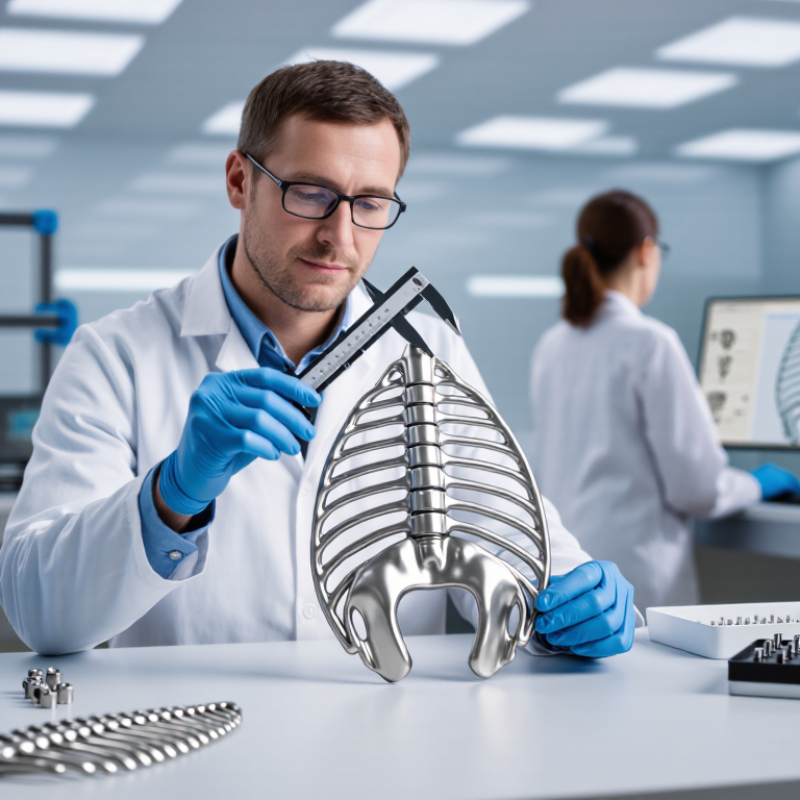
A reliable manufacturer should understand anatomy, mechanical loading, implant materials, and design verification. They should also explain how prototypes move from CAD files to inspected physical parts. Ask about machining, additive manufacturing, surface finishing, dimensional inspection, and material traceability. Small details matter. A rough edge can distort a fit test. An undocumented material change can weaken confidence in later results.

Biomedical engineer Scott Hollister has said, “The ultimate goal is to create a living, functional replacement for tissues and organs.” This perspective reminds teams that orthopedic prototypes are not merely attractive models. They support decisions about comfort, fixation, strength, and patient safety.

Look for suppliers familiar with design controls, risk management, and quality systems such as ISO 13485. Their experience should include patient-specific geometry, CT-derived models, anatomical testing, and controlled revision histories. Ask to review inspection reports, sample documentation, and previous project workflows. A confident answer is useful. A measurable answer is better.

Do not select a vendor only because the first sample looks perfect. It may conceal weak process control. Prototype success depends on repeatability, not appearance alone. Sometimes, the early design is wrong. That is normal.

The strongest partner will challenge unclear tolerances, identify manufacturability risks, and recommend practical testing steps. They will also admit limitations. That honesty is valuable.

This guide explains how to evaluate Orthopedic Prototype Manufacturing capabilities, technical credibility, communication habits, and long-term development support before making a decision.
2026 How to Choose Orthopedic Prototype Manufacturing?

Define Orthopedic Prototype Needs Under FDA 21 CFR Part 820

When choosing orthopedic prototype manufacturing, define the device purpose before selecting materials or processes. Under FDA 21 CFR Part 820, now aligned with ISO 13485:2016 through the Quality Management System Regulation, prototype work should support controlled design activities. Record the intended use, anatomical location, patient contact, expected load, and operating environment. A knee implant trial part and a surgical instrument need different evidence.

Create clear design inputs for dimensions, tolerances, surface finish, strength, cleanliness, and biological safety. Link each input to a drawing, inspection method, or test record. Maintain revision control for CAD files and specifications. Keep supplier information, material certificates, nonconformance reports, and approval decisions traceable. Verification should show whether the prototype meets its requirements. Validation should address intended use, simulated clinical conditions, and user needs. A visually accurate part is not automatically a safe prototype.

Tips: Ask the manufacturer how it controls changes, measures tight tolerances, prevents material mix-ups, and protects records. Request sample inspection reports before production. Review risk controls with engineering, quality, and clinical personnel. Avoid treating a prototype as an informal experiment. That assumption can create gaps later. Also, not every early prototype needs full production-level documentation, but its purpose and limitations must be documented. Pretty parts can still mislead.

2026 How to Choose Orthopedic Prototype Manufacturing?

Define Orthopedic Prototype Needs Under FDA 21 CFR Part 820

This planning chart ranks key evidence areas for an orthopedic prototype workflow. The scores are an illustrative prioritization index, not FDA-assigned ratings. Relevant 21 CFR Part 820 areas include design controls, production and process controls, acceptance activities, nonconforming product, corrective and preventive action, and device records. Applicability should be confirmed according to device classification, intended use, and the current FDA quality-system requirements.

Match Implant Materials with ASTM F2026 and ISO 10993 Requirements

Choosing an orthopedic prototype starts with the implant’s contact profile, not the machine shop. ASTM F2026 specifies PEEK polymers for surgical implant applications, including material identity and performance controls. It does not automatically prove biocompatibility. For metal, ceramic, UHMWPE, or PEEK parts, ISO 10993 requires a risk-based biological evaluation. ISO 10993-1 classifies contact as surface, externally communicating, or implant contact. Duration also matters: limited contact is up to 24 hours, prolonged contact exceeds 24 hours to 30 days, and permanent contact exceeds 30 days.

The FDA’s 2023 guidance on ISO 10993-1 recommends selecting endpoints from tissue contact, exposure time, processing, and clinical risk. That approach can prevent unnecessary testing, but it demands better records. A machined PEEK trial part may pass dimensional inspection while retaining machining residue, mold-release contamination, or sterilization changes. ASTM F2026 material certificates should be matched with supplier lot data, processing history, sterilization method, and final cleaning validation. The weak point is often not the polymer. It is the undocumented process.

Tips: Build a material-to-risk matrix before cutting metal or polymer. Record the exact grade, lot, additives, and finishing steps. Test the final manufactured state, not only raw resin. Ask whether the proposed ASTM F2026 material is suitable for the intended implant design. It may not be. Recheck assumptions with a qualified materials and biological-safety specialist.

2026 How to Choose Orthopedic Prototype Manufacturing? - Match Implant Materials with ASTM F2026 and ISO 10993 Requirements

Implant Material Typical Orthopedic Prototype Uses ASTM F2026 Applicability Common Material Standards to Review Relevant ISO 10993 Evaluation Areas Suitable Prototype Processes Key Selection Considerations
Ultra-high-molecular-weight polyethylene (UHMWPE) Acetabular liners, tibial inserts, wear components, and other bearing elements Directly applicable when the material is intended for surgical implants; ASTM F2026 specifies requirements for UHMWPE used in surgical implants ASTM F2026; applicable material, processing, and finished-device specifications should also be reviewed ISO 10993-1 biological evaluation plan; ISO 10993-5 cytotoxicity; ISO 10993-12 sample preparation; ISO 10993-18 chemical characterization; ISO 10993-17 toxicological risk assessment; additional tests based on contact type and duration CNC machining, compression molding, ram extrusion, or machining from qualified stock; controlled finishing and cleaning are essential Wear resistance, oxidation, sterilization effects, molding history, surface finish, and traceability of resin and processing conditions
Titanium and titanium alloys Bone plates, screws, spinal components, fixation devices, and porous or solid implant structures Not directly applicable; ASTM F2026 is specific to UHMWPE and does not establish requirements for titanium ASTM F67 for unalloyed titanium; ASTM F136 for wrought titanium-6Al-4V ELI; other device-specific standards may apply ISO 10993-1 biological evaluation; ISO 10993-5 cytotoxicity; ISO 10993-12 sample preparation; ISO 10993-18 chemical characterization; ISO 10993-17 toxicological assessment; particulate and surface-related assessment where relevant CNC machining, laser or electron-beam powder-bed fusion, metal injection molding, and additive manufacturing for porous structures Surface roughness, residual powder, heat treatment, porosity, dimensional accuracy, corrosion behavior, and removal of machining or additive-manufacturing residues
Cobalt-chromium-molybdenum alloy Femoral heads, articulating components, trauma hardware, and high-wear metallic parts Not directly applicable; ASTM F2026 does not cover cobalt-chromium alloys ASTM F75 for cobalt-28chromium-6molybdenum casting alloy; the selected product form and device specification must also be considered ISO 10993-1, -5, -12, -17, and -18 as appropriate; evaluate metallic ions, particulates, processing residues, and patient-contact duration CNC machining, investment casting, and metal additive manufacturing for selected geometries Hardness, wear, corrosion, surface integrity, inclusions, dimensional control, and management of metal particulates or residues
PEEK (polyether ether ketone) Spinal cages, fixation components, radiolucent trial parts, and structural polymer prototypes Not directly applicable; ASTM F2026 is limited to UHMWPE Device-specific polymer specifications and validated supplier material specifications; the selected grade and fillers must be documented ISO 10993-1, -5, -12, -18, and -17 as applicable; assess additives, colorants, fillers, processing residues, and sterilization effects CNC machining, injection molding, and polymer additive manufacturing for design and fit prototypes Grade selection, fiber or radiopaque filler content, moisture and thermal history, surface finish, sterilization compatibility, and mechanical anisotropy in printed parts
Polymethyl methacrylate (PMMA) Bone cement-related prototypes, spacer concepts, anatomical models, and cemented fixation evaluations Not directly applicable; ASTM F2026 does not cover PMMA The applicable bone-cement or device-specific standard should be selected according to formulation and intended use ISO 10993-1, -5, -12, -18, and -17 as applicable; residual monomer, additives, extractables, and degradation or leachable substances require consideration Mix-and-cure processing, casting, machining, and low-volume molding Mixing ratio, curing temperature, porosity, residual monomer, exothermic reaction, mechanical strength, and handling time
Polyurethane or other elastomeric polymers Flexible interfaces, damping elements, temporary prototypes, and soft-tissue-contact components Not directly applicable; ASTM F2026 is not a general polymer standard A material-specific or device-specific standard should be identified based on chemistry, formulation, and intended clinical contact ISO 10993-1, -5, -10 or -23 where relevant, -12, -18, and -17; evaluate sensitization, irritation, cytotoxicity, extractables, and degradation products Compression molding, casting, overmolding, CNC machining of suitable stock, and additive manufacturing for non-final prototypes Hydrolysis or oxidation, hardness, tear strength, compression set, additives, curing residues, and long-term chemical stability
Important compliance note: ASTM F2026 applies specifically to UHMWPE for surgical implants. ISO 10993 is a series of biological-evaluation standards rather than a single universal test package. The required evaluations should be determined through a documented risk-based biological evaluation, considering the final material, manufacturing process, sterilization method, body contact type, contact duration, and finished-device configuration.

Compare CNC, SLM, and SLA Using 20–60 μm Layer Data

2026 How to Choose Orthopedic Prototype Manufacturing?

For orthopedic prototypes, layer data helps, but it does not tell the whole story. CNC machining creates no printed layers. It cuts aluminum, titanium, or engineering plastic from a solid block. This often delivers predictable dimensions, sharp interfaces, and smooth bearing areas. However, deep channels and complex lattice structures may require extra setups or specialized tools.

SLM commonly uses 20–60 μm metal layers. Smaller layers can capture porous structures and curved bone-contact surfaces more accurately. Yet, thin layers increase build time and may leave partially fused powder in narrow cavities. Heat can also cause distortion. Stress-relief treatment and careful support removal remain essential. A prototype may look precise before machining, then shift slightly afterward.

SLA usually works within a similar 20–60 μm range, depending on the selected resin and machine settings. It produces fine visual details, clear anatomy models, and smooth surgical planning forms. It is less suitable for final load-bearing evaluation because resin behavior can change with moisture, temperature, and aging. I have seen teams overvalue a smooth surface and overlook weak snap-fit features. That mistake is easy to repeat.

Choose CNC for functional fit checks and durable handling. Choose SLM for complex metal geometry and porous design studies. Choose SLA for fast visual validation and ergonomic review. Measure critical holes, mating faces, and lattice openings after post-processing. The first result is rarely perfect. Recheck the assumptions.

Audit Suppliers Against ISO 13485:2016 and Full Lot Traceability

2026 How to Choose Orthopedic Prototype Manufacturing?

Audit suppliers against ISO 13485:2016, not attractive samples alone. A capable prototype partner should show controlled procedures, trained personnel, and documented risk management. Ask how design inputs become drawings, inspection plans, and production records. Request recent examples with sensitive information removed.

Traceability must follow every lot. Check whether raw material certificates connect to heat numbers, supplier receipts, machining travelers, inspection results, and shipment records. For titanium components, the lot identity should remain visible after cutting, washing, and packaging. Do not assume. Test the system with a sample record. Can the supplier retrieve every related document within one working day?

Review calibration logs, equipment maintenance, nonconformance reports, and corrective actions. ISO 13485:2016 alignment means more than holding a certificate. The quality system must operate on the factory floor. Walk through the process. Compare written procedures with actual operator behavior. A clean audit room can mislead. In practice, missing signatures and unclear revision control often create greater risk than visible cosmetic defects.

Ask how engineering changes are approved during prototype builds. Confirm that obsolete drawings cannot quietly reach production. Evaluate packaging identification and final release authority. Suppliers should explain what happens when a measurement fails, not hide the problem. I have found that honest escalation is stronger than perfect-looking records. Some traceability systems remain partly manual, so verify their weaknesses and require practical controls before production expands.

Select Partners by 2026 Lead-Time, Cost, and ±0.1 mm Tolerance Targets

2026 How to Choose Orthopedic Prototype Manufacturing?

Select Partners by 2026 Lead-Time, Cost, and ±0.1 mm Tolerance Targets

In 2026, orthopedic prototype selection should begin with measurable production targets. Ask for a lead-time plan, not a hopeful delivery date. A capable partner should separate machining, finishing, inspection, and shipping times. For a small bone plate prototype, five extra inspection days can affect the entire test schedule. Confirm whether the quoted lead time includes material sourcing and fixture preparation.

Cost needs equal attention. Request an itemized quotation covering programming, tooling, surface treatment, inspection, and design revisions. A low unit price may hide expensive setup work. Compare total project cost instead. The cheapest option is rarely the safest choice. It can become expensive.

Tolerance claims also require evidence. If your drawing specifies ±0.1 mm, ask how critical dimensions will be measured. A coordinate measuring machine, calibrated gauges, and a recorded inspection report provide stronger confidence than a verbal promise. Review datum selection, material behavior, and surface finish requirements before production. Titanium and stainless steel can respond differently to cutting heat and clamping pressure.

Technical communication matters. Send the partner a clear 3D model, 2D drawing, material grade, and tolerance map. Request a manufacturability review before approval. In practice, teams sometimes over-specify every feature. That increases cost without improving function. I have also seen tolerance assumptions change late, causing avoidable delays. A short design review can expose those weaknesses early. Leave room for learning. Prototype manufacturing is not perfectly predictable. Reliable partners document deviations, explain risks, and suggest practical corrections without weakening essential performance.

FAQS

What should I check beyond attractive prototype samples?

Review controlled procedures, trained personnel, risk management, and production records. Samples alone can mislead.

How can I verify full lot traceability?

Test one sample record. Raw material certificates should connect with heat numbers, machining records, inspections, and shipping documents.

Should titanium lot identity remain visible during production?

Yes. It should remain identifiable after cutting, washing, and packaging. Do not assume; verify it.

What quality records should a supplier provide?

Check calibration logs, equipment maintenance, nonconformance reports, corrective actions, and final release records.

How quickly should traceability documents be retrieved?

Ask whether the supplier can retrieve every related document within one working day. Manual systems need extra controls.

How should engineering changes be managed during prototyping?

Changes need approval and revision control. Obsolete drawings must not quietly reach production.

What should a lead-time quotation include?

It should separate material sourcing, fixture preparation, machining, finishing, inspection, and shipping. Five extra inspection days matter.

How should prototype costs be compared?

Request itemized pricing for programming, tooling, surface treatment, inspection, and revisions. Compare total project cost, not unit price.

How can I verify a ±0.1 mm tolerance claim?

Ask for calibrated measurement equipment and recorded inspection results. Review datums, material behavior, clamping, and surface finish.

What information should I send before requesting a review?

Provide a 3D model, 2D drawing, material grade, and tolerance map. Request manufacturability feedback early.

What common planning weakness should I expect?

Teams may over-specify features or change tolerances late. A short design review can reveal costly assumptions.

How should a supplier respond when measurements fail?

They should document the deviation, explain the risk, and propose a practical correction. Perfect-looking records are not always honest.

Conclusion

Choosing the right Orthopedic Prototype Manufacturing strategy in 2026 requires a clear understanding of clinical goals, regulatory expectations, and production capabilities. Start by defining the prototype’s intended use, risk level, performance requirements, and documentation needs under FDA 21 CFR Part 820. Material selection should then align with implant-specific requirements, including ASTM F2026 where applicable and ISO 10993 biocompatibility considerations. Evaluating CNC machining, selective laser melting, and stereolithography through factors such as 20–60 μm layer data, surface finish, strength, and dimensional stability can help determine the most suitable process.

Supplier qualification is equally important. Manufacturers should be audited for ISO 13485:2016 compliance, process validation, quality controls, and complete lot traceability. Finally, compare potential partners using 2026 targets for lead time, total cost, communication, and dimensional accuracy, including a practical tolerance goal of ±0.1 mm. A structured evaluation helps reduce development risks and supports reliable, compliant orthopedic prototype production.

Charlotte

Charlotte

Charlotte is a dedicated marketing professional with an exceptional level of expertise in our company's product offerings. With a deep understanding of market trends and consumer needs, she plays a vital role in shaping our brand's narrative. Charlotte frequently updates our website with insightful......