
Knowledge & Innovation

Orthopedic Device Insights & Industry News

Explore technical articles, regulatory clearance strategies, design trends, and manufacturing innovations from Rebellion Solutions.

0%

Choosing China’s best CNC Grinding for Surgical Instruments supplier requires more than comparing prices or viewing polished factory photographs. Surgical components demand repeatable geometry, controlled surface finish, clean production areas, and complete inspection records. A supplier may display advanced five-axis grinders, yet still lack stable process control across thousands of parts. That difference matters.

Stephen Malkin, a respected grinding researcher and author of Grinding Technology, stated, “Grinding is a complex process involving the interaction of a large number of abrasive grains with the workpiece.” His observation explains why supplier evaluation must examine wheel selection, coolant management, dressing methods, and material behavior. These details influence cutting edges, hinge surfaces, and narrow instrument tips. A reliable manufacturer should also provide equipment information, operator qualifications, calibration evidence, and traceable inspection reports.

The strongest China suppliers usually combine CNC automation with experienced process engineers. Look for in-process measurement, controlled burr removal, and documented corrective actions. Ask how they manage stainless steel grades, titanium alloys, and heat-treated components. Request sample parts with measurable specifications, not only visual approval. However, no supplier is perfect. Even a capable factory may face wheel wear, thermal distortion, or inconsistent incoming material. Honest communication about these weaknesses can be more valuable than exaggerated promises.

This article outline reviews supplier capabilities, quality systems, machining accuracy, communication practices, and total purchasing risk. It also considers lead times, prototype support, packaging, and long-term cooperation. The goal is practical judgment. Not marketing language. A suitable partner should prove performance with evidence, repeatability, and clear accountability before production begins.
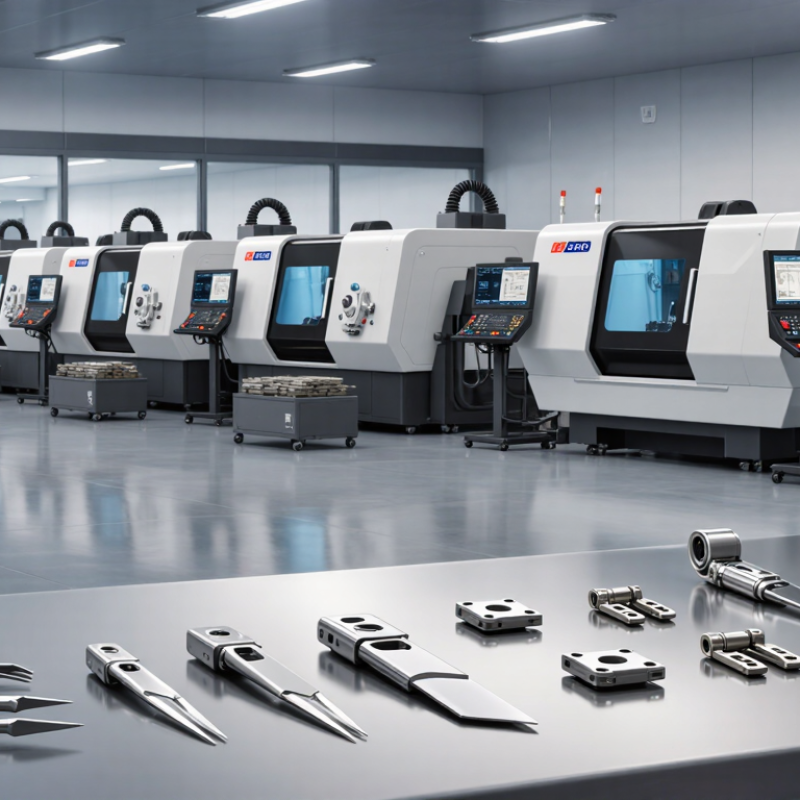
China Best CNC Grinding for Surgical Instruments Suppliers?

CNC Grinding for Surgical Instruments: Definition and Scope

CNC grinding for surgical instruments is a precision manufacturing process. It removes small amounts of material with a rotating abrasive wheel. The process shapes edges, slots, shanks, hinges, and cutting surfaces. Typical materials include stainless steel, cobalt-chromium alloys, and hardened tool steel. Each material needs different wheel specifications, coolant control, and feed rates.

The scope extends beyond simple sharpening. It covers surface preparation, dimensional control, burr removal, and repeatable finishing before cleaning and sterilization. A grinding supplier may use external, internal, centerless, or five-axis grinding equipment. For a forceps hinge, even a slight mismatch can affect opening resistance. For scissors, uneven bevels may create poor cutting action. Small details matter.

Grand View Research reported that the global surgical instruments market reached approximately USD 14 billion in 2023, with continued growth expected through 2030. This expansion increases demand for stable, traceable machining processes. ISO 13485-based quality systems commonly support inspection records, process validation, and material traceability. However, compliance documents do not replace practical experience. Wheel wear, thermal damage, and microscopic burrs can still appear during production. That uncomfortable gap deserves attention. Suppliers should verify critical dimensions with calibrated gauges, optical inspection, and documented sampling plans. A polished surface may look acceptable but still fail under repeated use. Supplier evaluation should examine actual grinding data, not only equipment lists or sales claims.

Key Grinding Processes Used in Surgical Instrument Manufacturing

China Best CNC Grinding for Surgical Instruments Suppliers?

CNC grinding gives surgical instruments their controlled geometry, clean edges, and consistent fit. Common processes include surface grinding, cylindrical grinding, centerless grinding, and internal grinding. Each process solves a different manufacturing problem. Surface grinding creates flat jaws and precise clamping faces. Cylindrical grinding refines shafts, pins, and round handles. Centerless grinding supports high-volume production of narrow components. Internal grinding improves holes used for pivots or locking mechanisms.

Edge grinding needs special attention. A cutting blade may require a controlled bevel, uniform thickness, and a smooth transition near the tip. Excessive heat can weaken the material or create discoloration. Skilled operators adjust wheel speed, feed rate, coolant flow, and dressing intervals. Small changes matter. They should inspect edges under magnification, not rely on touch alone.

Reliable suppliers should provide process records, material traceability, dimensional reports, and surface roughness results. Coordinate measuring machines can verify critical features, while optical inspection helps detect burrs and uneven bevels. A clean coolant system also reduces the risk of abrasive contamination. I would not trust a bright surface alone. Polishing can hide grinding defects. No grinding plan is perfect; trial parts may reveal vibration marks or slight taper. Suppliers that document these findings can improve fixtures, tooling, and inspection methods before volume production.

China Best CNC Grinding for Surgical Instruments Suppliers? - Key Grinding Processes Used in Surgical Instrument Manufacturing

Grinding Process Typical Surgical Components Common Materials Typical Dimensional Capability* Typical Surface Finish* Main Quality Considerations
Cylindrical CNC Grinding Instrument shafts, pins, pivots, cylindrical joints Martensitic stainless steel, precipitation-hardening stainless steel, titanium alloys Approximately ±0.005–0.020 mm, depending on geometry and machine setup Typically Ra 0.20–0.80 µm Roundness, taper, concentricity, heat generation, and burr control
Centerless Grinding Straight rods, guide pins, wire-like components, small shafts Stainless steel, titanium, cobalt-chromium alloys Often within ±0.005–0.015 mm for suitable high-volume parts Typically Ra 0.20–0.60 µm Stable through-feed, diameter consistency, straightness, and wheel dressing
Surface Grinding Clamping faces, flat jaws, locking plates, instrument brackets 420 stainless steel, 17-4 PH stainless steel, titanium, hardened tool steels Approximately ±0.005–0.020 mm for controlled flatness and thickness Typically Ra 0.20–0.80 µm Flatness, parallelism, thickness variation, magnetic fixturing, and thermal damage
Profile and Form Grinding Scalpel edges, scissors, forceps jaws, serrations, atraumatic gripping profiles Hardened stainless steel, titanium alloys, cobalt-chromium alloys Profile accuracy commonly controlled within approximately ±0.010–0.030 mm Typically Ra 0.20–0.80 µm on functional surfaces Edge geometry, symmetry, radius control, burr-free transitions, and repeatability
Internal Grinding Bushings, bores, sleeves, internal pivot holes, cannulated components Stainless steel, titanium, cobalt-chromium alloys Approximately ±0.005–0.020 mm for suitable bore sizes Typically Ra 0.20–0.80 µm Bore size, cylindricity, alignment, internal burrs, and abrasive removal
Jig and Tool Grinding Precision holes, slots, locating features, dies, and forming tools Hardened stainless steel, tool steel, carbide Approximately ±0.005–0.015 mm for precision features Typically Ra 0.20–0.60 µm Coordinate accuracy, tool wear compensation, feature location, and thermal stability
Edge Grinding and Sharpening Scalpels, surgical scissors, bone cutters, punches, and cutting jaws Hardened martensitic stainless steel, carbide, cobalt-chromium alloys Edge angle commonly controlled within approximately ±1°; profile depends on design Functional edge finish commonly Ra 0.20–0.80 µm Cutting angle, edge straightness, micro-chipping, burr removal, and operator safety
Fine Grinding and Superfinishing Contact surfaces, polished jaws, bearing areas, and visible instrument surfaces Stainless steel, titanium, cobalt-chromium alloys Usually applied after rough grinding to preserve final geometry Approximately Ra 0.05–0.40 µm, depending on the required finish Reflectivity, scratch pattern, residual abrasive, corrosion resistance, and cleanability

*The listed values are typical manufacturing ranges rather than universal specifications. Actual results depend on material condition, part geometry, heat treatment, grinding wheel selection, coolant control, fixturing, inspection equipment, and drawing requirements.

How to Evaluate Chinese CNC Grinding Suppliers

Choosing the best Chinese CNC grinding supplier for surgical instruments requires more than comparing prices. Start with process evidence, not polished promises. Ask for production samples made from the same stainless steel and similar instrument geometry. Inspect cutting edges, radii, burr removal, surface finish, and dimensional consistency under magnification.

A capable supplier should explain its grinding sequence clearly. Check machine accuracy, coolant control, dressing methods, and inspection frequency. Request calibration records for micrometers, gauges, and optical equipment.

Material certificates and lot traceability should follow each production batch. Review whether the factory controls contamination, segregates materials, and documents nonconforming parts. Small details matter.

Visit the facility when possible. Watch operators measure parts, not just machines running. Ask how they investigate an oversized slot or uneven bevel. A useful corrective-action report should identify the cause, affected lots, and prevention steps.

Communication also reveals reliability; unclear answers may become costly delays. Be realistic about pilot orders. A supplier may pass initial samples but struggle with stable volume production.

I have seen evaluation plans focus too heavily on tolerance tables and overlook packaging damage, inspection records, or changing operators. Keep a scored comparison covering quality, lead time, engineering support, traceability, and response speed. Then repeat the audit after several shipments. Performance must remain consistent.

Quality Standards for Precision Medical Component Grinding

China Best CNC Grinding for Surgical Instruments Suppliers?

Quality Standards for Precision Medical Component Grinding

Precision grinding for surgical instruments demands more than a bright surface. The World Health Organization reports over two million medical device types worldwide, showing how varied component requirements can become. Small errors matter. A 0.01 mm deviation may affect edge geometry, balance, or assembly fit.

Reliable suppliers should work within ISO 13485:2016 quality systems and apply ISO 14971 risk management principles. Their CNC process should control wheel wear, coolant temperature, dressing intervals, and clamping pressure. Inspection records should include dimensional results, surface roughness, burr checks, and material traceability. ISO 1101 geometric tolerancing can define flatness, runout, and profile requirements more clearly than general dimensions.

In practical production, experienced technicians inspect the first article under magnification. They also compare measurements from calibrated gauges and coordinate measuring equipment. For stainless steel instruments, passivation and cleaning controls deserve equal attention after grinding. A polished edge is not proof of safe performance. It can hide heat damage or a microscopic burr.

Some supplier audits focus heavily on equipment lists. That is not enough. Process capability data, nonconformance records, and corrective actions reveal more. A capable supplier should provide measurable Cpk results when required, although Cpk alone cannot replace functional testing. This is where procurement teams sometimes underestimate risk: perfect paperwork may still reflect an unstable grinding process.

Supplier Selection and Procurement Considerations in China

Choosing the best CNC grinding supplier in China requires more than comparing unit prices. For surgical instruments, procurement teams should review grinding experience, process control, and evidence of consistent results. Ask for samples made from the same stainless steel grade and with similar geometry. Small differences matter. Inspect edge condition, concentricity, burr control, and surface roughness with documented measurements. A polished sample can hide weak production discipline.

During supplier evaluation, request a process flow covering incoming material checks, fixture setup, grinding parameters, cleaning, inspection, and packing. Reliable suppliers should identify operators, calibrated equipment, inspection frequency, and nonconformance procedures. Review material certificates and batch traceability before placing a larger order. An on-site or live video audit can reveal tool wear, crowded work areas, and unclear labeling. It is not perfect evidence. Still, it improves judgment.

Procurement terms deserve equal attention. Confirm drawing revision control, tolerances, finish requirements, sample approval, lead time, payment milestones, and replacement responsibilities. Use a pilot order with measurable acceptance criteria rather than trusting verbal promises. Calculate total cost, including inspection, packaging, shipping, rework, and possible delays. Communication can fail when technical terms are translated loosely. A bilingual quality specification helps. I would also leave room for honest review after the first batch; one successful sample does not prove stable capability.

FAQS

What is CNC grinding for surgical instruments?

It removes tiny amounts of material with a rotating abrasive wheel. The process shapes edges, slots, shanks, hinges, and cutting surfaces. It also supports burr removal and dimensional control. Not only sharpening.

Which materials are commonly ground?

Common materials include stainless steel, cobalt-chromium alloys, and hardened tool steel. Each material needs suitable wheels, coolant flow, and feed rates. Using one setting everywhere can create defects. That shortcut is risky.

Which grinding methods are used?

Surface grinding creates flat jaws and clamping faces. Cylindrical grinding refines shafts, pins, and round handles. Centerless grinding suits narrow components made in larger quantities. Internal grinding improves pivot holes and locking features.

How does grinding affect cutting performance?

A blade needs a controlled bevel and consistent thickness. The transition near the tip should remain smooth. Uneven bevels can cause poor cutting action. Heat matters too.

How can suppliers control grinding quality?

They should record grinding settings, wheel dressing, coolant checks, and inspection results. Calibrated gauges can verify important dimensions. Optical inspection can reveal burrs and uneven bevels. Magnification helps.

Why is surface appearance not enough?

A bright surface may still contain taper, vibration marks, or hidden grinding damage. Polishing can conceal weak process control. Repeated use may expose problems that visual checks miss. I would recheck it.

What should buyers request from a supplier?

Request material certificates, batch traceability, dimensional reports, and surface roughness results. Ask for samples using the same material grade and similar geometry. Review the process from incoming material through packing. Details count.

How can buyers test supplier capability?

Use a pilot order with measurable acceptance criteria. Inspect edge condition, concentricity, burr control, and roughness. Review inspection frequency and nonconformance handling. One good sample proves little.

What procurement details need clear agreement?

Confirm drawing revisions, tolerances, finish requirements, lead time, and sample approval. Define replacement responsibilities before production begins. Include inspection, packaging, shipping, rework, and delay costs. Verbal promises are weak.

What problems can appear during production?

Wheel wear may change dimensions or edge geometry. Excessive heat can weaken material or cause discoloration. Coolant contamination may leave abrasive residue. Trial parts reveal more.

Conclusion

CNC Grinding for Surgical Instruments is a precision manufacturing process used to produce accurate shapes, smooth surfaces, and consistent dimensions for components such as cutting tools, clamps, and orthopedic devices. This article explains the scope of CNC grinding and reviews key processes, including surface grinding, cylindrical grinding, centerless grinding, and tool grinding. Each method supports different geometries, tolerances, and finishing requirements in surgical instrument production.

It also outlines how to evaluate Chinese CNC grinding suppliers by examining equipment capability, technical expertise, inspection systems, production capacity, and communication practices. Attention is given to quality standards for precision medical components, including material traceability, process control, dimensional verification, cleanliness, and documented quality management. Finally, the article discusses supplier selection and procurement considerations, such as sampling, quotations, lead times, confidentiality, packaging, logistics, and long-term cooperation, helping buyers make informed and reliable sourcing decisions.

Charlotte

Charlotte

Charlotte is a dedicated marketing professional with an exceptional level of expertise in our company's product offerings. With a deep understanding of market trends and consumer needs, she plays a vital role in shaping our brand's narrative. Charlotte frequently updates our website with insightful......